
Last updated November 2, 2026
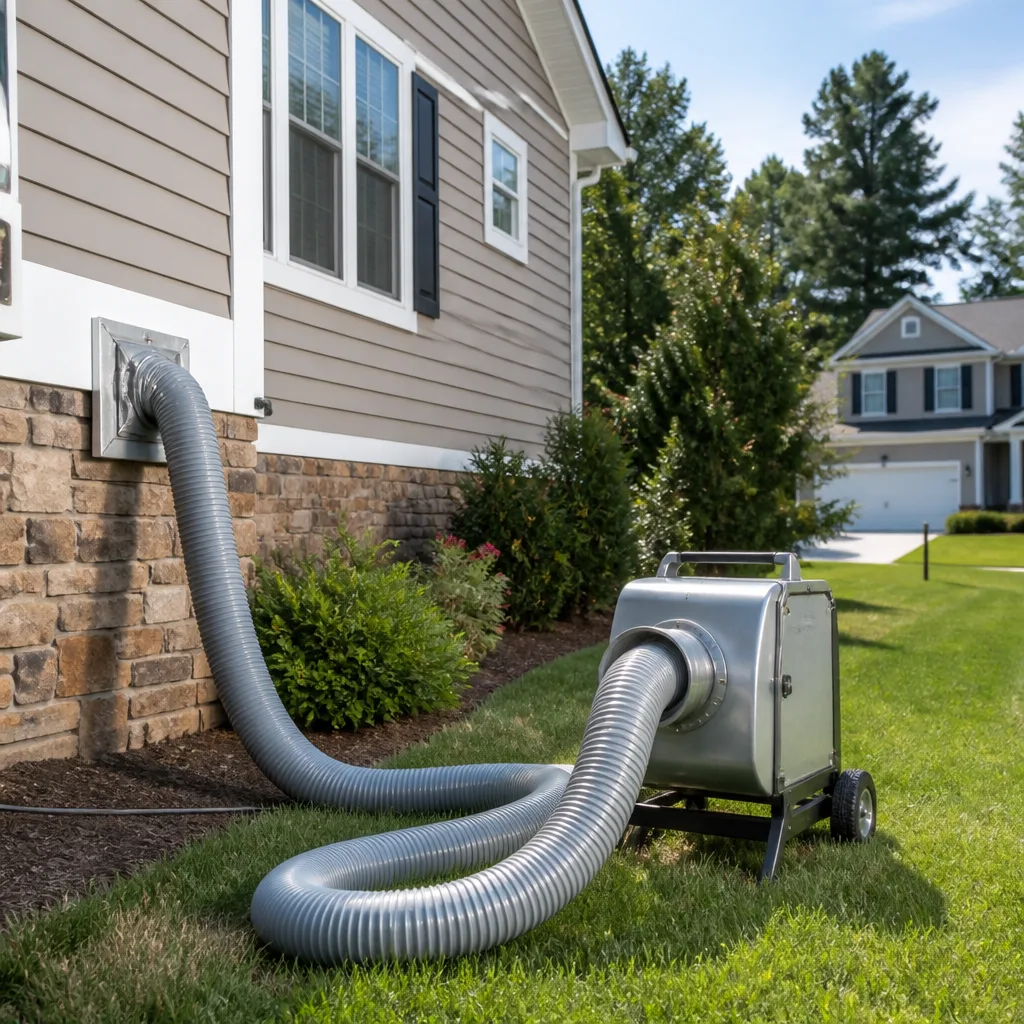 Whole-home duct cleaning
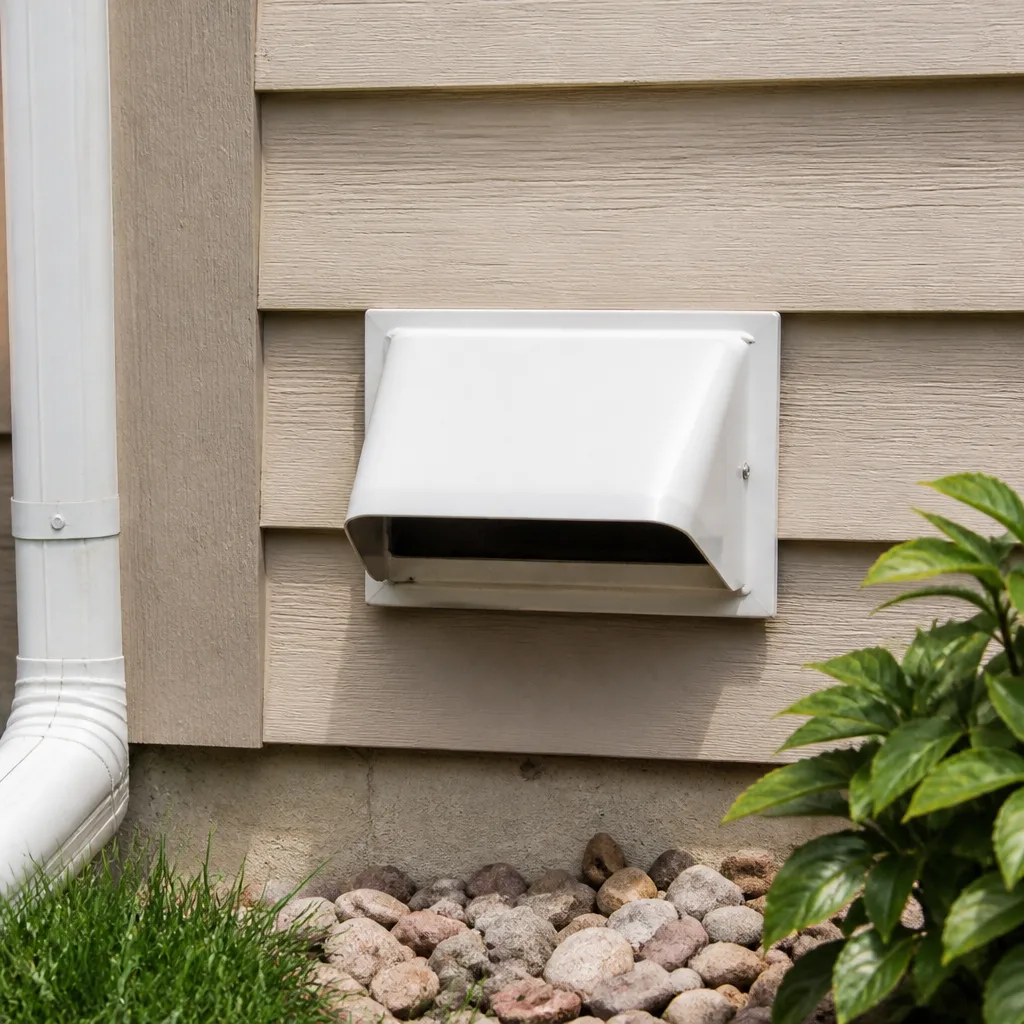 Dryer vent cleaning
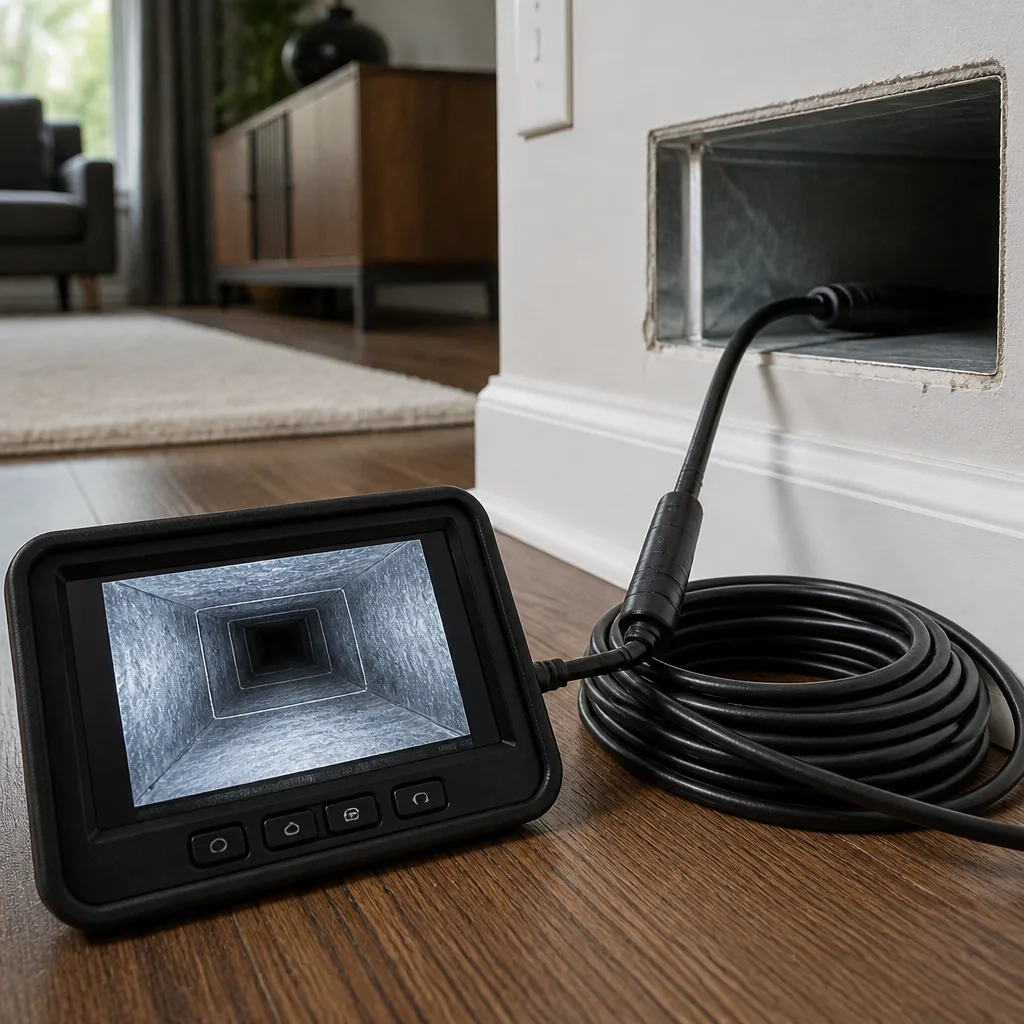 Camera inspection
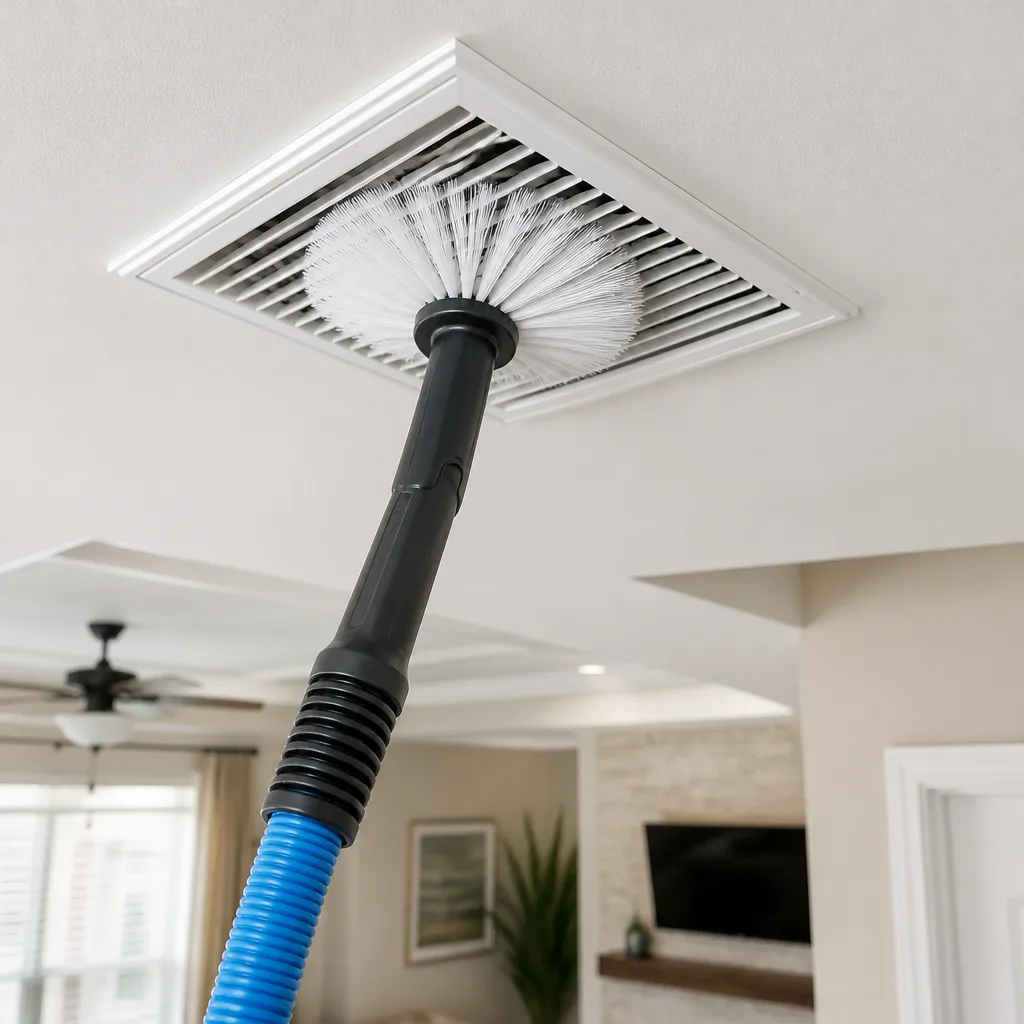 Sanitizing & deodorizing
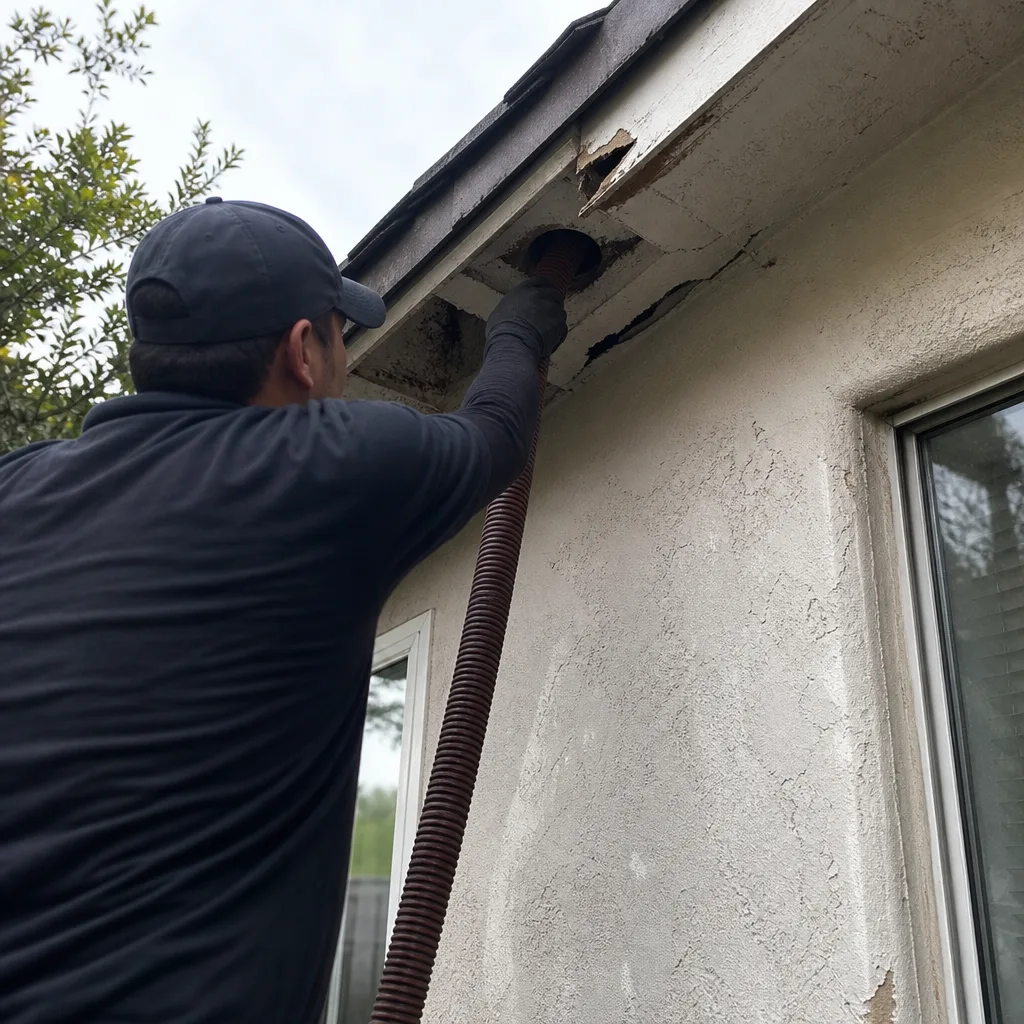
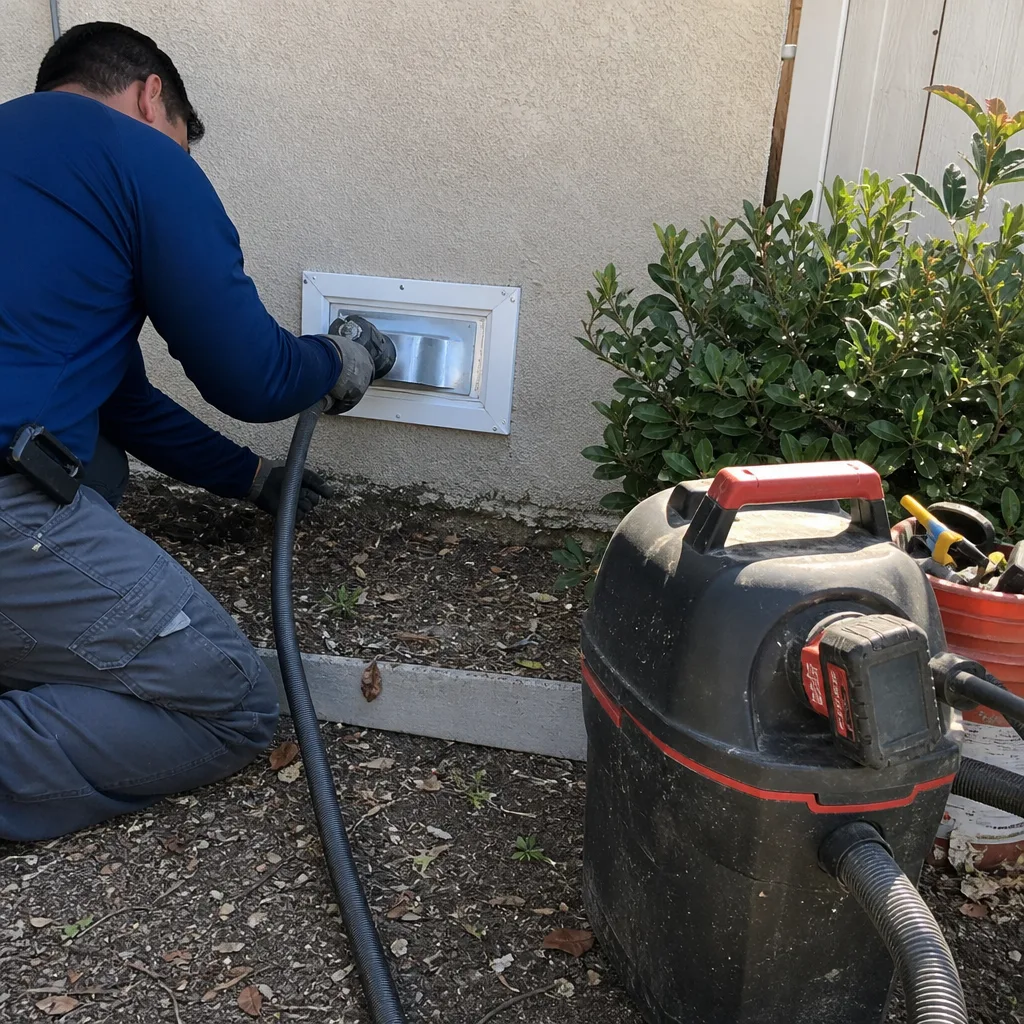
Whole-system duct and dryer vent check with before-and-after photos - you see exactly what came out of your vents
That "$99 whole-house special" is a bait ad - the real number appears once they are in your hallway, or the "clean" is a shop-vac at the register. We photograph the inside of your ducts before and after instead.
DIY vs Professional Air Duct Cleaning: The Rancho Cucamonga Homeowner’s Decision Guide
A standard shop vac pulls somewhere between one and two inches of water column in static pressure. The negative-air machines used in professional duct cleaning run at four to eight inches, and the best truck-mounted systems go higher. That gap is not a marketing detail. It is the mechanical reason most DIY duct cleaning attempts in Rancho Cucamonga leave the system looking superficially better while the actual debris load inside the ductwork barely moves. This guide explains where a homeowner with a brush kit and a good shop vac can genuinely do useful work, and where the physics of air movement dictates that only contained, negative-pressure extraction will get the job done.
Styles & brands we work with
- Whole-home duct cleaning
- Dryer vent cleaning
- Camera inspection
- Sanitizing & deodorizing
Quick Answer
DIY duct cleaning in Rancho Cucamonga can handle accessible register cleaning, filter replacement, and basic visual inspection of flex duct sections in the attic or crawl space. But it cannot reproduce the negative air pressure extraction that professional equipment like Rotobrush rotary brush systems and Abatement Technologies negative-air machines generate, which means a shop vac removes what is within a few feet of the register while redistributing or ignoring everything deeper in the trunk line. For systems not serviced in five-plus years, post-renovation dust, or any sign of mold or pest activity, professional cleaning is the only method that actually removes the contamination rather than stirring it around.
Table of Contents
- What DIY Can Actually Accomplish
- The Physics of Negative Air Pressure (And Why Your Shop Vac Can’t Keep Up)
- DIY Mistakes That Make Things Worse
- When Professional Cleaning Is Non-Negotiable
- What It Actually Costs: DIY vs Professional in Rancho Cucamonga
- How Professional Equipment Works: Rotobrush, Nikro, and Abatement Technologies
- Rancho Cucamonga-Specific Factors: Climate, Construction, and Duct Contamination
- Common Mistakes to Avoid
- When to Call a Professional
- Frequently Asked Questions
- The Bottom Line
What DIY Can Actually Accomplish
We want to be clear about something upfront: there is legitimate DIY duct maintenance. A homeowner in Rancho Cucamonga who spends twenty minutes every few months doing these tasks will have cleaner supply registers and better airflow than a neighbor who never touches the system. The key is understanding what you are actually doing when you clean a register versus what you are not doing to the rest of the duct run.
Here is the honest scope of what makes sense to do yourself:
- Register and grille cleaning: Remove the supply registers and return grilles, wash them in warm soapy water, dry them fully, and reinstall. This removes surface dust and pet hair that blocks airflow at the opening. In Rancho Cucamonga’s dry climate, register dust accumulates fast, especially during Santa Ana wind season when fine particulate gets pulled into the home.
- Filter replacement: Change the HVAC filter every 60 to 90 days, more often if you have pets or live near the 210 freeway corridor where particulate load is higher. A clean filter protects the blower motor and reduces the amount of new dust entering the system. This is the single highest-impact thing any homeowner can do.
- Accessible flex duct visual inspection: In many Rancho Cucamonga homes with attic or crawl space HVAC installations, you can visually inspect the first few feet of flex duct from the plenum. Look for kinks, disconnected sections, tears in the outer vapor barrier, or signs of rodent activity. A kinked flex duct in the attic is a common cause of one room staying hot in August regardless of how clean the system is.
- Return register vacuuming: Using a shop vac with a crevice tool, you can remove loose dust and debris from the return register cavity and the first few inches of visible return duct. This is genuinely useful because return sides pull air in and collect more visible debris than supply sides.
None of this requires special equipment beyond a screwdriver, a shop vac, and replacement filters. It will not clean the full trunk line or the branch ducts running to each room, but it keeps the visible entry points clear and reduces the volume of new contamination entering the system.
The Physics of Negative Air Pressure (And Why Your Shop Vac Can’t Keep Up)
Duct cleaning is not fundamentally about brushing. It is about extraction. A brush loosens debris from duct walls, but if you do not have enough negative air pressure pulling that loosened debris out of the system and into a containment unit, you have simply moved dust from the walls into the airstream, where it will either resettle somewhere else in the duct or get blown into living spaces the next time the blower kicks on.
This is the mechanical wall that DIY duct cleaning runs into, and it is worth understanding the numbers.
A consumer shop vac generates roughly 40 to 80 CFM of airflow at one to two inches of water column static pressure. That is enough to collect debris at the end of a hose, but static pressure drops off sharply as the hose gets longer or the diameter narrows, meaning the effective suction at ten feet down a duct run is dramatically weaker than it is at the nozzle. Now consider that a typical Rancho Cucamonga home built in the 1990s or 2000s has duct runs of twenty to forty feet from the plenum to the farthest register. A shop vac hose extended into that run has lost most of its pulling power by the time it reaches the middle of the trunk line.
Professional negative-air machines, by contrast, move 2,000 to 5,000 CFM or more at four to eight inches of static pressure, and truck-mounted units can exceed that. The machine is connected to the duct system at the plenum, creating continuous negative pressure through the entire run while rotary brush equipment works each branch. That means debris loosened anywhere in the system gets pulled toward the collection point rather than pushed deeper or blown into the home.
What does this mean practically? A shop vac can remove a visible dust pile sitting at the register boot. It cannot reverse airflow through a thirty-foot branch duct and pull dislodged debris back through the entire run. That debris stays in the duct, and some of it will re-enter the room when the system cycles on. In our experience cleaning Rancho Cucamonga homes, the most common thing homeowners report after a DIY attempt is that registers looked clean for about two weeks and then dust reappeared, because the source material was never extracted.
DIY Mistakes That Make Things Worse
There is a category of DIY duct cleaning that is not merely ineffective, it is actively counterproductive. These are the methods that circulate on social media and home improvement forums, and they share a common flaw: they apply positive pressure to the system without any negative pressure on the other end, which turns the ductwork into a distribution system for whatever was inside it.
The leaf blower method
Some homeowners stick a leaf blower into a supply register and run it at full throttle, reasoning that the air blast will push dust out through other registers. What actually happens is that the leaf blower pressurizes the duct system and forces accumulated dust, insulation fragments, and sometimes rodent droppings out of every register opening at high velocity, directly into the living spaces of the home. The dust that does not come out gets blown deeper into the main trunk line, where it will continue to circulate for months. This method does not clean the ducts. It redistributes contamination from the duct walls into the air you breathe.
The compressed air method
Similar problem, smaller scale. An air compressor nozzle pointed into a register blows dust off the nearby duct walls, but with no negative pressure downstream to capture it, the airborne particulate drifts into the room or settles back into the duct as soon as the air settles. You would be better off not touching the system at all, because at least settled dust stays put until it is properly extracted.
The brush-only method
Running a dryer vent brush or furnace brush down a register boot without any vacuum attached loosens material from the duct walls and lets it fall back into the duct. When the HVAC system cycles on, that loosened pile gets carried into the filter or the room. Brushing without extraction is like sweeping a floor without a dustpan and then turning on a fan.
The pattern here is consistent: without negative air pressure on the system, any agitation you do makes the indoor air dustier, not cleaner. This is why Timberline Air Duct Cleaning runs containment and negative air as standard practice rather than an optional add-on. The Abatement Technologies equipment we use on job sites is designed specifically to keep dislodged debris from entering living spaces during the cleaning process, which is the exact problem leaf blower and compressor methods create.
When Professional Cleaning Is Non-Negotiable
There are scenarios where the question is not DIY versus professional, but whether you can afford to skip professional cleaning at all. These are the situations where a brush kit and shop vac are categorically the wrong tool, and delaying proper service makes the underlying problem worse.
Post-renovation dust: If you have remodeled a kitchen, bathroom, or any significant portion of a Rancho Cucamonga home, drywall dust and construction debris have entered the duct system. Drywall dust is extremely fine, abrasive to blower motors, and a known respiratory irritant. It also travels deep into the trunk line and settles everywhere. Only negative-pressure extraction with brush agitation removes it thoroughly. If your contractor ran the HVAC during construction, the system is contaminated whether you can see it at the registers or not.
Suspected pest intrusion: Roof rats and mice are a known concern in Rancho Cucamonga, particularly in neighborhoods bordering the foothills and in homes with attic duct runs. If you hear scratching in the attic or find droppings near a return register, the ducts may contain nesting material, droppings, or a deceased animal. This is a health and air quality issue that requires professional removal, and ideally duct repair afterward if the pests chewed through flex duct or separated joints. Our Air Duct Repair in Rancho Cucamonga service exists for exactly this reason, and we repair what we find rather than telling you to call someone else.
Visible mold or persistent musty odor: If you see mold growth on the inside of a visible duct section or smell a persistent musty odor that gets stronger when the HVAC runs, this is beyond cleaning. Mold requires professional assessment, and the affected duct sections typically need replacement or professional-grade sanitizing that DIY products cannot replicate. Running a brush through a moldy duct without proper containment spreads spores through the home.
Five-plus years without service: Even in a clean home with regular filter changes, duct systems accumulate a measurable layer of fine dust, skin cells, pet dander, and fiberglass particles over time. After five years without attention, the buildup is substantial enough that DIY methods touch only the surface. The National Air Duct Cleaners Association recommends inspection every few years and cleaning as needed, and in a dusty climate like the Inland Empire, the accumulation curve is steeper than in coastal areas.
Occupants with respiratory conditions: If anyone in the home has asthma, COPD, allergies, or an immune-compromised condition, duct cleanliness is not a cosmetic matter. Fine particulate circulating through the HVAC system aggravates these conditions. Professional cleaning with HEPA-filtered negative air is the appropriate intervention.
What It Actually Costs: DIY vs Professional in Rancho Cucamonga
Let us be straightforward about money, because cost is the primary reason homeowners in Rancho Cucamonga attempt DIY duct cleaning in the first place. A professional service call costs real money, and we are not going to pretend otherwise. But an honest accounting includes not just the equipment cost, but the time, the risk, and the cost of correcting a DIY attempt that makes things worse.
DIY cost breakdown
| Item | Typical Cost |
|---|---|
| Shop vac with extension hose and crevice tools | $80 – $200 if you already own one; $150 – $400 to buy |
| Duct brush kit (furnace brush on flexible rod) | $25 – $60 |
| Replacement HVAC filter (MERV 8 – 11) | $15 – $40 per filter |
| Screwdriver, flashlight, basic tools | $0 – $30 if already owned |
| Time investment (full DIY attempt) | 4 – 8 hours for register cleaning, filter change, and partial reach |
| Total DIY cost | $40 – $120 out of pocket if equipment already owned; $200 – $500 if starting from scratch |
Professional cost in Rancho Cucamonga
Professional air duct cleaning in Rancho Cucamonga typically runs between $350 and $700 for a standard single-family home with one HVAC system, depending on home size, number of returns, accessibility of the plenum, and the condition of the system. Homes with two systems, larger square footage, or significant contamination will run toward the higher end. A combined service that includes Dryer Vent Cleaning in Rancho Cucamonga at the same visit is a cost-efficient way to address both issues in one trip.
The hidden cost of DIY error
The risk cost of DIY is where the math gets uncomfortable. If a homeowner uses a leaf blower or compressed air method and fills the home with accumulated duct dust, the cleanup involves wiping down every surface, laundering fabrics, and often running air purifiers for days. Some homeowners end up calling a professional service afterward anyway, meaning they pay for the DIY attempt in time and frustration, then pay for the professional service on top of it. In the worst cases, damage to flex duct from aggressive brushing creates a tear that requires duct repair, which adds cost that no DIY method was ever going to prevent.
The realistic comparison is not $50 versus $500. It is $50 for superficial register cleaning versus $500 for actual system extraction, and $50 plus a weekend plus a dust-covered living room plus a follow-up professional call versus just calling a company like Timberline Air Duct Cleaning the first time. Call (877) 265-9115 for an honest quote with no bait-and-switch pricing, and you can decide from real numbers rather than guesswork.
How Professional Equipment Works: Rotobrush, Nikro, and Abatement Technologies
When we say professional-grade equipment, we mean specific machines made by companies like Rotobrush, Nikro, and Abatement Technologies, not a longer hose on a consumer vacuum. Understanding what these tools do helps explain why professional cleaning produces a different result than any amount of DIY effort.
Rotobrush rotary brush systems are built for HVAC ductwork specifically. The system uses a motorized rotary brush on a flexible shaft that extends into the duct run, physically agitating dust, debris, and film off the duct walls while an integrated vacuum simultaneously captures the loosened material. The brush does what a handheld brush cannot: it reaches the full length of the trunk line and branch runs, and it applies consistent mechanical agitation across the entire interior surface. A homeowner with a furnace brush on a rod is working blind past the first few feet, while a professional operating a Rotobrush system is cleaning the entire run methodically.
Nikro equipment is the same brand used by restoration and remediation contractors who handle water damage, fire damage, and mold jobs. That is a meaningful point: the people who clean up after serious contamination events use Nikro and similar professional HVAC cleaning machinery, because consumer equipment cannot achieve the extraction rates those jobs require. When a Rancho Cucamonga home needs duct cleaning after a water damage event or animal intrusion, that is the standard of equipment the situation calls for.
Abatement Technologies negative-air machines are the containment backbone of professional cleaning. We connect a negative air machine to the duct system before agitation begins, which creates continuous vacuum pressure through the entire run. That means every particle loosened by the rotary brush is pulled toward the containment unit rather than escaping into the home. This is contained cleaning, and it is the entire point. The alternative – agitating ducts without negative pressure – is what DIY methods do, and it is why professional companies invest in this equipment rather than showing up with a truck-mounted vacuum and a prayer. We also work with Timberline Air Duct Cleaning home customers on broader air-quality improvements using Honeywell and Aprilaire products, because duct cleaning is often one part of a larger indoor air strategy.
Rancho Cucamonga-Specific Factors: Climate, Construction, and Duct Contamination
Duct systems in Rancho Cucamonga face a specific set of conditions that shape how fast they accumulate debris and what kind of debris they collect. This matters because a homeowner who moved here from a coastal climate or a cooler region may underestimate how aggressively the local environment loads up a duct system.
The Santa Ana wind factor. Each fall, Santa Ana winds push extremely dry, particulate-laden air through the Inland Empire. That fine dust enters homes through every gap and crack, and a significant portion gets pulled into the HVAC system through the return air. Homes in north Rancho Cucamonga near the foothills see more of this wind-driven dust than homes south of the 210, and it settles inside duct runs, coating interior walls with a fine layer that accumulates season after season. A system that was cleaned in 2019 has already absorbed six Santa Ana seasons of particulate, and that is a meaningful accumulation.
Construction era and duct material. The majority of single-family homes in Rancho Cucamonga were built between the 1980s and the late 2000s, sprawling across the post-boom development that filled out the city. Many of these homes use flex duct in the attic or crawl space, which is lighter and cheaper than rigid metal duct, but also more prone to kinking, tearing, and collecting debris in sagging sections. Older flex duct breaks down over time, shedding fiberglass particles into the airstream. A visual inspection of accessible flex duct is something a homeowner can do, but a full assessment requires professional inspection with the right equipment.
Desert-adjacent dust load. Rancho Cucamonga sits at the western edge of the Inland Empire, where the air carries more fine particulate than coastal communities in Orange County or Los Angeles. Homes on the eastern and northern edges of the city, toward Etiwanda and Alta Loma, tend to see more dust intrusion than neighborhoods farther west. This is not an argument for cleaning ducts every year, but it is a reason why the five-year mark is a real threshold here rather than a conservative suggestion.
Pest pressure. Homes in the foothill-adjacent and older tree-lined neighborhoods of Rancho Cucamonga contend with roof rats, which are established throughout Southern California. Attic duct systems are vulnerable to rodent intrusion, and a rodent that gets into a flex duct run can nest, defecate, and eventually die inside the system. This creates a contamination problem that has nothing to do with normal dust accumulation and everything to do with air quality and health. This is one of the clearest cases where professional cleaning and Air Duct Repair in Rancho Cucamonga are the appropriate response.
Common Mistakes to Avoid
- Using a leaf blower or air compressor on the ducts. Positive pressure with no negative pressure on the system turns your ductwork into a dust cannon pointed at your living room. This is the single worst DIY mistake we see referenced online, and the cleanup afterward is worse than the original duct dust was.
- Brushing without vacuum capture. Running any brush into a duct without simultaneous suction loosens material and lets it fall deeper into the run or blow out when the HVAC cycles. Agitation without extraction is worse than no action.
- Believing filter replacement equals duct cleaning. A clean filter prevents new debris from entering the system, but it does nothing about what is already inside the trunk line and branch ducts. They are separate maintenance tasks with separate functions.
- Attempting DIY mold remediation. If you see what looks like mold inside a duct, do not brush it, do not spray it with bleach, and do not run the HVAC. Mold requires professional containment and often duct replacement, not surface cleaning.
- Ignoring the return side. Many DIY attempts focus on supply registers because those are visible, but the return side is where most air enters the system, and it collects more debris. A thorough cleaning must address supply and return portions of the system.
- Neglecting the dryer vent while you are at it. In Rancho Cucamonga, dryer vents clog with lint because of the volume of laundry from families in normal suburban homes. A clogged dryer vent is a fire risk, and it deserves the same attention as the HVAC ducts. Our Dryer Vent Cleaning in Rancho Cucamonga service treats it as a dedicated safety procedure, not a quick add-on.
- Assuming a newer home does not need service. New construction in Rancho Cucamonga frequently leaves construction debris – drywall dust, sawdust, even scraps – inside the duct system when the subs finish and the general contractor does not arrange a post-build clean. A new-to-you home deserves an inspection just as much as a twenty-year-old one.
When to Call a Professional
If any of the following applies, skip the DIY phase and get a professional assessment: the system has not been cleaned or inspected in five or more years, you have completed any kind of renovation or construction project, you suspect or have evidence of rodent activity in the attic or ducts, you smell must or see visible mold near any register or duct opening, anyone in the home has a respiratory condition that makes air quality medically relevant, or you have already attempted DIY cleaning and noticed dust reappearing at registers within weeks. These are the situations where professional negative-air extraction with rotary brush equipment is the correct tool, and where attempting more DIY work risks making the situation worse. Timberline Air Duct Cleaning offers free estimates in Rancho Cucamonga – call (877) 265-9115 and we will assess the system and give you an honest recommendation, even if that recommendation is that you do not need cleaning yet. We would rather tell you the truth than sell you a service you do not need.
Frequently Asked Questions
Professional air duct cleaning in Rancho Cucamonga typically costs between $350 and $700 for a single-family home with one HVAC system, with homes larger than 2,500 square feet or with two systems running toward the high end. The cost is driven by system size, accessibility, contamination level, and whether additional services like dryer vent cleaning are included. Call (877) 265-9115 for a free estimate specific to your home rather than relying on a coupon price that will change once a company sees the job.
DIY duct cleaning is worth doing only for the accessible portion of the system: register and grille removal and washing, filter replacement, and visible inspection of accessible flex duct. These tasks are genuinely useful as maintenance and they require nothing more than basic tools. They do not clean the trunk line or branch ducts, and no amount of shop vac extension changes that mechanical limitation.
You can remove surface debris from the first few feet of duct at the register boot with a shop vac and a brush, but the shop vac lacks the static pressure and CFM to maintain extraction over the full length of a typical Rancho Cucamonga duct run. The result is partial cleaning that leaves the bulk of the debris in place, which is why registers often look dusty again within weeks.
Some companies quote a very low per-vent or whole-house price to get a technician in the door, then upgrade the price once they inspect the system, or they skip the equipment and containment work that actually cleans the ducts. The low-price model in this industry is well documented, and it is why we give one flat price per system before work starts. The price we quote is the price you pay.
Ask the company what equipment they use, whether they run negative air during the job, and whether they show you before-and-after photos of the interior of the ducts. Any professional company will document the work with photos, and a company using proper equipment like Rotobrush and Nikro systems with Abatement Technologies containment should be able to show you what the ducts looked like before and what they look like after. If a company cannot or will not show before-and-after photos, find a different company.
In Rancho Cucamonga’s dusty, Santa Ana-wind climate, most homes benefit from a professional duct cleaning every three to five years, with the lower end applying to homes with pets, smokers, recent renovations, or residents with respiratory conditions. Homes with minimal occupants, no pets, and consistent filter changes can extend that interval. The best way to know is to have the system inspected, and the inspection should be free.
The Bottom Line
DIY duct maintenance has a legitimate place: registers, filters, and visible inspection are homeowner work. But the mechanical gap between a shop vac and a negative-air extraction system is not a matter of effort – it is a matter of physics. A shop vacuum cannot maintain meaningful suction through a thirty-foot duct run, which means it cannot extract the debris that actually matters. In Rancho Cucamonga’s dusty climate, where Santa Ana winds deliver fresh particulate to your ductwork every fall, that limitation compounds over time. For systems that have not been serviced in years, have absorbed renovation dust, or show signs of pests or mold, professional equipment is the only honest solution. If you are in the Inland Empire and want an honest assessment, Air Duct Cleaning in Rancho Cucamonga starts with a free inspection and a real price before any work begins. Call (877) 265-9115.
Written by the team at Timberline Air Duct Cleaning, serving Rancho Cucamonga since 2014.
See the difference
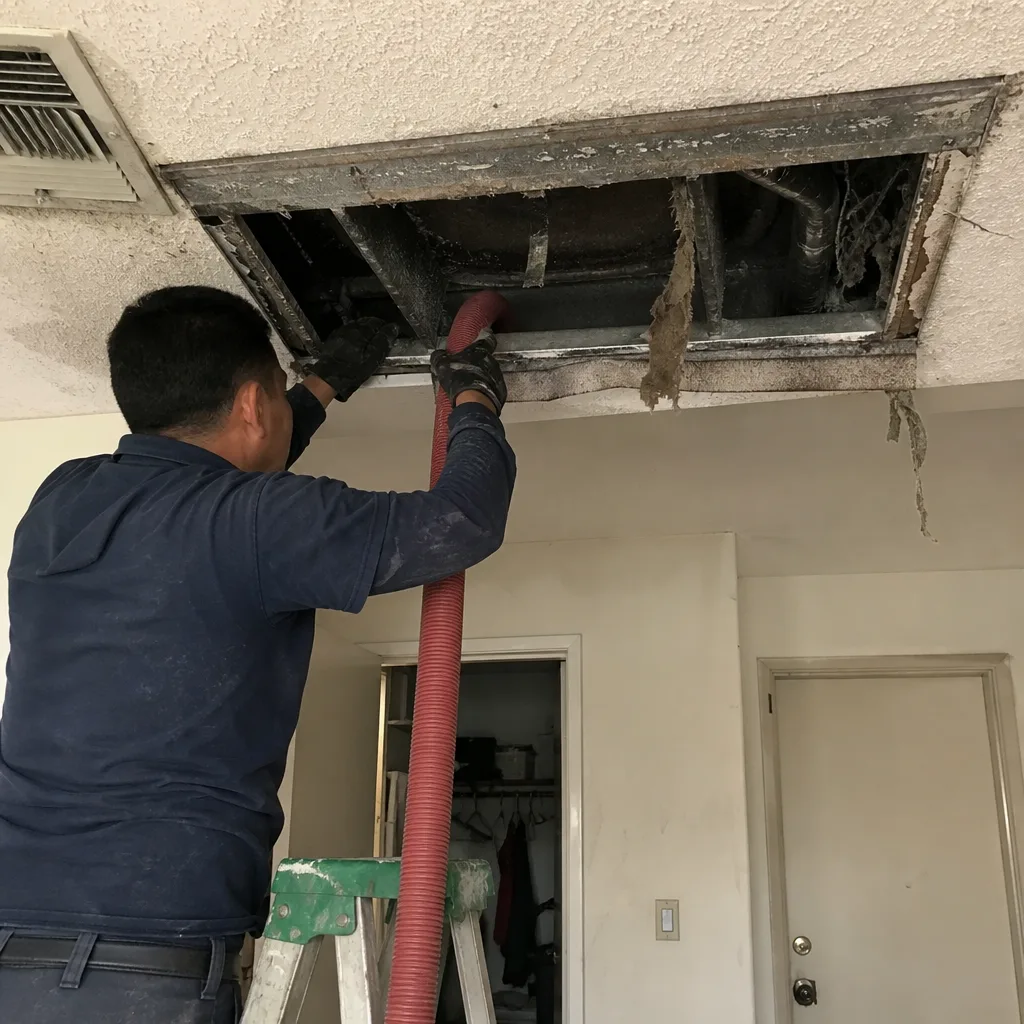 Before
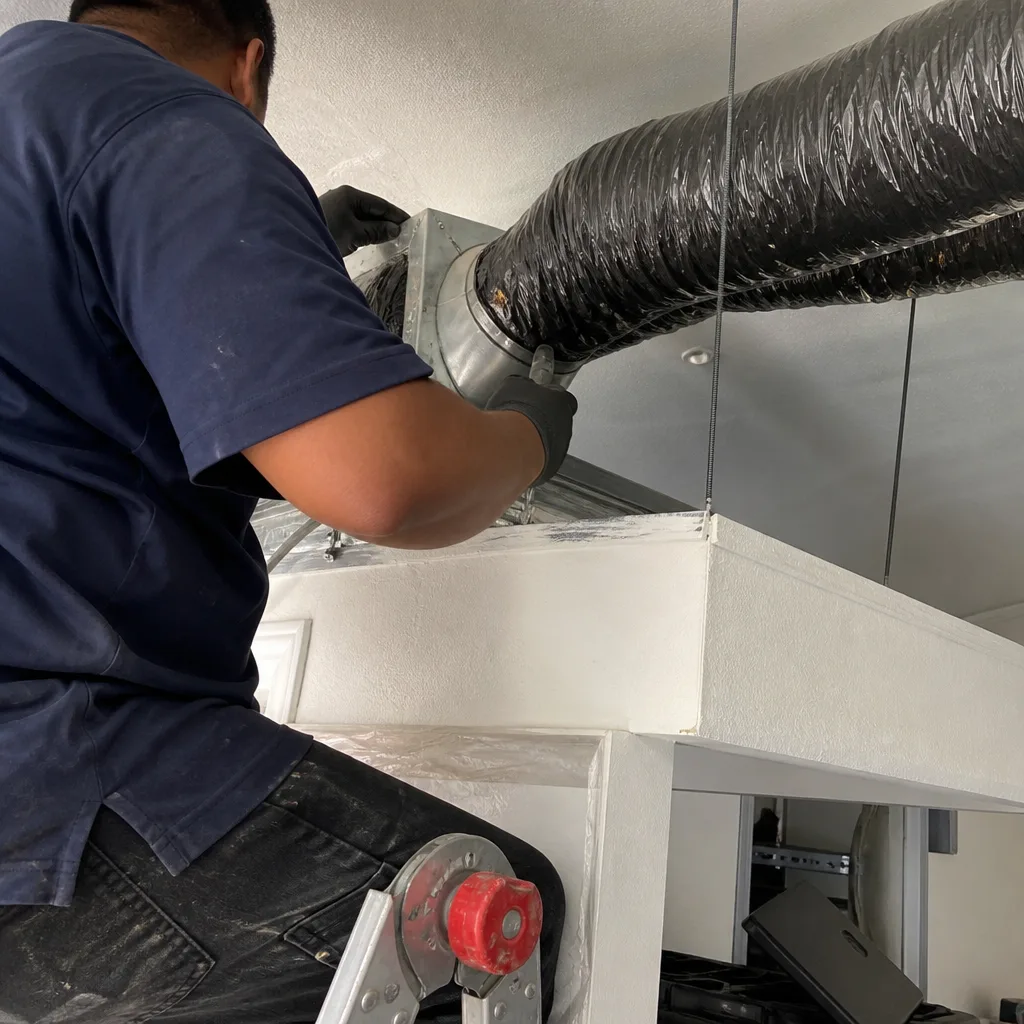 After
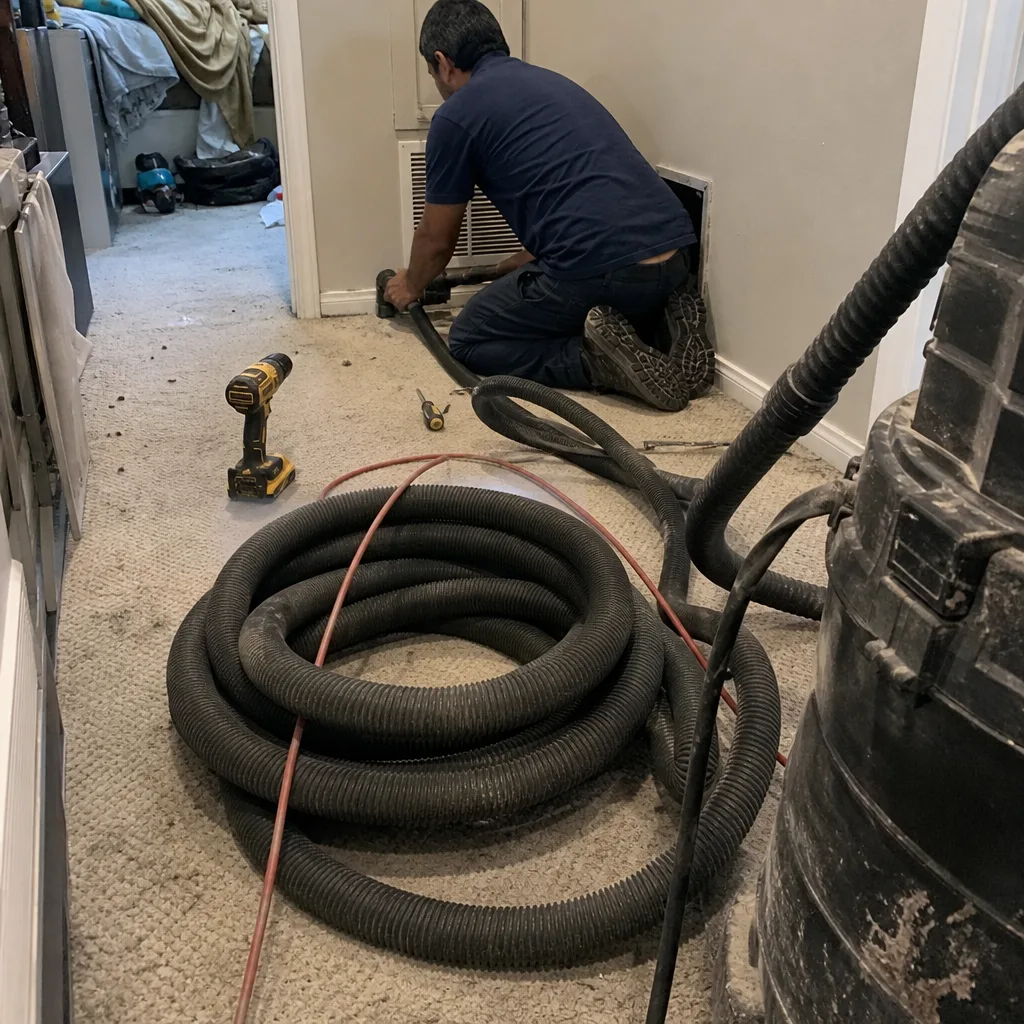 Before
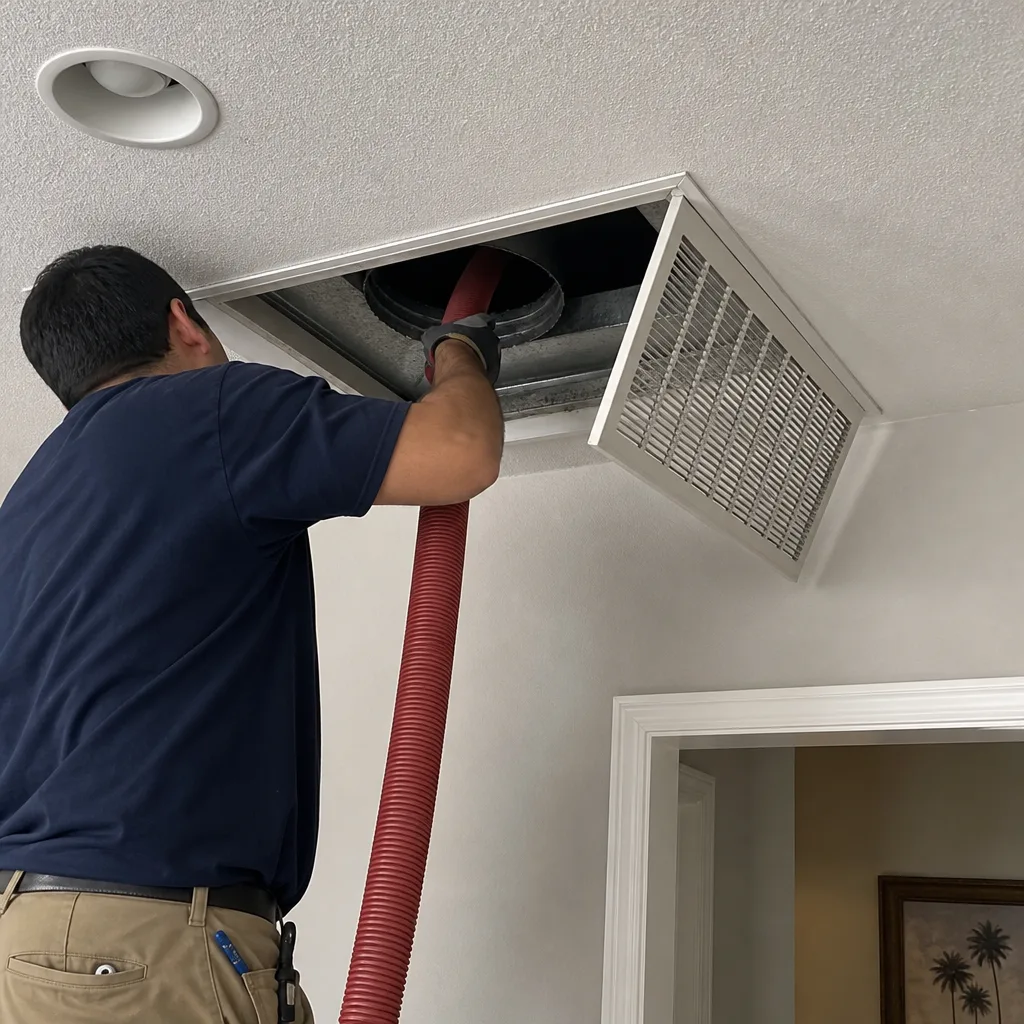 After
 Before
 After