
Last updated November 2, 2026
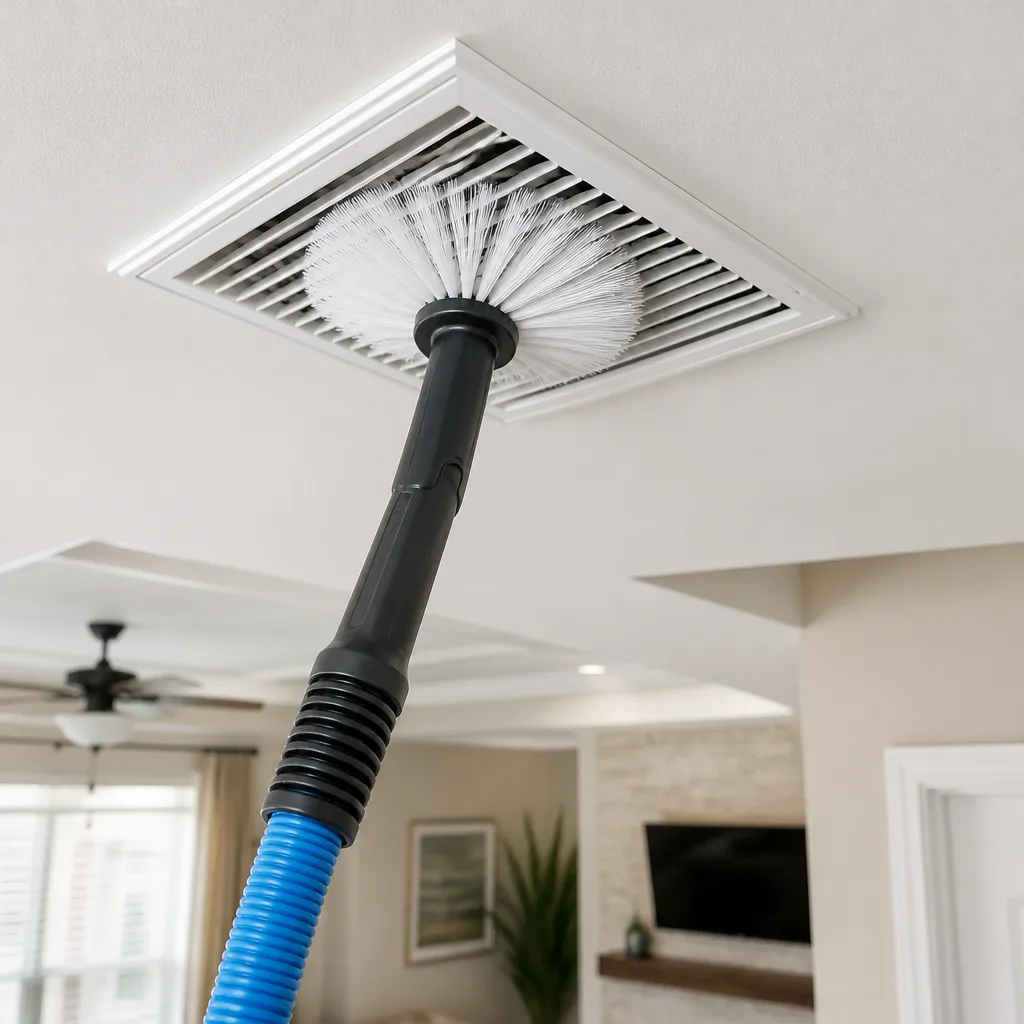
 Whole-home duct cleaning
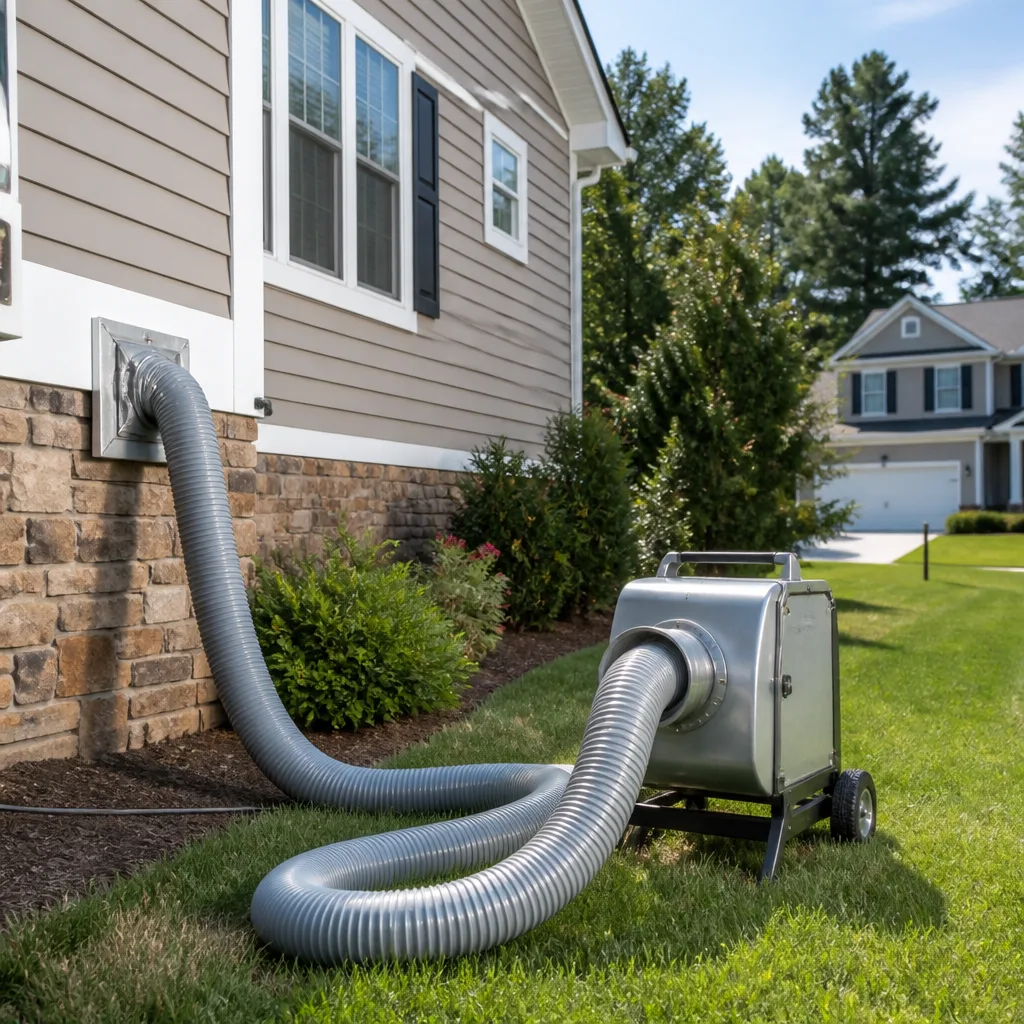
 Dryer vent cleaning
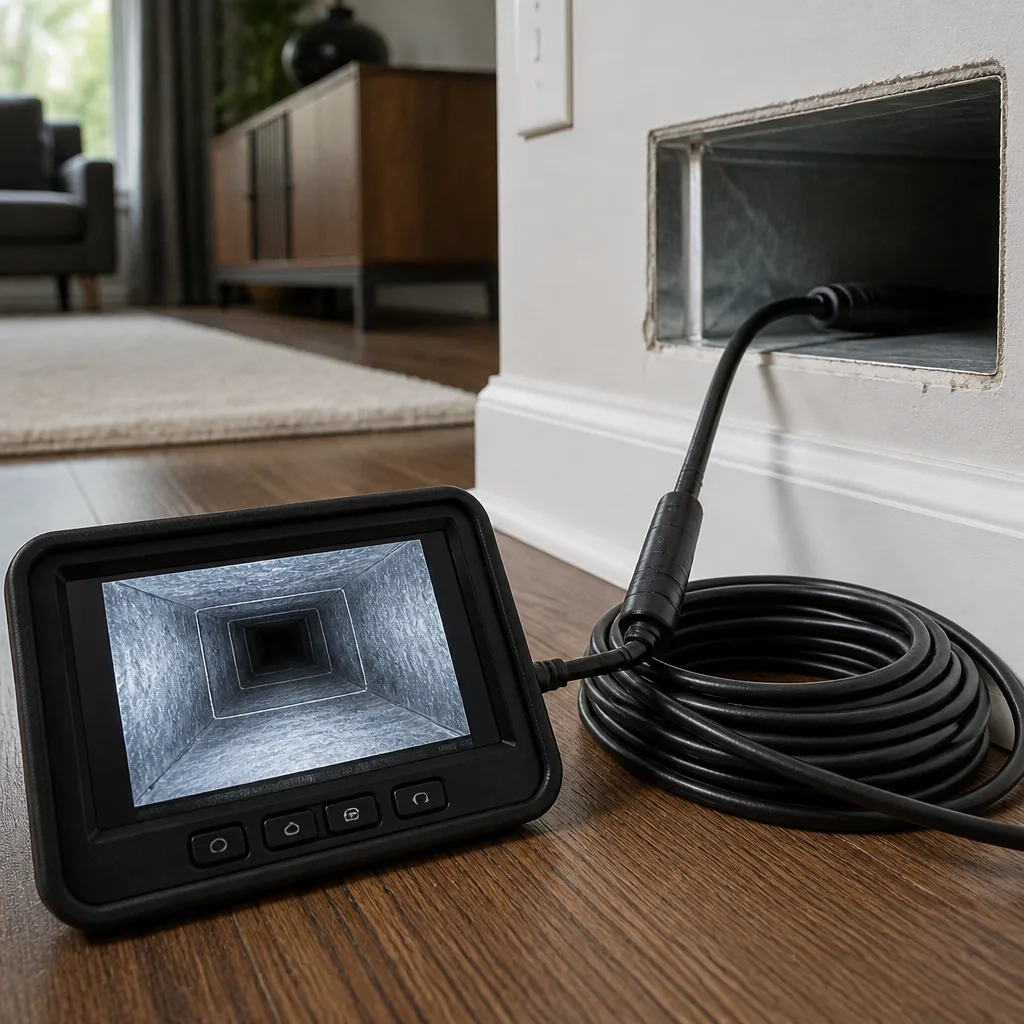 Camera inspection
 Sanitizing & deodorizing
Whole-system duct and dryer vent check with before-and-after photos - you see exactly what came out of your vents
That "$99 whole-house special" is a bait ad - the real number appears once they are in your hallway, or the "clean" is a shop-vac at the register. We photograph the inside of your ducts before and after instead.
The Complete Air Duct Cleaning Guide for Rancho Cucamonga Homeowners
The San Bernardino County Air Quality Management District regularly records PM2.5 levels that rank among the worst in California – and that’s before a Santa Ana event pushes desert particulate through the Cajon Pass into Rancho Cucamonga. Your HVAC system isn’t just conditioning air; it’s acting as a filter for one of the most dust-loaded airsheds in the state. This guide explains how that specific environmental reality changes what duct cleaning actually means for your home, what equipment matters, and how to avoid paying for a service that only makes things look clean on the surface.
Quick Answer
Air duct cleaning in Rancho Cucamonga means removing the accumulated desert dust, construction particulate, and occasional wildfire ash that collects inside your HVAC ductwork – and doing it with equipment designed to contain what it dislodges. For most single-family homes in this city, a professional cleaning with a rotary brush system and negative-air containment runs roughly $350 to $750, and it should happen every 3 to 5 years depending on filter habits and nearby construction. The job is done right when the technician uses contact cleaning, not just a high-pressure air wand, and when the system is kept under negative pressure so dislodged debris can’t recirculate into your living room.
Styles & brands we work with
- Whole-home duct cleaning
- Dryer vent cleaning
- Camera inspection
- Sanitizing & deodorizing
Table of Contents
- Why Rancho Cucamonga Ducts Fill Faster Than Coastal California Homes
- What Actually Accumulates in Inland Empire Ductwork
- Rotary Brush vs. Truck-Mounted Vacuum: The Equipment Difference
- Why Negative-Pressure Containment Matters in Ranch-Style Homes
- How to Read Your HVAC Filter as a Duct Condition Report
- What Legitimate Post-Cleaning Verification Looks Like
- How Often Should Rancho Cucamonga Homes Actually Get Duct Cleaning?
- The Dryer Vent Parallel Risk in Rancho Cucamonga
Why Rancho Cucamonga Ducts Fill Faster Than Coastal California Homes
Coastal California homes contend with marine-layer moisture and moderate pollen counts. Rancho Cucamonga sits in a different environment entirely. The city sits at the base of the San Gabriel Mountains, directly in the path of the Santa Ana wind corridor that funnels through the Cajon Pass. When those winds kick up – typically September through February – they carry fine desert particulate from the Mojave, and they push it against the foothills where most Rancho Cucamonga neighborhoods sit. Your HVAC system pulls that air in every time it cycles.
Add in the region’s construction activity. Rancho Cucamonga has seen continuous residential and commercial development over the past two decades, from the Victoria Gardens area east toward Etiwanda. Construction dust is heavier and more abrasive than organic household dust. It settles into return ducts, collects on blower motor fins, and coats the interior of supply runs. Then, during wildfire season, smoke and ash from the San Bernardino National Forest or points further east can introduce ultra-fine carbon particulate that clings to duct walls and resists simple air movement.
In practical terms, a duct system in Rancho Cucamonga accumulates debris roughly 30 to 50 percent faster than a comparable home in coastal Orange County. That’s not marketing spin. It’s the measurable effect of airborne particulate load. Homes near the 210 freeway corridor or in neighborhoods undergoing infill development see the fastest accumulation. Homes in established, tree-dense areas like Alta Loma see somewhat slower buildup, but the Santa Ana factor still applies everywhere in the 91701, 91730, and 91739 zip codes.
The takeaway: if you’ve read generic duct cleaning advice that suggests a 5 to 7 year interval, that timeline was written for a different climate. Rancho Cucamonga’s dust load compresses that window. We’ll get into specific frequency recommendations below, but the baseline assumption has to change when your air starts with more particulate in it than most of the state.
What Actually Accumulates in Inland Empire Ductwork
Not all duct debris is the same, and the difference matters for how it should be removed. In Rancho Cucamonga, we consistently see three distinct material profiles inside HVAC systems based on location and home age.
Desert particulate (silt and fine sand). This is the dominant component in most Rancho Cucamonga systems. It’s heavier than household dust, which means it settles in the lowest points of duct runs rather than staying suspended. In attic-mounted systems – common in the single-story ranch homes that dominate neighborhoods from Cucamonga Canyon up to the Banyan Street corridor – that means debris collects in the long horizontal runs that snake across the attic. Fine sand is abrasive. It accelerates wear on blower bearings over time, and it doesn’t respond well to low-pressure air washing. It needs mechanical agitation to break the bond it forms with duct walls.
Construction dust (gypsum, concrete, wood fiber). Homes built during Rancho Cucamonga’s major growth phases – the 1980s through early 2000s – often had their HVAC systems run during the framing and drywall phases of construction. Even decades later, residual construction dust can remain, particularly in return cavities and panned joist returns. This material is dense and cohesive. It forms a hardened layer that a simple vacuum pass won’t remove. Contact cleaning with a rotary brush is the only reliable method for construction dust that’s had years to compact.
Fire ash and carbon particulate. During and after wildfire events – the 2024 Line Fire in the San Bernardino National Forest is a recent example – ultra-fine ash can be drawn into HVAC systems across Rancho Cucamonga. This material is uniquely problematic. It’s light enough to become airborne with any disturbance, and it’s small enough to pass through standard fiberglass filters. It also carries odor. If your home smelled like smoke for days after a fire event, some of that smoke is now resident in your duct insulation and fiberglass liner material. Removing carbon particulate requires both mechanical cleaning and fine-particle HEPA filtration at the vacuum source.
Rotary Brush vs. Truck-Mounted Vacuum: The Equipment Difference
The air duct cleaning industry has a split personality, and Rancho Cucamonga homeowners encounter both ends of the spectrum. Understanding the equipment difference is the single most important factor in predicting whether a cleaning will be worth the money.
The entry-level approach: truck-mounted vacuum with air agitation. A truck-mounted vacuum generates strong suction, often 12,000 CFM or more. But suction alone only removes loose surface debris along the bottom of ducts. To dislodge anything adherent – compacted dust, construction residue, pet hair woven into fiberglass liners – technicians typically use compressed air wands or “skipper balls” that bounce through the duct. This is the origin of the industry’s bad reputation. Air agitation blasts debris around inside the duct, but it can’t produce uniform contact across all four interior surfaces. In rectangular metal ducts common in older Rancho Cucamonga homes, air wands leave material in the corners. In flex duct, aggressive air pressure can tear the inner liner.
The contact-cleaning approach: rotary brush systems. A rotary brush system – the most common professional brand is Rotobrush, and it’s what we run at Timberline Air Duct Cleaning in Rancho Cucamonga – uses a motorized rotating brush head that physically scrubs all four interior surfaces of the duct simultaneously while a vacuum captures loosened debris immediately at the point of contact. The brush is fed down each duct run from the register opening. It makes direct, mechanical contact with duct walls. This is the difference between sweeping a floor and pointing a fan at it.
Why it matters for Inland Empire duct conditions. The debris profile we described earlier – fine sand, compacted construction dust, pet dander bonded to moisture from evaporator coil condensation – requires mechanical agitation. A vacuum-only pass will make the first few feet of duct look cleaner. A rotary brush removes material from the full run, including the vertical risers and transitions where most homes concentrate debris. For homes in Rancho Cucamonga with flexible duct, the brush system we use operates at controlled speed to protect the liner while still achieving contact. For older metal duct systems – common in homes built before 1985 in central Rancho Cucamonga – the brush removes rust scale and debris that air methods leave behind.
Nikro is another brand we run on our trucks. Nikro builds high-torque portable cleaning systems that a number of restoration and remediation contractors in Southern California use after fire and water damage events. Using the same equipment platform for routine cleaning that damage remediation companies use for fire cleanup matters when a chunk of your debris load is wildfire particulate.
Why Negative-Pressure Containment Matters in Ranch-Style Homes
The single-story ranch layout that defines much of Rancho Cucamonga’s housing stock creates a specific challenge for duct cleaning: long, attic-mounted horizontal duct runs. When ducts run through a hot attic, the temperature differential between attic air and cooled supply air creates condensation at connection points. That moisture combines with settled dust to create adhesive debris. It’s also why disturbing that debris without proper containment sends it back into the house.
Contained cleaning means the section of ductwork being cleaned is placed under negative pressure relative to the living space. In practice, a powerful vacuum – often a HEPA-filtered unit – is connected to the duct system, typically at the furnace or air handler. The cleaning tool then works from the register end. Any debris dislodged by the brush is immediately pulled toward the vacuum, not pushed out through the register into the room. For this to work properly, the vacuum system has to move enough air to overcome the natural pressure in the duct system.
In our operation, we use Abatement Technologies equipment for this containment function. Abatement Technologies is a manufacturer of negative-air machines and HEPA filtration systems used in hospital isolation rooms and asbestos abatement, not just residential duct cleaning. When their equipment is pulling on your duct system during a cleaning, the entire section under service is under negative pressure. Loose particulate exits through the HEPA-filtered vacuum. It does not enter your bedroom.
This matters more in ranch-style homes for a simple geometric reason. A two-story home can isolate duct runs floor by floor. A single-story Rancho Cucamonga home has all supply and return runs on one level, often radiating from a central hallway closet or garage-mounted furnace. That means the entire system is interconnected, and a pressure imbalance in one section affects the whole. Without proper negative-air setup, a technician cleaning one duct run can inadvertently push debris into another run that hasn’t been cleaned yet. Negative-pressure containment is not an option for thorough cleaning in this housing stock. It’s the only way to do the job without making the problem worse than when you started.
How to Read Your HVAC Filter as a Duct Condition Report
Before scheduling any duct cleaning in Rancho Cucamonga, your HVAC filter can tell you a lot about what’s happening deeper in the system. Here’s a step-by-step method to read it:
- Note the filter’s rated lifespan. A standard 1-inch fiberglass filter is rated for roughly 30 days. A 4-inch media filter may be rated for 6 to 12 months. This is your baseline.
- Check the filter at the mid-point of its rated life. Pull the filter and hold it up to a light source. If you can’t see visible light through the media at the halfway point, the filter is loading faster than rated. That means more particulate is entering your system than the filter was sized for.
- Examine the color and texture of the accumulated material. Gray-brown, powdery material is consistent with desert dust and fine particulate. Dark gray to black material with a slightly oily texture suggests either carbon from vehicle exhaust or wildfire smoke, or fine soot from a gas appliance. Reddish-tan material is consistent with Inland Empire soil composition.
- Check the filter frame and surrounding slot for dust bypass. If dust is visible on the clean side of the filter housing, your system has a bypass problem – air is going around the filter, not through it. That unfiltered air deposits particulate directly into your duct runs and evaporator coil.
- Note how quickly the filter loads after replacement. In Rancho Cucamonga homes with average dust exposure, a standard 1-inch filter typically shows visible loading within 30 days. If your filter looks heavily loaded at the two-week mark, especially during fall Santa Ana season, your ducts are likely accumulating debris at a proportionally faster rate.
If your filter readings suggest heavy loading, that’s a signal to inspect the ducts themselves. But don’t open the system casually – in flex-duct systems, improper reconnection can dislodge connections. A professional inspection that includes register removal and camera scoping costs less than a full cleaning and tells you definitively whether the ducts need service. Air duct repair services address the root causes that a filter can only hint at – failed connections, crushed flex runs, and gaps at the plenum that allow attic air (and attic dust) directly into your supply airstream.
What Legitimate Post-Cleaning Verification Looks Like
The duct cleaning industry’s credibility problem comes from the gap between what’s promised and what’s verifiable. Here’s how to distinguish real verification from theater.
What legitimate verification includes:
- Camera inspection before and after, using the same access point. A borescope or inspection camera inserted through a register should capture the same duct section before cleaning and after cleaning. The images should show the same identifiable features – a seam, a bend, a joint – so you can confirm it’s the same location and that debris is actually gone.
- Visual confirmation of the contact point. For accessible metal duct sections, the technician should be able to run a white cloth or gloved hand along the cleaned surface and show you the result. A clean duct should leave no transfer on the cloth.
- Static pressure reading if airflow was the concern. If you scheduled cleaning to address weak airflow in specific rooms, post-cleaning static pressure measurements or airflow readings at registers should show improvement. This is particularly relevant in Rancho Cucamonga homes where long attic runs and undersized returns are common.
- Documentation of the debris removed. A HEPA vacuum’s collection canister or the disposable filter from the negative-air machine should contain the material pulled from your ducts. A legitimate technician can show you the debris volume removed from your specific system.
What theater looks like: A phone photo taken from a register looking three inches deep, showing one clean section. A “before” photo from a different duct run than the “after” photo. Generic before-and-after images that don’t match your home’s duct type. A technician who completes a 2,000-square-foot home in under two hours and reports that everything went great. Thorough contact cleaning of a typical Rancho Cucamonga ranch home takes hours, not minutes. At Timberline, we document every job with real before-and-after imagery from the same access points, and we show you the debris we removed – not just a receipt.
How Often Should Rancho Cucamonga Homes Actually Get Duct Cleaning?
The national industry standard for duct cleaning frequency – typically quoted as every 3 to 5 years – wasn’t written with Inland Empire dust loads in mind. Based on the debris accumulation patterns we see across Rancho Cucamonga’s housing stock, here’s a more locally calibrated set of recommendations:
- Standard single-family home, no pets, no construction nearby: every 4 to 5 years. This assumes you replace 1-inch filters every 30 to 60 days and your home isn’t directly downwind of active construction.
- Home with pets, especially multiple shedding animals: every 3 to 4 years. Pet dander combines with fine desert dust to create the adhesive compound we described earlier. Pet hair accumulates in return ducts and around blower assemblies faster than any other debris type.
- Home within half a mile of active construction or major road/rail traffic: every 3 years. Rancho Cucamonga’s proximity to the 210 and 15 freeways, plus the Metrolink corridor, means certain neighborhoods face continuous particulate exposure. Active homebuilding in north Rancho Cucamonga and Etiwanda exacerbates this.
- Home that experienced nearby wildfire smoke exposure: within 12 months of the event, especially if you noticed smoke odor indoors. Smoke carbon persists in duct liners and insulation and doesn’t dissipate on its own.
- Home purchased recently without a duct service history: within the first year of ownership. Most Rancho Cucamonga homes have never had their ducts cleaned. If you bought a 1980s or 1990s home and the previous owners made no mention of duct service, the system likely contains 20 to 40 years of accumulated material.
These are guidelines, not hard rules. The filter-reading method above gives you a real-time proxy. If your filters are loading noticeably faster than rated, your ducts are accumulating correspondingly faster, and a cleaning may be due sooner than any calendar-based schedule would suggest.
The Dryer Vent Parallel Risk in Rancho Cucamonga
Your HVAC ducts aren’t the only air pathways that accumulate debris in this climate. Dryer vents see the same desert particulate and deserve equal – if not greater – attention because of the fire component.
In Rancho Cucamonga, the same Santa Ana winds that load your HVAC system also carry lint particles around your home’s exterior. Clothes dryer exhaust vents accumulate lint regardless, but Inland Empire conditions compound the problem in two ways. First, the dry air means lint remains loose and airborne rather than settling out early. Second, many Rancho Cucamonga homes have longer-than-average dryer vent runs. Ranch-style layouts with laundry rooms in the center of the home can push dryer exhaust 20 to 30 feet before it reaches an exterior wall. Longer runs create more surface area for lint accumulation and more pressure drop, meaning the lint doesn’t all exit the system.
The U.S. Fire Administration tracks clothes dryer fires as a leading cause of residential structure fires, and the most common ignition point is accumulated lint in the vent run. In a climate where lint dries quickly and winds keep particulate moving, the accumulation rate in an unmaintained vent can be faster than national averages.
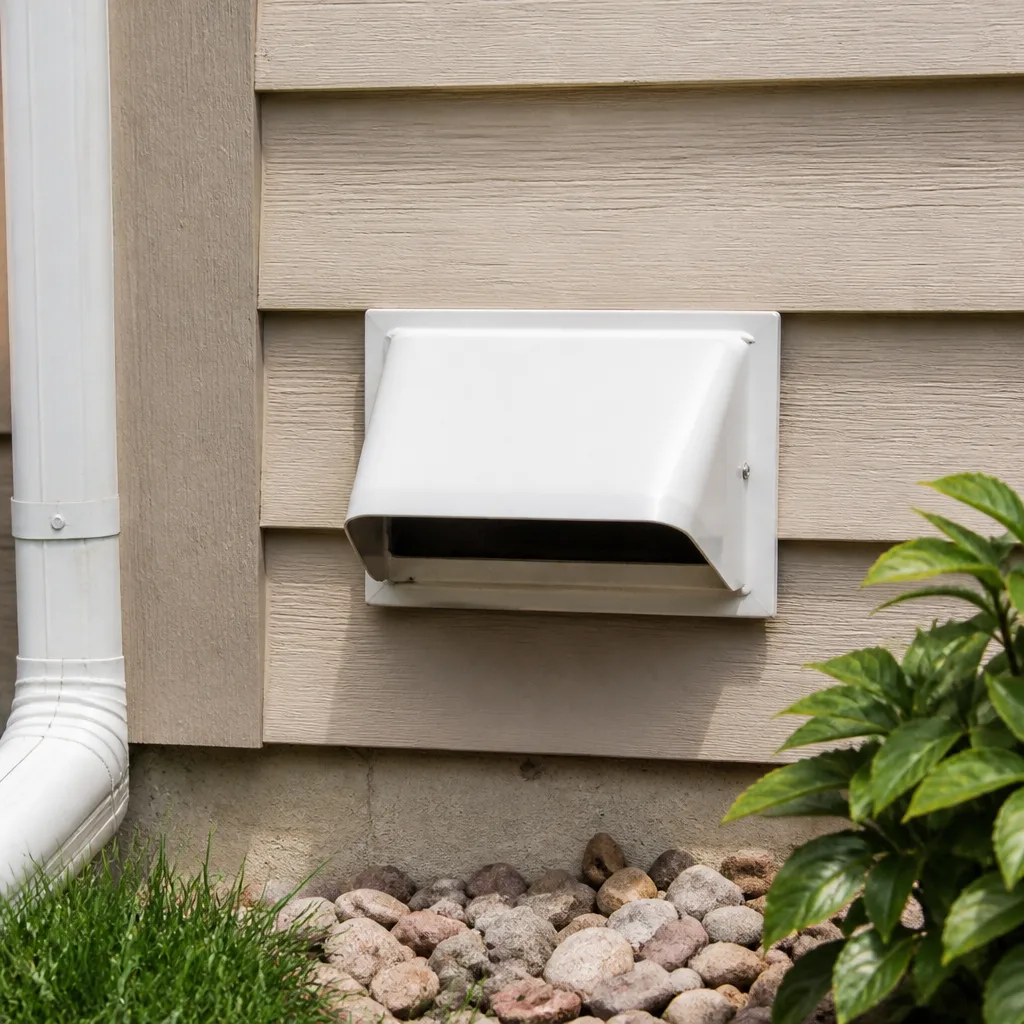
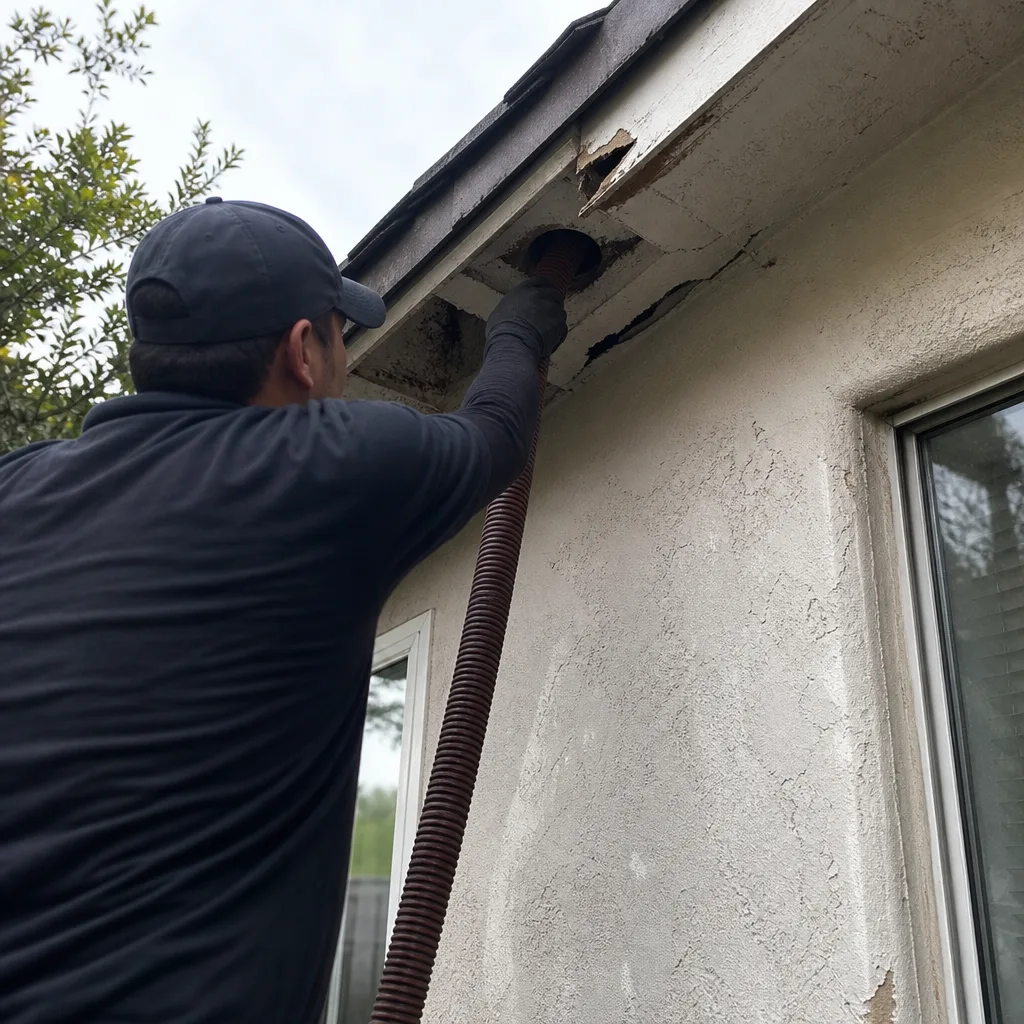
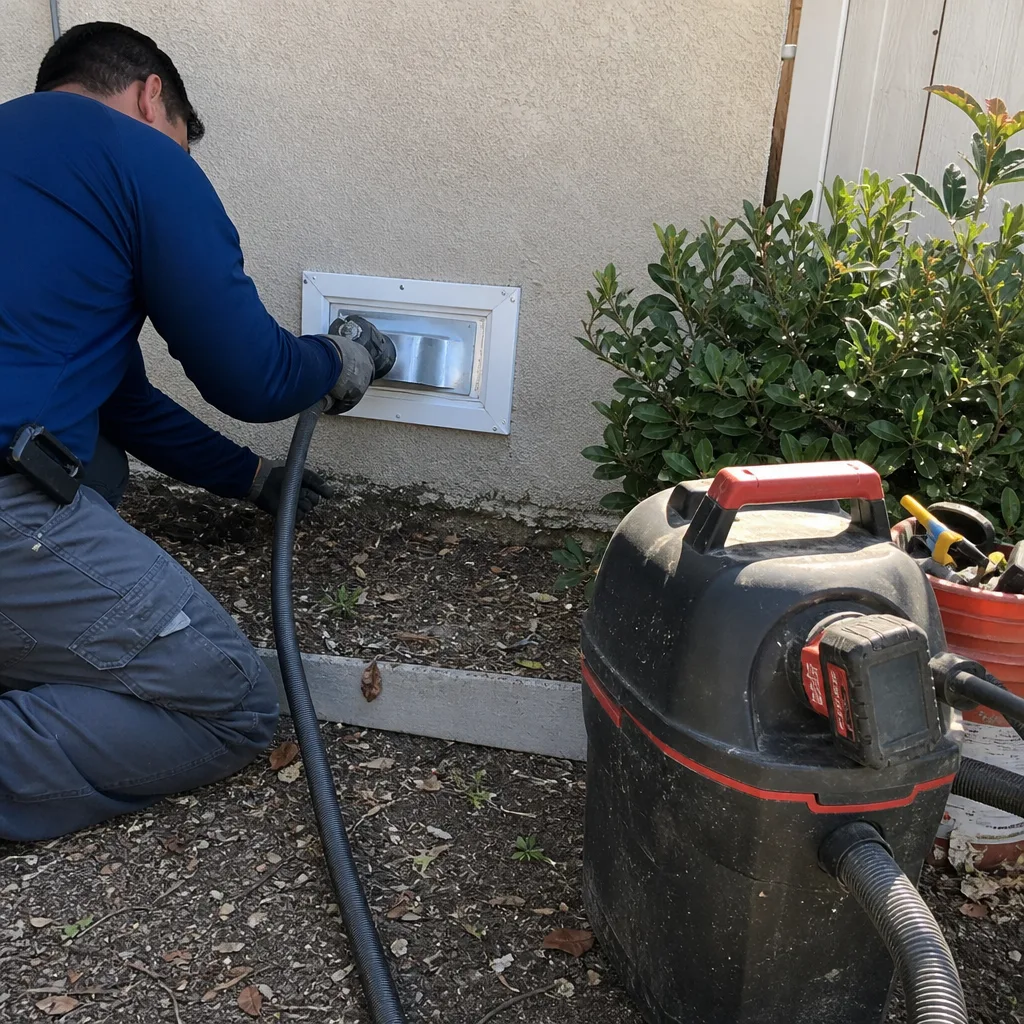
Our approach to dryer vent cleaning in Rancho Cucamonga treats the vent as a fire-prevention asset, not a quick add-on to a duct cleaning invoice. We use rotary brush systems sized for dryer vent diameters, and we verify airflow at the exterior termination point before and after the job. The test is simple: you should be able to feel strong exhaust flow at the vent cap when the dryer is running. If you can’t, the vent needs service.
Honeywell and Aprilaire represent the air-quality side of what we do. Homes in Rancho Cucamonga with persistent dust issues despite duct cleaning often have a filtration gap – standard 1-inch filters simply can’t arrest the fine particulate this airshed produces. Upgrading to a 4-inch media cabinet or adding an Aprilaire air purifier to the system addresses the airborne load before it deposits in your ducts. It’s not a substitute for cleaning, but it’s the right companion measure for homes that fight a losing battle against dust. For homeowners who want to understand their full options, the Timberline Air Duct Cleaning home page covers the complete service scope.
Common Mistakes to Avoid
- Hiring on price alone. Rancho Cucamonga sees a steady stream of coupon mailers for $49 or $99 whole-house duct cleaning. These operations typically run a truck-mounted vacuum for an hour and leave most of the system untouched. If the price would barely cover the fuel to get the truck to your Rancho Cucamonga neighborhood, the service can’t possibly include the equipment and labor hours required for a real cleaning.
- Accepting a “cleaning” without seeing the equipment. Any legitimate contractor should show you the rotary brush system and negative-air unit before work begins. If the technician’s entire toolkit fits in a duffel bag, they’re not doing contact cleaning.
- Replacing filters without checking for bypass. A high-quality filter in a poorly sealed slot delivers the same result as a cheap filter. Confirm the filter seat is tight and that no air bypasses around the frame. You’d be surprised how many Rancho Cucamonga homes have filter slots that were poorly installed at construction.
- Neglecting the return side. Return ducts are where debris enters the system, yet many cleaning operations focus only on supply registers. In homes with panned joist returns – common in 1960s and 1970s construction – the return path is a cavity, not a sealed duct, and it accumulates debris differently than fabricated metal runs. Make sure your cleaning contract covers the full return path.
- Cleaning ducts without addressing the source. If your system has a duct leak, a crushed flex run, or a dislodged connection, cleaning is a temporary fix. Debris will return through the same opening. A proper duct repair service seals the system first or identifies what needs sealing during the cleaning.
- Skipping the dryer vent while cleaning HVAC ducts. The two systems are independent, and a great HVAC cleaning does nothing for a lint-clogged dryer vent. Given the fire risk, both deserve separate, dedicated attention.
See the difference
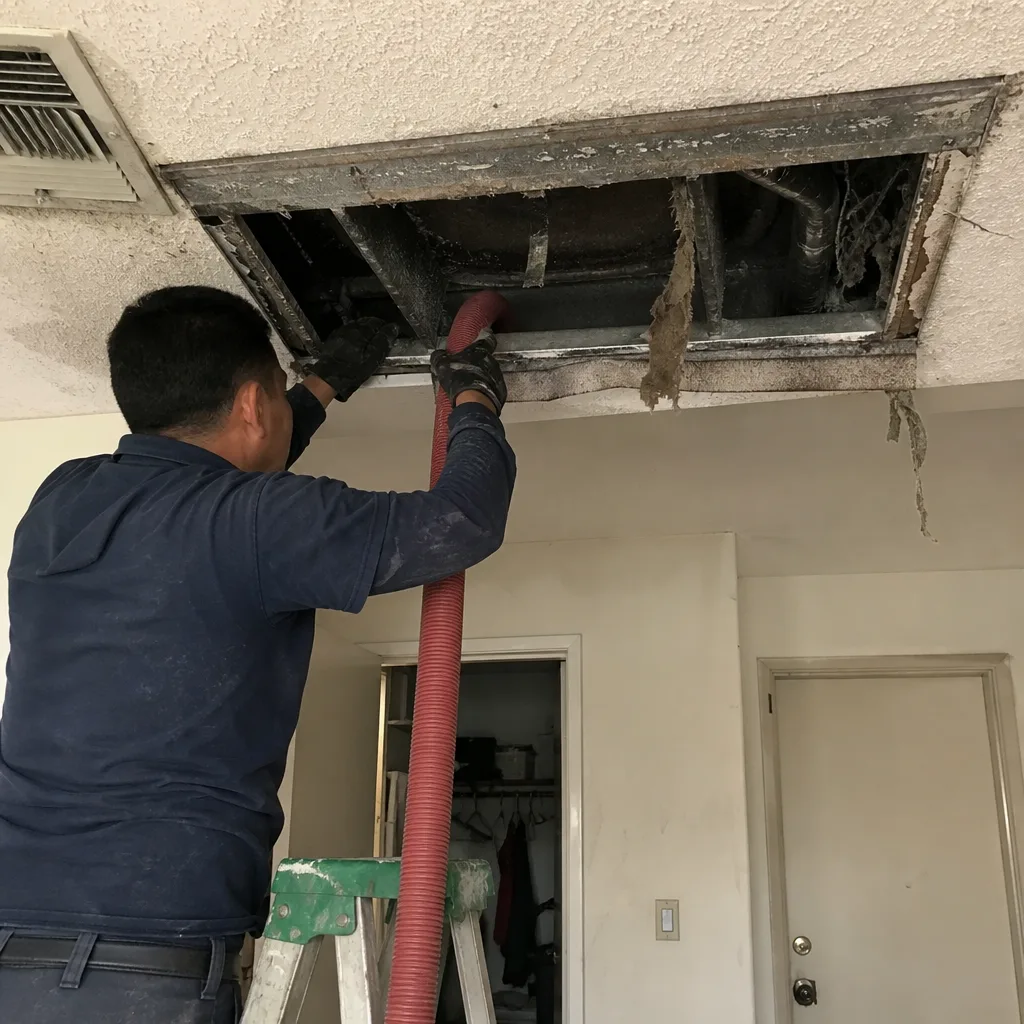 Before
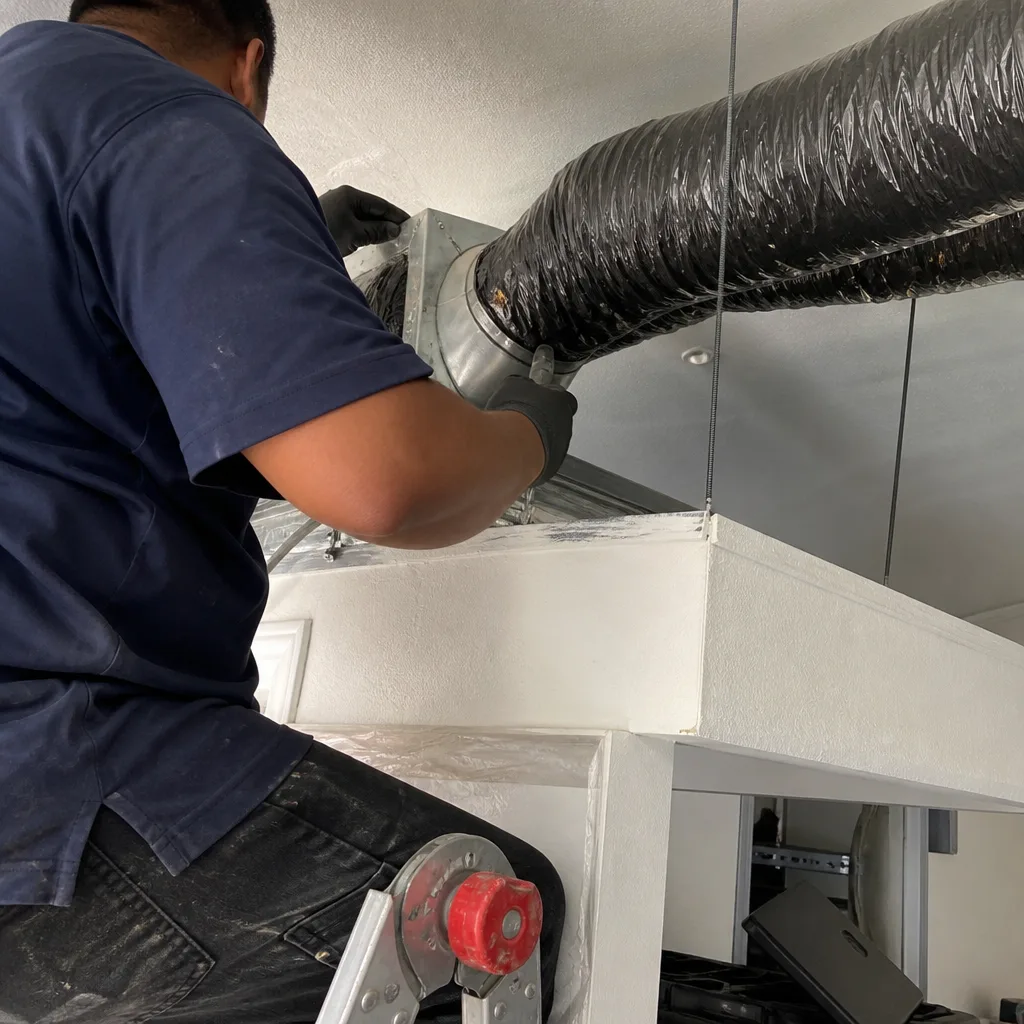 After
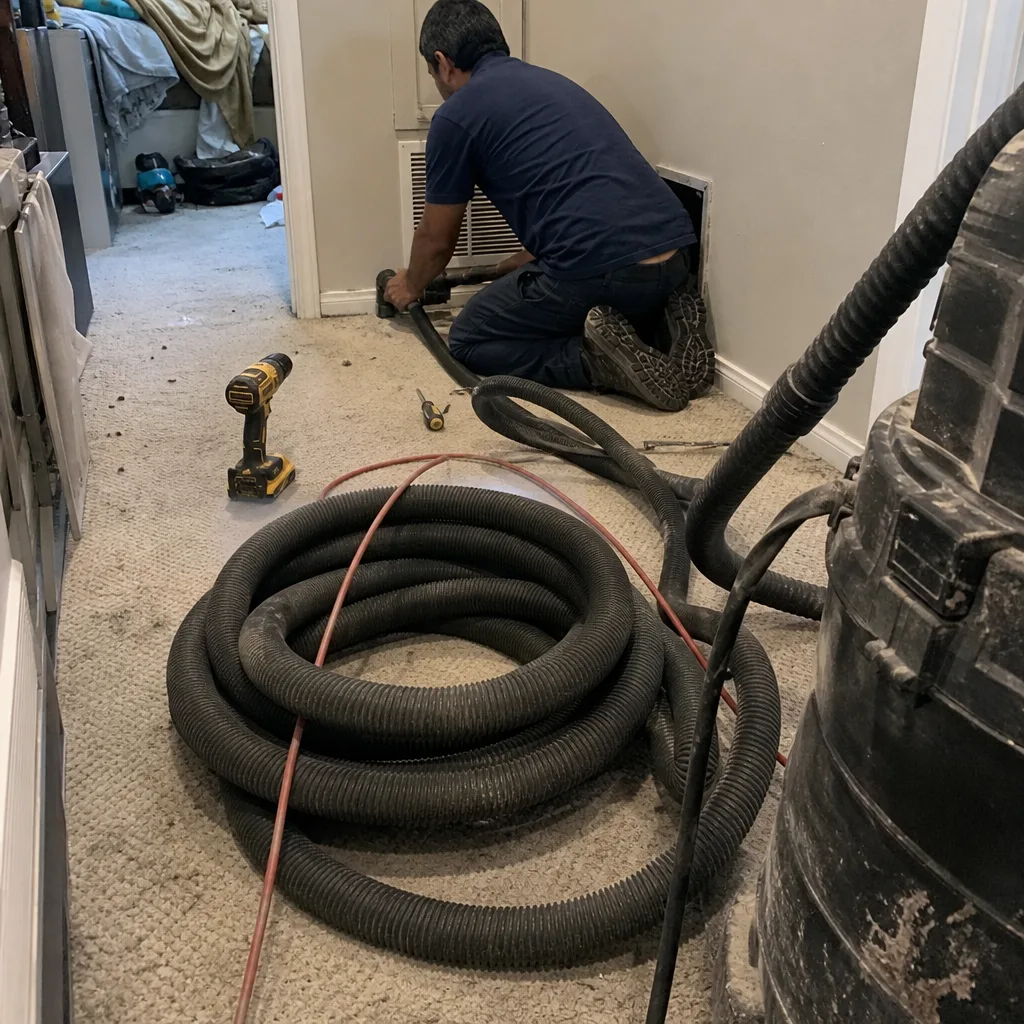 Before
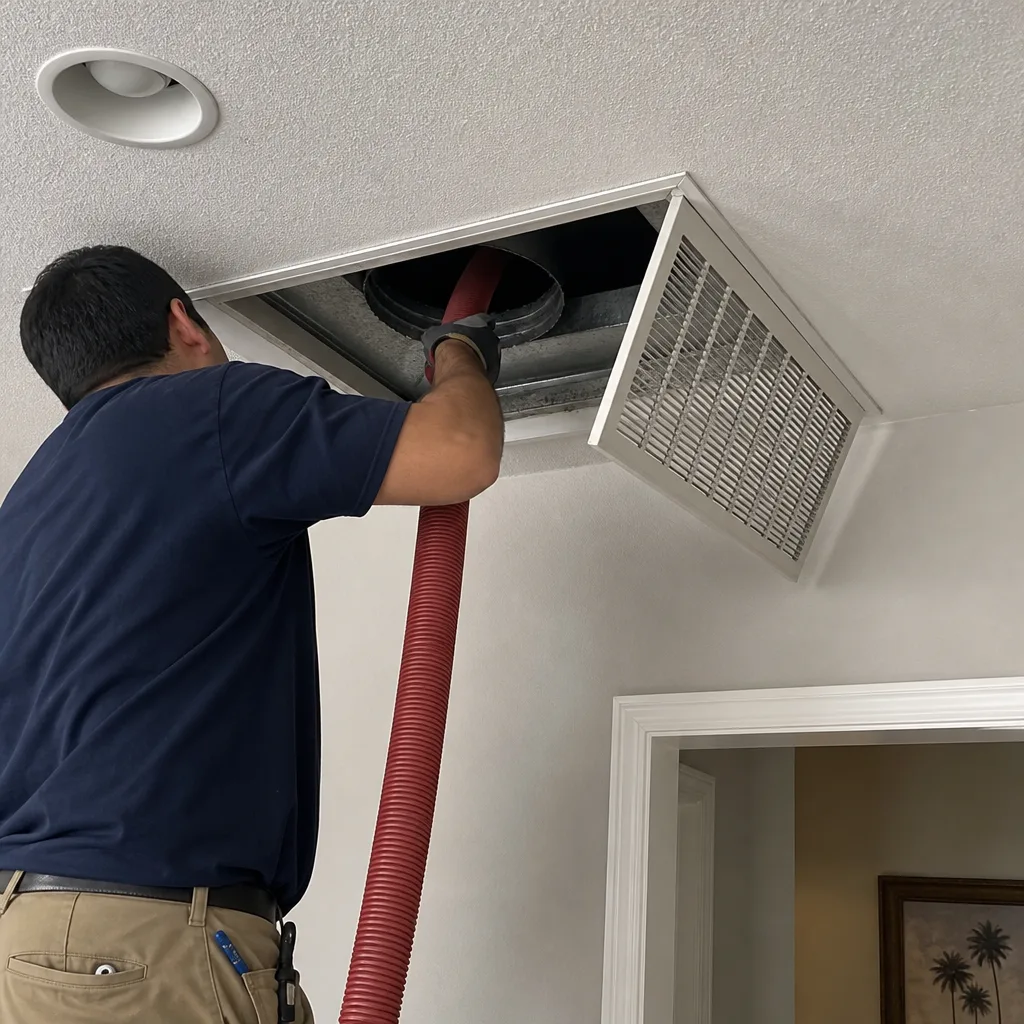 After
 Before
 After
When to Call a Professional
Duct cleaning is not a DIY job, and any guide that suggests otherwise is ignoring what’s actually involved. The system is enclosed, runs through your attic or crawlspace, and requires specialty equipment to service without causing damage or recirculating debris. Call a professional when you see visible dust accumulating on registers or surfaces shortly after cleaning, when airflow from specific rooms is noticeably weaker than others, when your filter loads at double the expected rate, when you smell musty or smoky odors from the system, or when you’ve lived in the home more than five years with no duct service history. If you have renovation debris in the system from a remodel, that’s another clear trigger – construction dust is too dense and compacted for household methods to address. Timberline Air Duct Cleaning offers free estimates in Rancho Cucamonga – call (877) 265-9115.
Frequently Asked Questions
Professional air duct cleaning using rotary brush equipment and negative-air containment typically runs $350 to $750 for a single-family home in Rancho Cucamonga, depending on home size, system complexity, and the number of duct runs. Homes with multiple systems, difficult attic access, or severe debris loads can exceed that range. Quote well under $300 should be treated with skepticism – the equipment and time required for a proper contact cleaning can’t be delivered at that price. Call (877) 265-9115 for a free estimate based on your specific system.
The price difference comes down to equipment and method. Truck-mounted vacuum passes with compressed air agitation can be completed in one to two hours and require less equipment investment – hence the low price. Contact cleaning with a rotary brush system and negative-air containment takes three to five hours for a typical home and involves commercial-grade machinery. The cheaper quote is cheaper because less work is being done. In Rancho Cucamonga’s high-debris environment, the low-cost method leaves the densest material behind.
Request before-and-after camera inspection from the same register access points, and verify the images show the same duct features in both. A legitimate company will show you the debris removed from your system and should be willing to let you inspect accessible duct sections. Any pushback on verification is a signal to find another contractor.
Every 3 to 5 years for most homes, with the shorter interval for households with pets, nearby construction, wildfire smoke exposure, or homes built before 1990 that have never had duct service. Your filter loading rate is the best local indicator – if filters load visibly within two weeks during Santa Ana season, your ducts are accumulating faster than the standard schedule accounts for.
Yes, when the dust source is the duct system itself. The cleaning removes accumulated debris that recirculates every time the blower runs. But in Rancho Cucamonga, ambient dust is a constant – the air outside contains more particulate than coastal areas. Pairing duct cleaning with a 4-inch media filter or an Aprilaire air purifier addresses the continuous incoming load. Duct cleaning removes what’s already settled; filtration manages what’s still arriving. For a full assessment of your system’s air quality gaps, call (877) 265-9115.
Significantly. Active homebuilding within half a mile means consistent construction dust in the ambient air, and that material is heavier and more abrasive than organic household dust. It settles in ducts, coats blower assemblies, and accelerates filter loading. Homes near the active developments in north Rancho Cucamonga and Etiwanda should lean toward the 3-year cleaning interval and consider upgrading filtration if dust accumulation is noticeable on indoor surfaces.
Duct cleaning removes the debris inside functioning ductwork. Duct repair in Rancho Cucamonga addresses the structural problems that let debris in – failed connections, crushed flex runs, gaps at the plenum, and torn duct liners. Both services are often needed together: a cleaning exposes problems that were previously hidden, and a repair prevents the problem from recurring. A contractor that does both closes the loop in a single visit rather than leaving you with a list of problems and no way to address them.
The Bottom Line
Rancho Cucamonga’s location at the base of the San Gabriel Mountains, in the path of Santa Ana wind corridors, and amid decades of construction activity means your duct system faces a particulate load that generic cleaning advice doesn’t account for. The right response is not to clean more often than necessary – it’s to clean thoroughly when you do, with contact-cleaning equipment and negative-pressure containment that matches the debris profile of the Inland Empire. Verify the work with real before-and-after documentation, address structural problems through proper repair, and pair duct cleaning with the filtration that this airshed demands. That’s how you get a system that moves clean air in a place where the ambient air isn’t helping you.
Written by the team at Timberline Air Duct Cleaning, serving Rancho Cucamonga since 2014.