
Last updated November 2, 2026
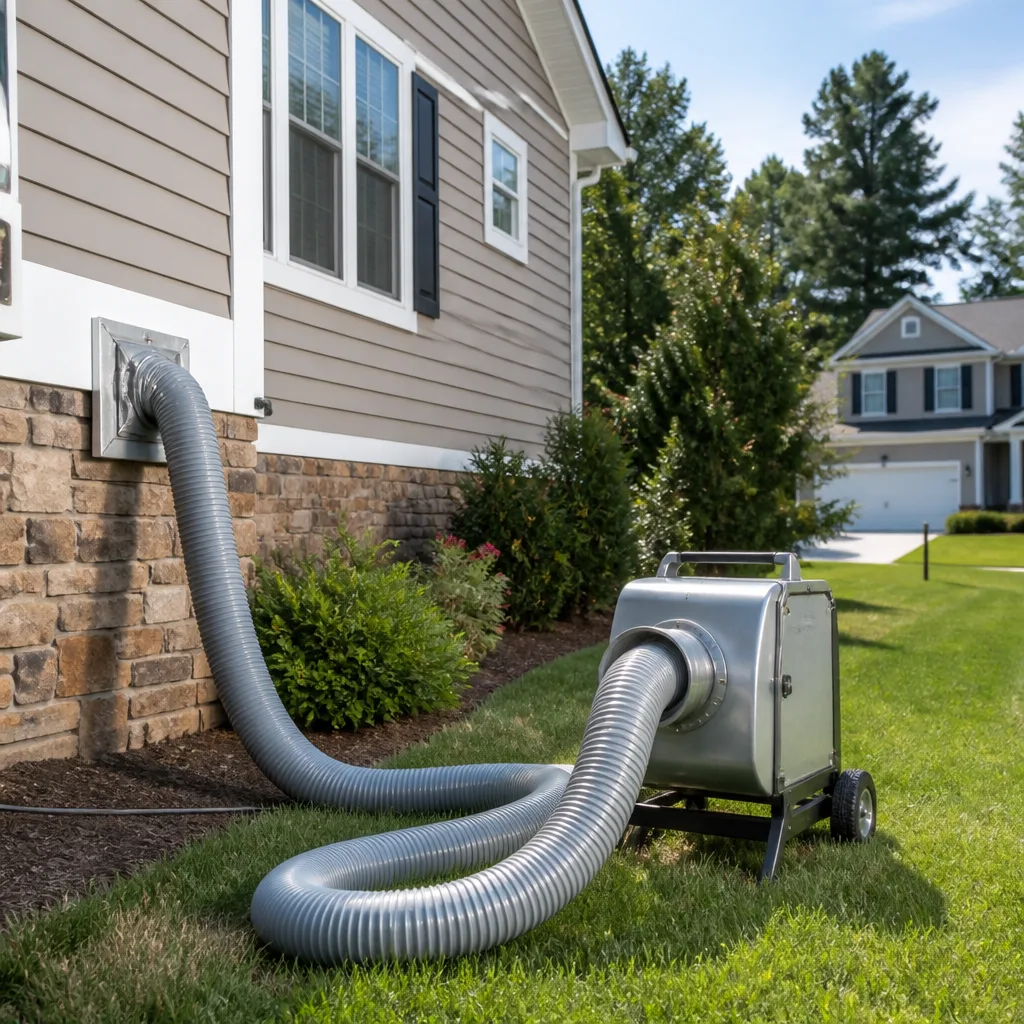 Whole-home duct cleaning
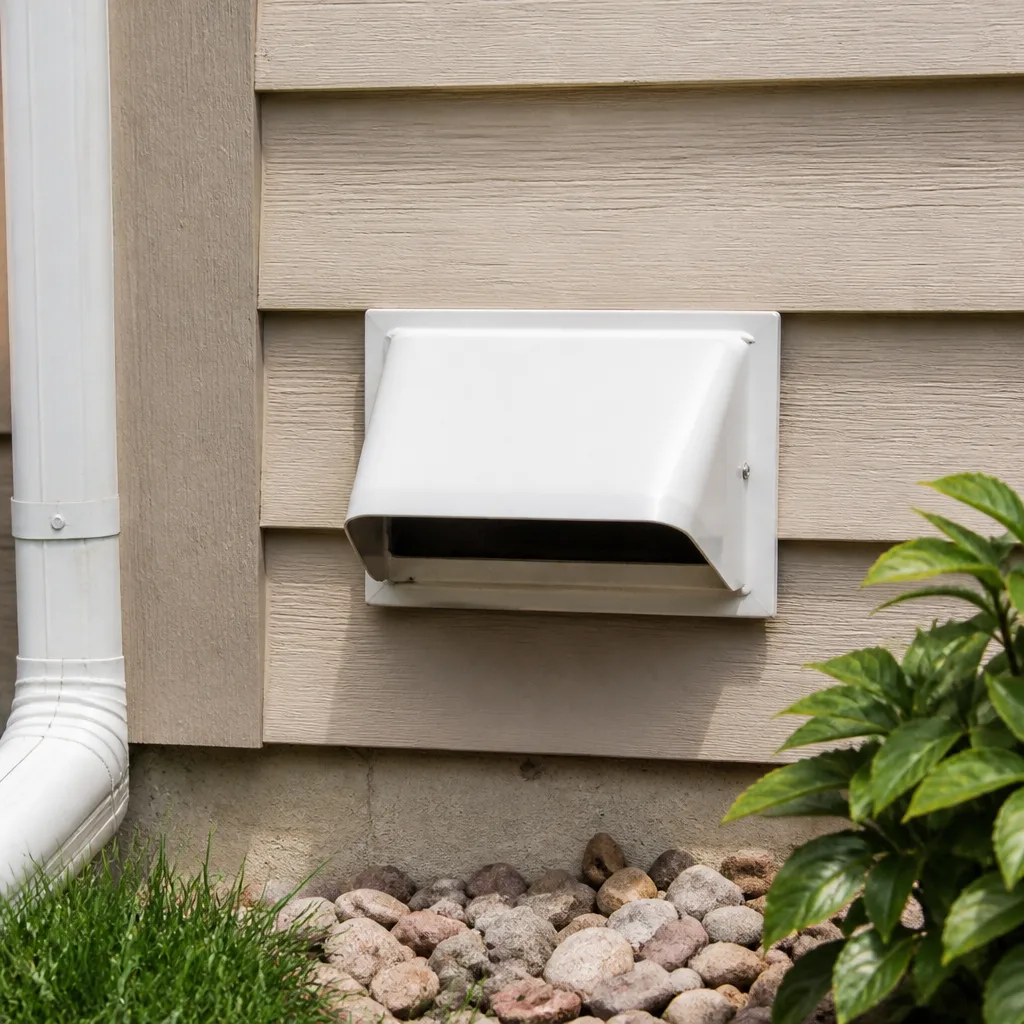 Dryer vent cleaning
 Camera inspection
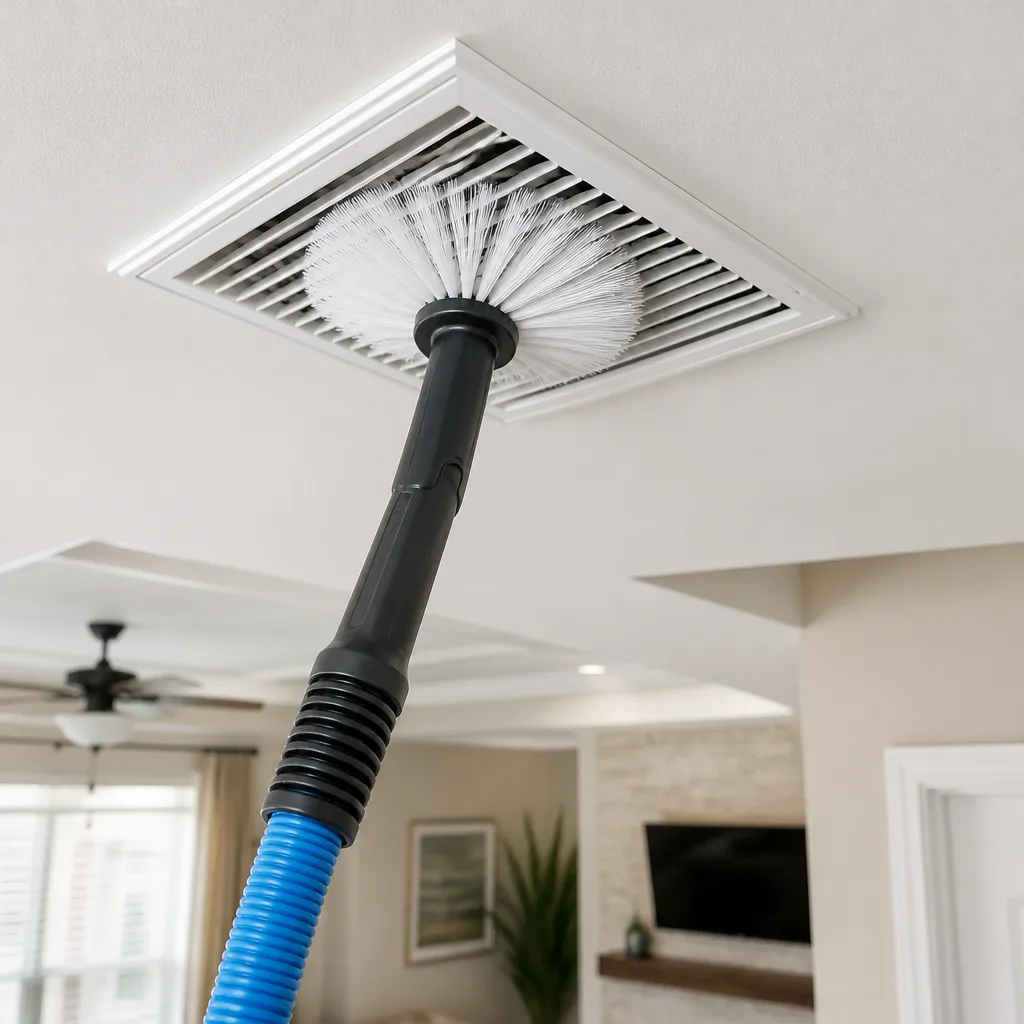 Sanitizing & deodorizing
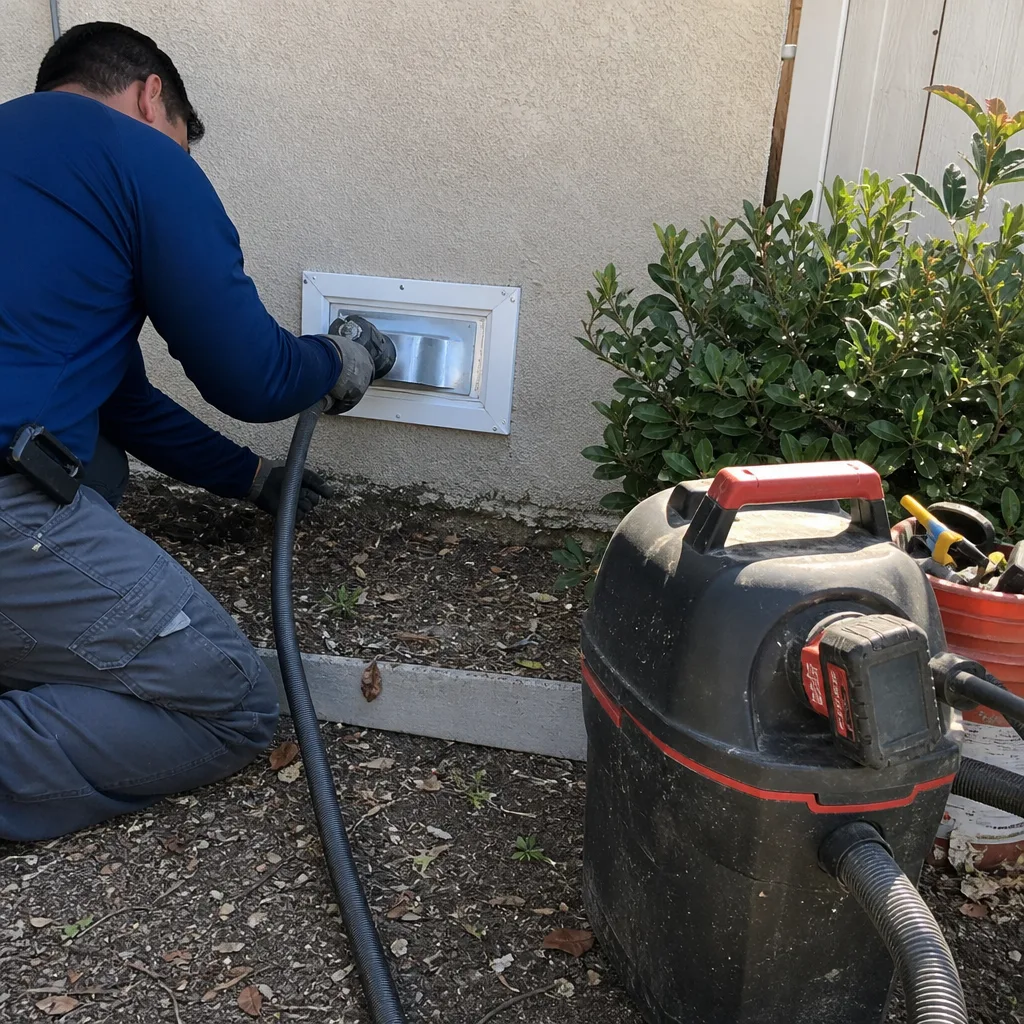
Whole-system duct and dryer vent check with before-and-after photos - you see exactly what came out of your vents
That "$99 whole-house special" is a bait ad - the real number appears once they are in your hallway, or the "clean" is a shop-vac at the register. We photograph the inside of your ducts before and after instead.
Air Duct Cleaning Warning Signs: A Rancho Cucamonga Homeowner’s Reference Guide
A musty smell that only appears when the AC first kicks on is not a sign you need air freshener. It is a sign of microbial growth in the air handler or evaporator coil area, and masking it with sanitizer spray without cleaning the source makes it worse. That is the difference between treating a symptom and diagnosing a problem, and it is the difference most generic duct cleaning advice misses. This guide will teach you how to read the specific warning signs your duct system gives you in Rancho Cucamonga, where summer heat, Santa Ana winds, and an active remodel market create a distinct set of conditions. You will learn which signs point to buildup, which point to breach, and which indicate contamination that requires more than a brush.
Quick Answer
The most telling air duct cleaning warning signs in Rancho Cucamonga are airflow problems (rooms that stay hot or cold, doors that slam on their own), odor patterns tied to specific conditions (musty smells on startup, burnt dust smells in winter), visible debris beyond dusty registers (pest droppings in return boots, debris rings around ceiling vents), and post-renovation dust. If you notice any combination of these, the duct system needs inspection rather than another air filter change. For a professional assessment, explore our Air Duct Cleaning services or call Timberline Air Duct Cleaning at (877) 265-9115.
Styles & brands we work with
- Whole-home duct cleaning
- Dryer vent cleaning
- Camera inspection
- Sanitizing & deodorizing
Table of Contents
- Airflow Warning Signs: What Your Rooms Are Telling You
- Odor Diagnostics: Reading the Smell of Your Ducts
- Visible Warning Signs Beyond Dusty Registers
- Post-Renovation Warning Signs: The Rancho Cucamonga Remodel Factor
- When Duct Cleaning Alone Isn’t Enough
- A Diagnostic Walkthrough: 7 Steps to Check Your Own System
- Common Mistakes to Avoid
- When to Call a Professional
Airflow Warning Signs: What Your Rooms Are Telling You
Most homeowners assume a dusty vent means dirty ducts. That is sometimes true, but airflow problems often arrive first, and they tell a more specific story. In Rancho Cucamonga, where summer temperatures routinely cross 100 degrees, airflow deficiencies become obvious quickly. The question is what they point to.
When one bedroom stays notably warmer than the rest of the house despite the thermostat reading correctly, you are looking at one of two problems. Either the duct run serving that room is restricted by debris buildup, or the duct itself has a leak or separation. These require different responses. A restricted duct responds well to cleaning with a rotary brush system. A breached duct needs repair, not cleaning, because the conditioned air is escaping into the attic or wall cavity before it ever reaches the room.
Pressure imbalances are another signal homeowners often dismiss as a quirk of the house. If interior doors slam shut when the air handler cycles on, or if you feel a noticeable push of air when opening a bedroom door, the system is fighting itself. Supply air is being delivered, but return air is not making it back to the unit. This frequently indicates a blocked or undersized return path, often caused by debris accumulation in return ducting or a collapsed return flex duct. In some Rancho Cucamonga homes built in the 1980s and 1990s, return air pathways were undersized from the start, which makes any restriction in the return side disproportionately disruptive.
Another airflow signal worth tracking is dust accumulation patterns. If one supply vent consistently shows a dust shadow on the wall or ceiling around it, the air exiting that register is carrying particulates. That points to either duct interior contamination or a breached return pulling attic dust into the system. When the supply side is clean but the return side is pulling from an unconditioned space, the air you breathe is being filtered through whatever is in the attic.
The distinction matters because the response differs. Duct cleaning addresses the contamination inside the ducts. Duct leakage requires sealing or repair. A company that only cleans cannot fix a breach, and a company that only patches cannot remove internal buildup. The diagnostic step is identifying which one you have.
Odor Diagnostics: Reading the Smell of Your Ducts
Odors are the most underdiagnosed warning sign in air duct systems because they are easy to misinterpret. Most people spray something and move on. But odor types map to specific problems, and each one points to a different response. In Rancho Cucamonga’s climate, where AC runs heavily for six months of the year and condensation cycles are frequent, moisture-related odors are particularly common.
A musty or wet-sock smell that appears only when the system first starts is almost always biological. The evaporator coil sits in a dark, damp environment that is ideal for microbial growth, and when the fan kicks on, it pushes that smell through the ductwork. Running the fan alone will not fix it. Cleaning the coil and sanitizing the accessible duct interior addresses the source. In some cases where the microbial growth has spread into the duct liner or insulation, more extensive work is needed. This is where contained cleaning matters, and it is why at Timberline Air Duct Cleaning we use Abatement Technologies negative-air and HEPA filtration to keep disturbed particulates out of living spaces during service. For more detail, see The Complete Air Duct Cleaning Guide for Rancho Cucamonga Homeowners.
A dusty or burnt-hair smell that appears when the furnace first cycles on in late fall is different. It points to accumulated debris sitting on the heat exchanger or inside the supply plenum. Dust settles there all summer while the AC runs, and the first time the burners fire, that dust heats up and releases that characteristic odor. It usually fades after a few cycles, but the debris remains. If the smell persists beyond the first few heating cycles of the season, the accumulation is significant enough to warrant removal. In houses with pets, this same heat-point debris often includes dander and hair, which intensifies the odor.
Chemical odors are less common but more concerning. In Rancho Cucamonga, where home turnover and remodeling are active, new carpeting, paint, cabinets, and flooring materials off-gas volatile organic compounds. Some of those compounds get pulled into the return side during construction and remain trapped in the ductwork. If you smell a persistent chemical or solvent-like odor through the vents weeks after a renovation, the ducts are holding construction-era air. A thorough cleaning with HEPA-filtered containment removes the particulates, but off-gassing from the materials themselves will continue until those materials cure. The distinction matters: if the smell is coming from the ducts, cleaning helps. If it is coming from the materials, time and ventilation are the primary remedies.
Visible Warning Signs Beyond Dusty Registers
The typical warning sign article tells you to look for dust on your vent covers. That is the shallowest possible signal, and in a dusty climate like Rancho Cucamonga, where the Santa Anas push fine particulate through every window seal, a dusty vent cover often just means the house is in the Inland Empire. The diagnostic value comes from looking at less obvious places.
One of the most important spots to check is the return air boot, the metal or fiberglass frame behind the return grille. Remove the grille, which is usually held by two screws or spring clips, and look inside. Pest evidence shows up here first. Rodent droppings, nesting material, and insect casings in the return boot mean the duct system has been used as a highway or a home. This is not a cleaning-only situation; it requires addressing the entry point and then cleaning the affected duct runs. In Rancho Cucamonga neighborhoods that back up to the foothills, rodents are an ongoing pressure, and return boots are a common entry point.
Debris rings on ceiling drywall around supply vents are another underused diagnostic. When a supply duct is breached in the attic, the air moving through it picks up insulation fibers and attic dust. That material deposits on the ceiling around the vent as the air exits into the room. If you see a gray or brown ring around a supply register that reappears after cleaning, you are looking at a duct breach above that vent, not a dirty room.
Inside the supply register itself, look past the vent cover into the first few inches of duct. If you see a thick, felted layer of gray-brown material that hugs the duct walls, that is accumulation. In a return flex duct, look for sagging or collapsed sections in the attic. A collapsed return flex is often visible from the attic access and indicates the duct needs replacement, not just cleaning.
Air filter condition offers another useful clue. If your filter loads up with visible debris within two to three weeks, the return side is pulling from an unconditioned, contaminated space. That is common when return ducting has separated at a joint inside the attic. The filter is doing its job, but it is acting as a bandage on a leak. The fix is locating and sealing the return breach.
Post-Renovation Warning Signs: The Rancho Cucamonga Remodel Factor
Rancho Cucamonga has an active remodeling market. Kitchen and bathroom renovations, flooring replacements, and room additions are constant, and many of them produce dust that finds its way into the duct system. Drywall dust is particularly problematic because it is fine enough to remain airborne for hours and gets pulled into return ducts whenever the system runs during construction.
The warning signs after renovation are specific. If you see a fine white dust re-appearing on surfaces within a day or two of cleaning, and that dust is concentrated in rooms served by the HVAC system rather than being evenly distributed, the ducts are acting as a reservoir. Every system cycle redistributes the dust throughout the house. Drywall dust is alkaline and abrasive. It degrades blower motor bearings over time and coats the evaporator coil, reducing heat transfer efficiency. It also tends to become embedded in flex duct liner, which makes surface-level cleaning insufficient. Rotobrush rotary brush agitation is designed for this: it mechanically scrubs the duct walls rather than just blowing air through them.
Insulation fibers are another renovation signal. If the work involved opening attic spaces or moving duct runs, fiberglass or cellulose insulation can enter the duct system through gaps at boots or separated joints. These fibers are visible as tiny glass-like particles in the dust around supply vents. They do not belong in the air you breathe, and their presence means the duct system was not properly protected during construction. Professional cleaning after renovation should include both the duct interior and the air handler cabinet, because construction dust infiltrates both.
A post-renovation sign that is often overlooked is reduced airflow to the renovated room itself. When contractors move or extend duct runs, the new section is sometimes undersized, poorly connected, or improperly supported. The room ends up warm in summer and cold in winter despite a new register. This is a duct design or installation issue that cleaning will not fix, and it should be diagnosed separately.
When Duct Cleaning Alone Isn’t Enough
One of the most important skills a homeowner can develop is knowing when cleaning will solve the problem and when it will not. Duct cleaning addresses contamination inside the ductwork: dust, debris, pest droppings, construction material, and surface-level microbial growth on the coil and inside the plenum. It does not fix structural problems, and it does not remediate mold that has penetrated porous materials.
If you have a breached duct, a separated joint, or a collapsed flex run, cleaning that section will not restore its function. The duct needs to be reconnected, resealed, or replaced. This is why Air Duct Repair is part of what we do at Timberline Air Duct Cleaning. In our experience, roughly one in five homes we inspect has some degree of duct leakage that affects performance regardless of how clean the interior is. When we find a problem during service, we repair it. We do not leave it behind with a note on the invoice.
If you see visible mold growth on registers, inside the duct liner, or on the air handler cabinet, cleaning is not the first step. Surface cleaning with a brush and agitation will not remove mold that has penetrated the fiberglass liner of flex duct or the insulation inside the air handler. Those materials typically need replacement. Professional mold testing can determine whether the growth is active and what type it is, but the practical reality is that porous materials with visible mold growth generally need to come out. In Rancho Cucamonga, the combination of high summer AC runtime and occasional winter humidity means condensation on the coil is constant. Once mold takes hold in the liner, it tends to return after cleaning because the material itself is compromised.
If the coil is heavily fouled, duct cleaning alone will leave the system underperforming. A coil caked with a felted mat of dust and pet hair restricts airflow and reduces heat transfer. The coil can often be cleaned in place as part of a thorough duct service, but in severe cases where the coil fins are corroded or the coil is inaccessible, replacement may be the honest recommendation. The diagnostic question is always: is the source inside the duct, or is the duct just the delivery mechanism for a problem located elsewhere?
A Diagnostic Walkthrough: 7 Steps to Check Your Own System
This sequence moves from the easiest observations to the most diagnostic. You can complete it in about thirty minutes, and it will give you a clearer picture of what you are dealing with than any checklist of generic symptoms.
- Check the filter. Remove the filter and hold it up to a light. If you cannot see light through it, it is loaded. If it loaded up within two to three weeks, suspect a return leak. Replace the filter and note the date.
- Inspect the return grille. Remove the return grille cover and look into the boot with a flashlight. Look for rodent droppings, nesting material, insect activity, or a thick accumulation of gray-brown debris on the boot walls.
- Examine supply registers. Look for dust shadows or debris rings on the ceiling or wall around each supply register. Remove one register cover in a bedroom and look into the first few inches of duct. A thick felted layer means buildup.
- Run the fan and listen. Turn the fan to “On” at the thermostat and walk the house. Listen for whistling at registers, which indicates airflow restriction. Feel for weak airflow in rooms that have always been comfortable.
- Test for pressure imbalance. With the fan running, open a bedroom door and close it from a few inches away. If the door slams shut, the room has a return air deficiency or the door is sealing tighter than the return path can accommodate.
- Smell test at startup. Turn the system off for an hour, then turn it on. Walk to a vent and smell. Musty means moisture and biological growth. Dusty or burnt means debris on the heat exchanger or in the plenum. Chemical means trapped renovation off-gassing.
- Check the attic, if accessible. Look at flex duct runs with a flashlight. Sagging, kinked, or collapsed sections indicate airflow problems. Disconnected joints will show as gaps or drooping tape. This is a visual inspection only; do not crawl onto ceiling joists unless you are experienced and the attic is designed for access.
These seven steps cover the most common warning signs without requiring specialized tools. If you find evidence of pest activity, collapsed ducts, or persistent musty odor, the next step is a professional inspection.
Common Mistakes to Avoid
- Masking odors instead of diagnosing them. Air fresheners, vent clips, and sanitizing sprays treat the symptom. A musty startup smell is a moisture problem, and it will continue until the moisture source is addressed. Masking it gives the problem more time to spread into duct liner and air handler insulation.
- Assuming a dusty vent means dirty ducts. In Rancho Cucamonga, surface dust on vent covers is often just ambient dust from the surrounding environment. The diagnostic question is whether dust is coming from inside the ducts or from the room itself. A debris ring around the vent answers that question more reliably than the dust on top of it.
- Running the system during renovation without sealing the returns. If you are remodeling, seal off return openings or keep the HVAC off while cutting, sanding, or demolition is happening. Once drywall dust enters the return system, it spreads through the entire house and into the blower motor and coil.
- Choosing a duct cleaner based on a low coupon price. The bargain model in this industry often relies on minimal equipment and quick turnaround. What gets skipped is agitation, containment, and inspection. You cannot thoroughly clean a duct system with a wand and a shop vacuum. Equipment matters, which is why we run Rotobrush rotary brush systems and Nikro HVAC cleaning equipment on every job.
- Deferring dryer vent cleaning because the dryer still works. A dryer vent that is partially blocked will still dry clothes, just less efficiently. But the lint that accumulates is combustible, and the heat that builds up in a restricted vent is a fire risk. In homes where the dryer vent run is long or has multiple turns, which is common in Rancho Cucamonga single-story layouts, the risk compounds. Dryer vent cleaning is a fire-prevention service, and we treat it that way.
- Ignoring pressure imbalances as a house quirk. Slamming doors and uneven temperatures are not personality traits of an older home; they are symptoms of a duct system that is not moving air the way it was designed to. The fix is diagnostic, and it is usually less expensive than years of higher energy bills.
When to Call a Professional
Some warning signs are unambiguous. If you see visible mold growth on registers or inside accessible duct openings, call a professional. If you find rodent droppings or nesting material in the return boot, call a professional. If you have persistent musty odor that does not resolve with coil cleaning, call a professional. If your airflow problems are room-specific and getting worse, call a professional. If you have just completed a renovation and white dust reappears on surfaces within days of cleaning, call a professional. These are not situations where another filter change or a $49 duct cleaning coupon is the appropriate response. Timberline Air Duct Cleaning offers free estimates in Rancho Cucamonga. Call (877) 265-9115 and we will inspect the system, identify what is actually going on, and give you a straight answer about what needs to be done.
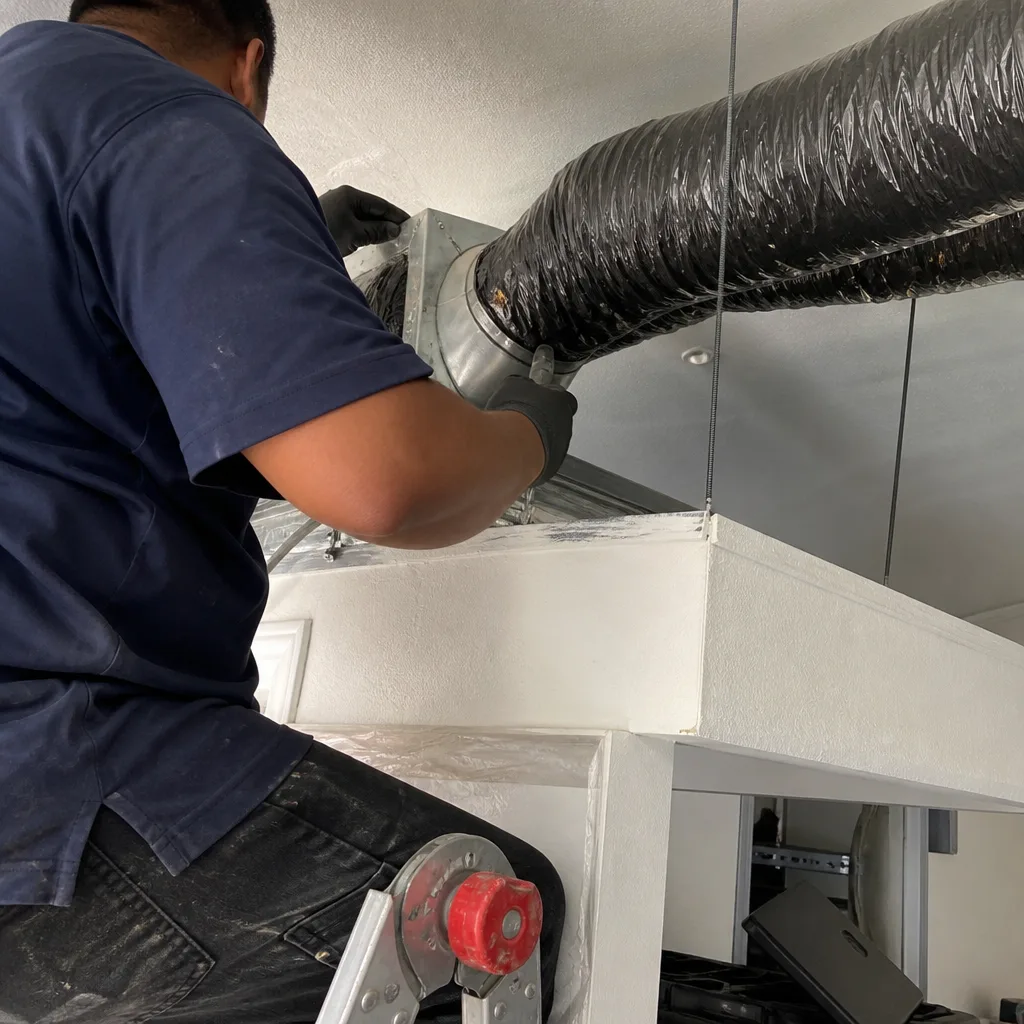
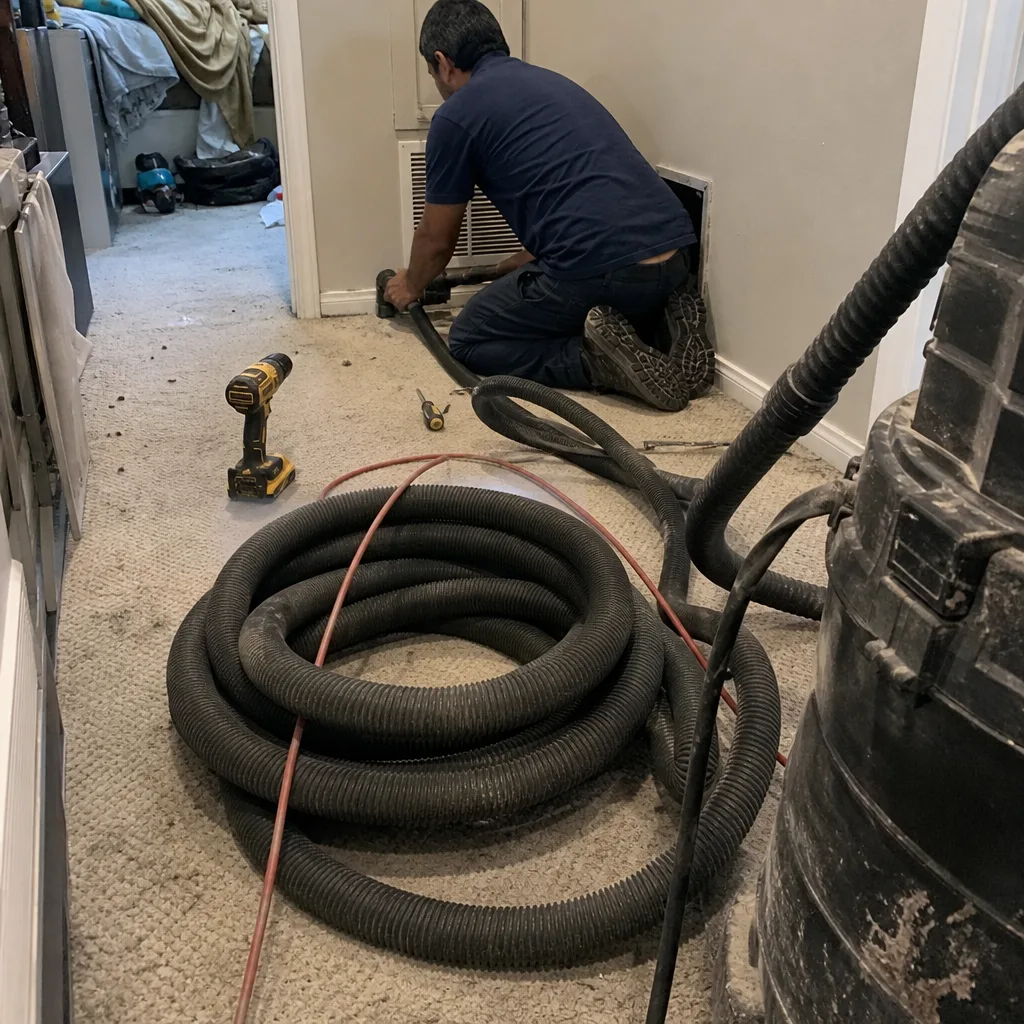
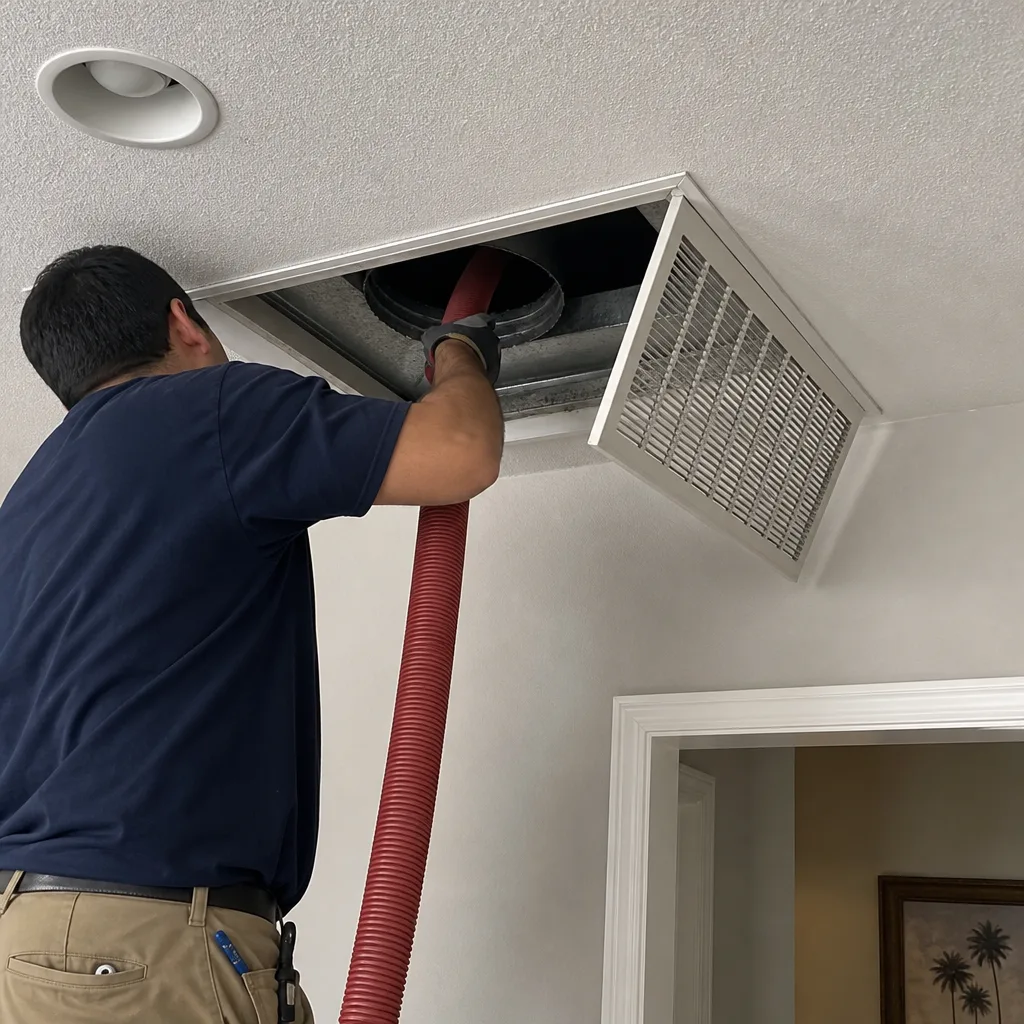
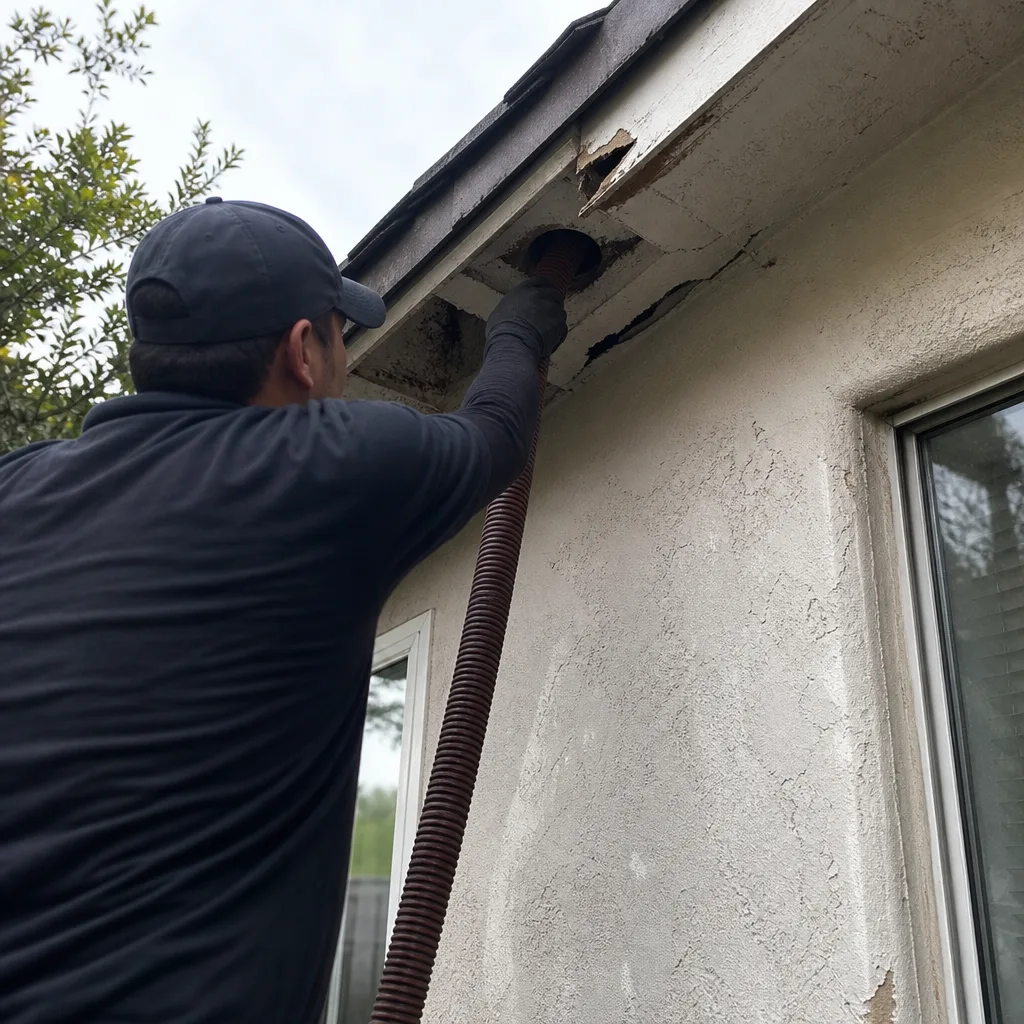
See the difference
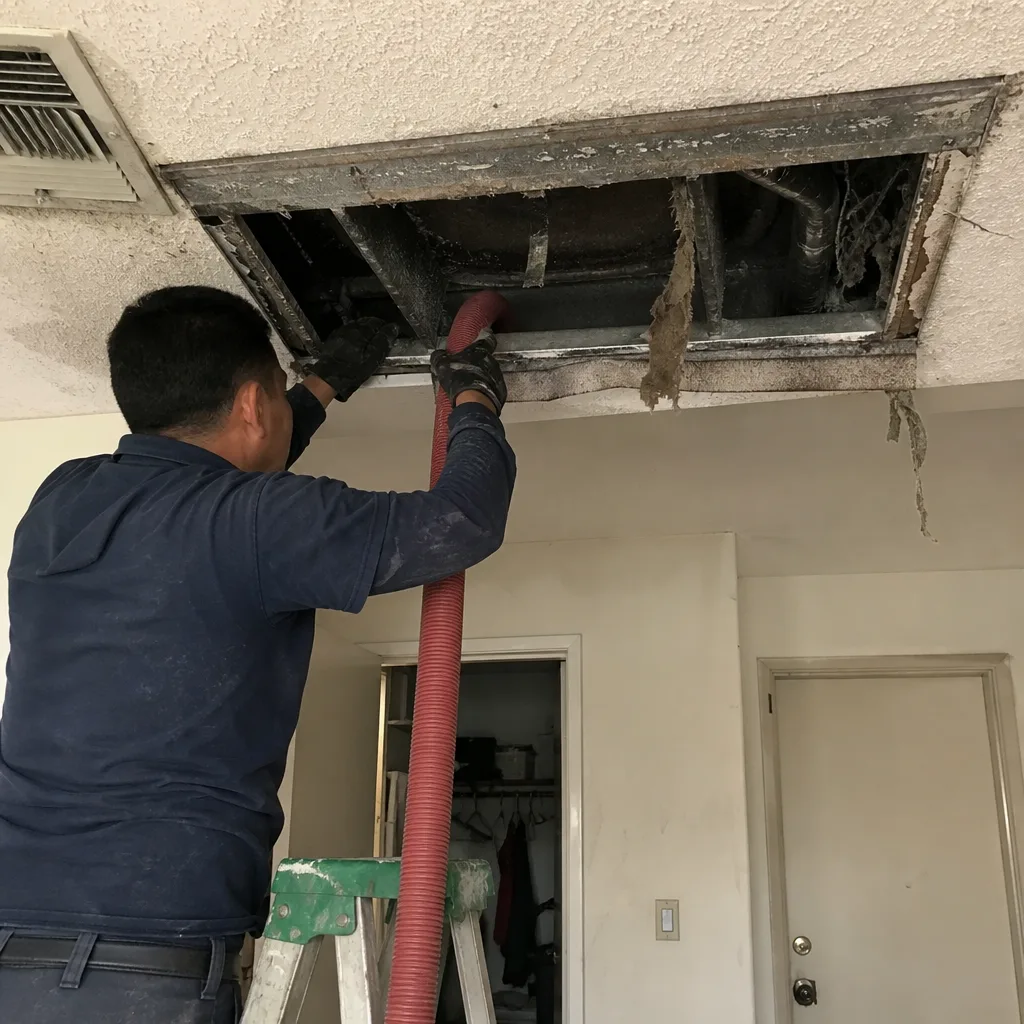 Before
 After
 Before
 After
 Before
 After
Frequently Asked Questions
Air duct cleaning in Rancho Cucamonga typically ranges from $400 to $800 for a full system, depending on the size of the home, the number of returns, and the condition of the ductwork. The price should include cleaning of supply and return ducts, the air handler, and the blower assembly. It should not be quoted as a per-vent price because that creates an incentive to under-clean. Call (877) 265-9115 for a free estimate specific to your home.
Cheaper quotes usually mean less equipment, less time on site, and fewer surfaces actually cleaned. A thorough duct cleaning requires mechanical agitation with a rotary brush system, not just vacuuming from the register openings. It also requires negative-air containment to keep dislodged debris from blowing into the living space. Companies that skip those steps can charge less because they are doing less. The question to ask any company is what equipment they run and what their process includes.
Ask for before-and-after photos of your own ductwork. A reputable company will photograph the interior of the ducts before and after cleaning, typically using a camera system or by capturing images at each register and at the air handler. You should see a visible difference between the before and after images. If a company cannot or will not provide that documentation, find one that will.
For most homes in Rancho Cucamonga, every 3 to 5 years is a reasonable schedule. Homes with pets, smokers, active renovation history, or occupants with respiratory conditions may benefit from more frequent cleaning. Homes that have never been cleaned and are 20 years old or older typically need it sooner. The honest answer is that the interval depends on what is in your ducts, and that is determined by inspection, not calendar.
Duct cleaning removes contamination from the interior of the duct system: dust, debris, pest evidence, and construction material. Air duct repair addresses structural problems: disconnected joints, breached ducts, collapsed flex runs, and poorly sealed connections. A thorough duct service should include inspection for both. If a problem is found during cleaning, the company should be able to repair it, not leave it behind for someone else.
Dirty ducts can contribute to indoor air quality problems by distributing allergens such as dust mite waste, pet dander, and pollen through the living space. In Rancho Cucamonga, where outdoor allergens are present year-round and Santa Ana winds push fine particulate through every gap, a duct system that is holding and redistributing those particles adds to the load your respiratory system is already managing. Cleaning the ducts reduces one source of indoor particulate exposure, which is meaningful for people who already manage allergies or asthma.
The Bottom Line
Most duct cleaning warning sign articles stop at dusty vents, and that is why most homeowners either overreact to a trivial symptom or underreact to a serious one. The diagnostic approach is different. Airflow problems tell you whether the issue is restriction or breach. Odors tell you whether the issue is biological, particulate, or chemical. Visual evidence in return boots and around supply registers tells you whether you are dealing with pests, leaks, or renovation debris. And knowing when cleaning is not enough, when you need repair, replacement, or mold evaluation, saves you from paying for a service that does not solve the problem. If you have noticed any of the signs described in this guide, call Timberline Air Duct Cleaning at (877) 265-9115 for a free estimate. We are a full-service duct company serving Rancho Cucamonga, which means we handle Air Duct Cleaning in Rancho Cucamonga, Dryer Vent Cleaning in Rancho Cucamonga, and Air Duct Repair in Rancho Cucamonga from one truck, with commercial-grade Rotobrush and Nikro equipment and Abatement Technologies containment on every job. You can learn more about Timberline Air Duct Cleaning home services or call us directly to schedule an inspection.
Written by the team at Timberline Air Duct Cleaning, serving Rancho Cucamonga since 2014. For more guides & resources, visit our blog.