
Last updated November 2, 2026
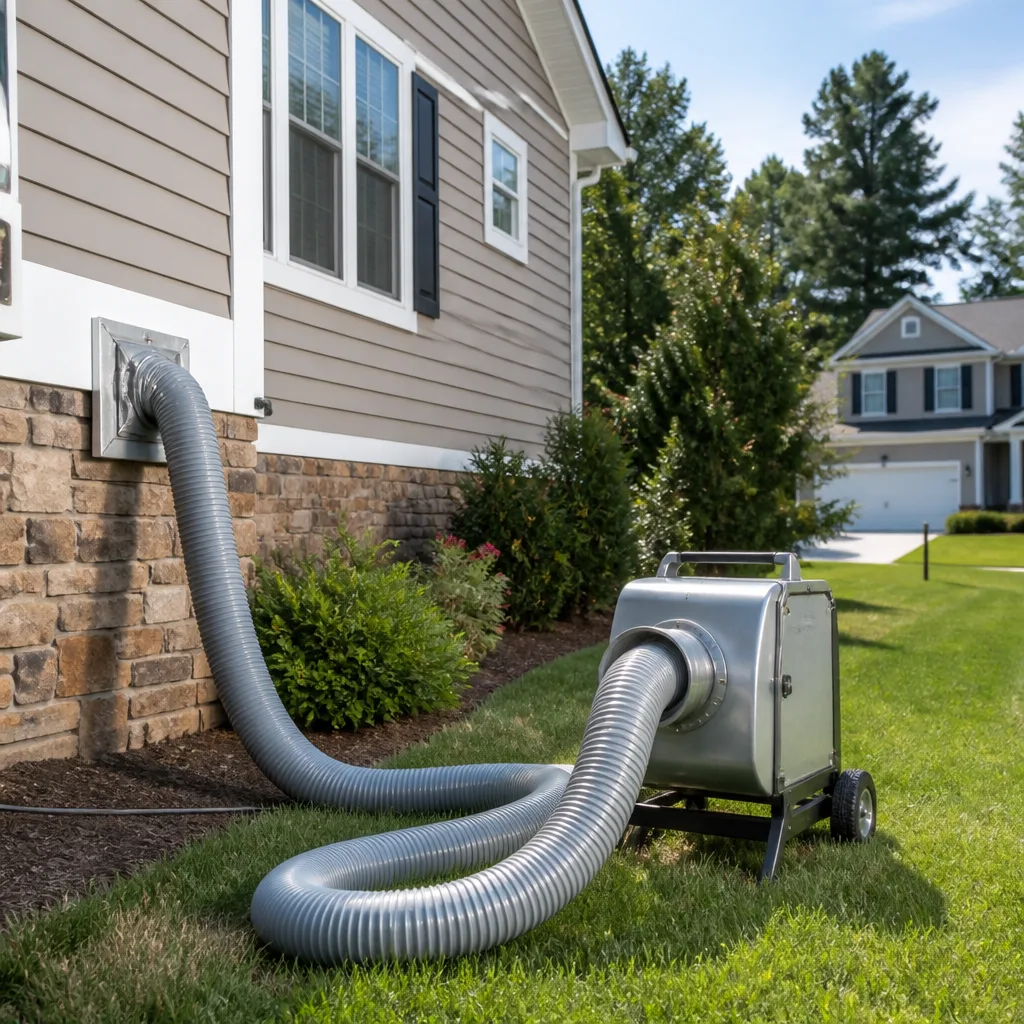 Whole-home duct cleaning
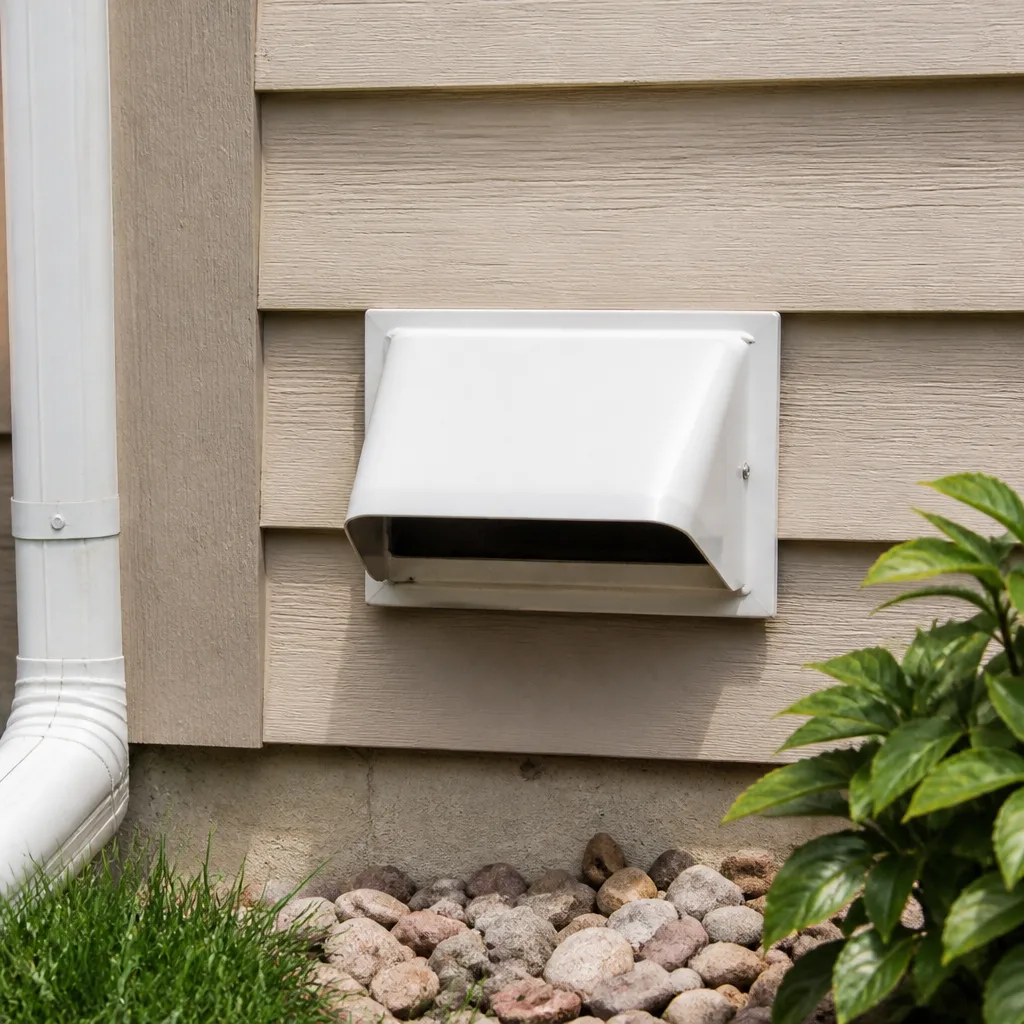 Dryer vent cleaning
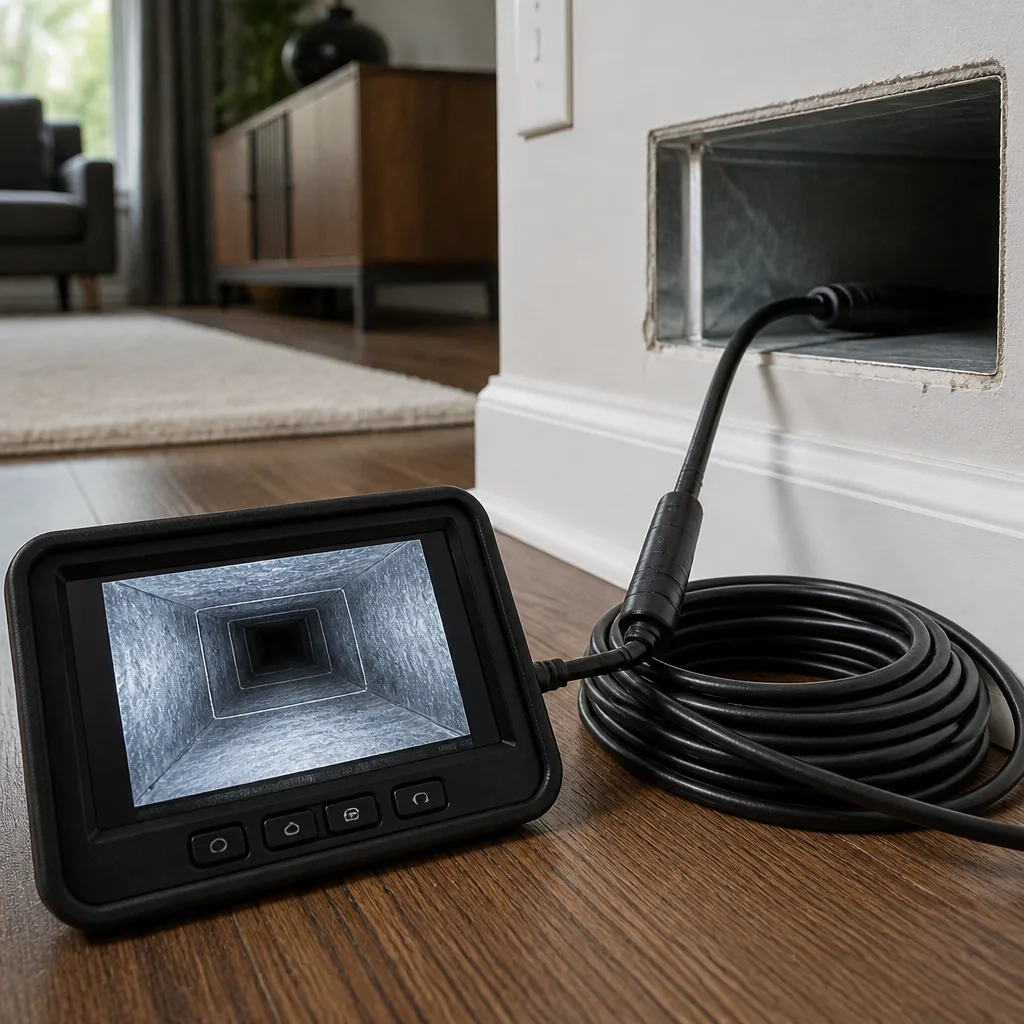 Camera inspection
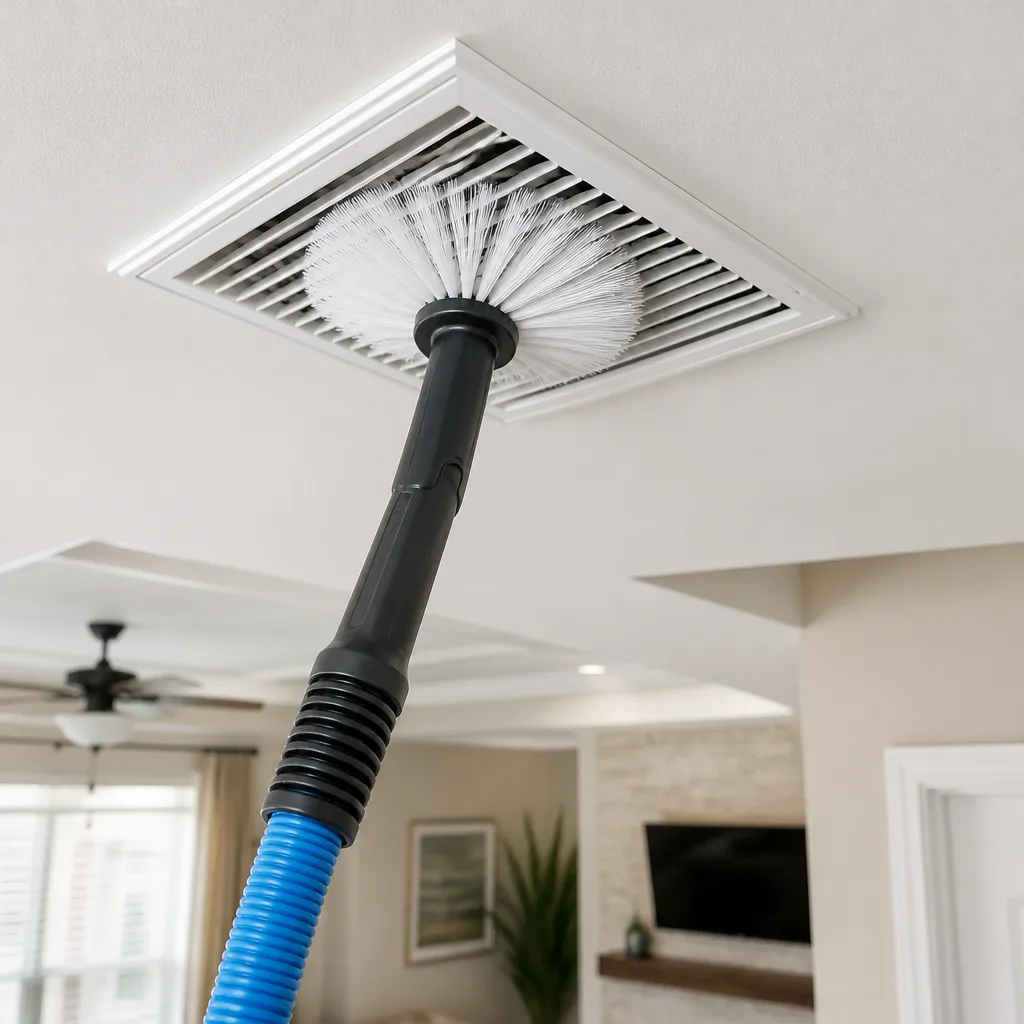 Sanitizing & deodorizing
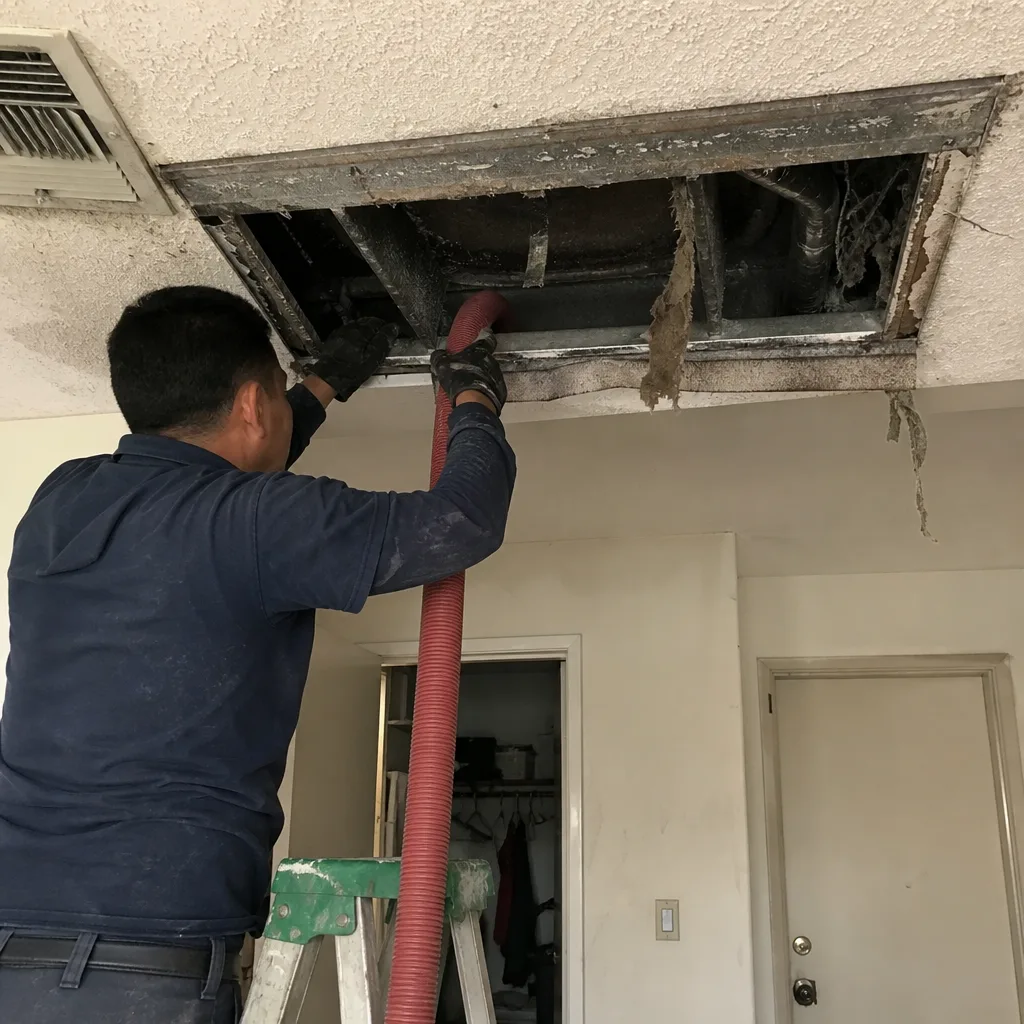
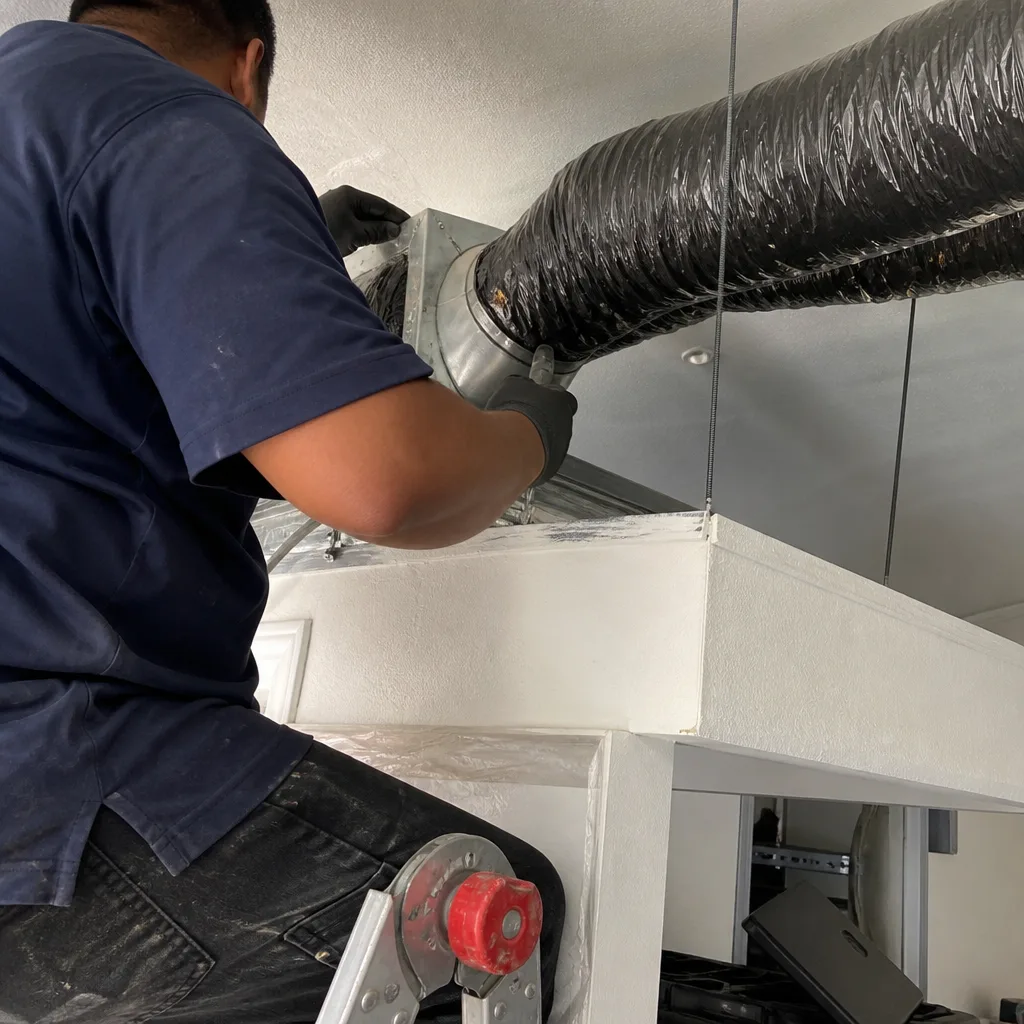
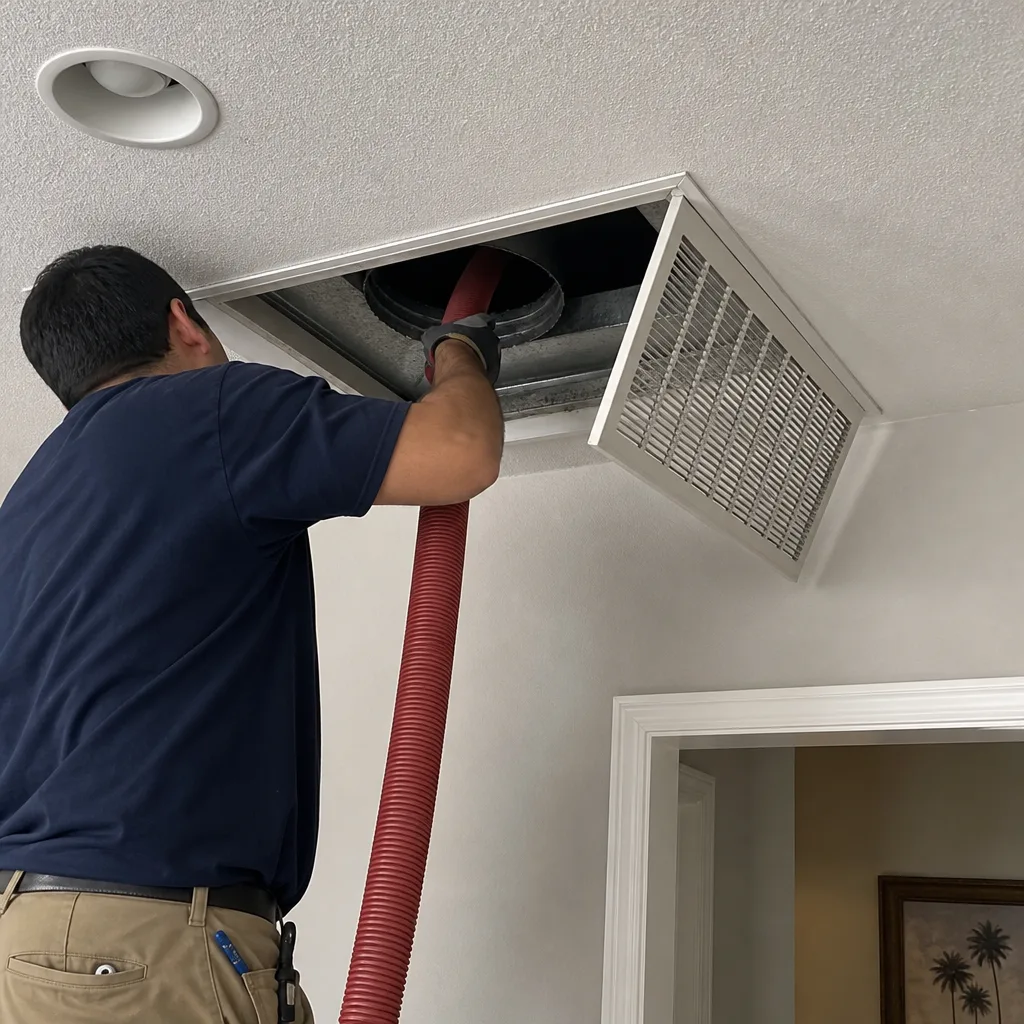
Whole-system duct and dryer vent check with before-and-after photos - you see exactly what came out of your vents
That "$99 whole-house special" is a bait ad - the real number appears once they are in your hallway, or the "clean" is a shop-vac at the register. We photograph the inside of your ducts before and after instead.
Air Duct Cleaning Emergency Preparedness Guide for Rancho Cucamonga Homes
Most Rancho Cucamonga homeowners don’t think about their ductwork until something goes wrong. But here’s the uncomfortable truth: the same geography that gives us mountain views and warm afternoons also puts our HVAC systems in the path of three distinct emergency scenarios that almost never appear together on any other duct cleaning guide. Wildfire smoke that saturates filter media and coats return plenums with fine ash. Seismic events that can separate flex duct connections behind drywall where you’ll never see them. Power surge damage that fries blower motor control boards and leaves a system limping along while circulating degraded air. This guide is built from what we’ve seen inside Rancho Cucamonga duct systems after each of these events. You’ll learn exactly what to do before, during, and after an emergency, what settings to change on your thermostat tonight, and how to assess whether your ducts need professional attention. If you live in Rancho Cucamonga, this is the preparedness plan your HVAC system has been missing.
Quick Answer
Air duct emergency preparedness for Rancho Cucamonga homes means three things: knowing the correct HVAC settings during wildfire smoke events (recirculate mode, MERV 13 filter, sealed returns), knowing how to inspect your system after an earthquake or power surge, and having a response plan that sequences the right professionals in the right order. For most emergency scenarios, the duct cleaning call comes after the HVAC system check, not before. If your ducts have absorbed wildfire smoke particulate or post-earthquake debris, professional cleaning with rotary brush and HEPA filtration equipment is the most reliable way to remove combustion byproducts and restore clean airflow.
Styles & brands we work with
- Whole-home duct cleaning
- Dryer vent cleaning
- Camera inspection
- Sanitizing & deodorizing
Table of Contents
- Wildfire Smoke Protocol: Exact HVAC Settings for Active Smoke Events
- Post-Smoke Assessment: Reading the Signs Your Ducts Absorbed Particulate
- Earthquake Duct Integrity: What Seismic Movement Does to Flex Duct
- Power Surge Recovery: Blower Motors, Control Boards, and Safe Restart
- Building a Rapid-Response Contact List for Rancho Cucamonga
- Why Equipment Matters After an Emergency
- Preventive Hardening: Duct-System Upgrades Worth Making Now
- Common Mistakes to Avoid
- When to Call a Professional
- Frequently Asked Questions
Wildfire Smoke Protocol: Exact HVAC Settings for Active Smoke Events
During the 2019 Tick Fire and 2020 Bobcat Fire smoke events, residents across the Inland Empire who ran their HVAC systems without switching to recirculation mode pulled exterior smoke directly through their ductwork and deposited fine ash throughout the system. The fix was not a filter change. The fix was a full mechanical cleaning of every supply run, return drop, and the air handler cabinet. This mistake is avoidable, and it starts with understanding how your thermostat settings control what enters your ducts.
Rancho Cucamonga sits in a smoke pathway. When fires burn in the San Gabriel foothills or further north in the Angeles National Forest, our prevailing wind patterns funnel smoke directly into the city. The air quality index here during active fire events routinely exceeds 150, sometimes spiking past 300 in neighborhoods like Alta Loma and the northern reaches near the foothills. At those levels, the decision you make at your thermostat determines whether your ductwork becomes a filtration casualty.
Settings to Change Immediately When Smoke Reaches Rancho Cucamonga
- Switch your thermostat fan setting from “Auto” to “On.” This keeps air moving through the filter continuously, which captures more particulate than intermittent cycling. It does increase energy use slightly. It also protects the system from smoke settling in stagnant duct sections between cycles.
- Close the outdoor air intake damper. Many Rancho Cucamonga homes built after 2000 have a fresh-air intake connected to the return plenum. This damper is usually located near the air handler. If it stays open, you are actively pulling smoke into the ducts even with the fan on. Close it. Mark the location now so you can find it quickly when smoke arrives.
- Upgrade to a MERV 13 filter before smoke season starts. MERV 13 media captures fine smoke particulate (PM2.5) far more effectively than the MERV 8 fiberglass filters many homes still use. Confirm your blower can handle the added static pressure; most modern systems can, but if you have an older single-stage unit, have an HVAC tech verify before installing.
- Seal return air leaks in the attic and garage. Returns that draw air from unconditioned spaces will pull smoke in around gaps in the return ductwork. Foil tape and mastic sealant applied to return joints before smoke season prevents contaminated air from bypassing the filter entirely.
- Run a standalone HEPA air purifier in the main living space. This reduces the particulate load your HVAC filter must handle and gives the system a fighting chance during extended smoke events. It is not a substitute for proper duct sealing, but it reduces the overall burden.
In our experience with Rancho Cucamonga homes after the Bobcat Fire, the systems that fared best had three things in common: a MERV 13 filter already installed, a closed fresh-air intake, and a homeowner who switched the fan to “On” at the first smell of smoke. The systems that required the most extensive cleaning were those that ran in “Auto” mode with the intake open, pulling smoke through the returns for days at a time.
Post-Smoke Assessment: Reading the Signs Your Ducts Absorbed Particulate
Once the air clears and the smoke plume moves out of Rancho Cucamonga, you have a decision to make. A filter change addresses the filter media. It does not address what already passed through the system while the filter was loading up or while the intake was open. Understanding what combustion byproduct deposition looks like inside ductwork is how you determine whether professional Air Duct Cleaning in Rancho Cucamonga is warranted.
Wildfire smoke is not dust. The particulate is finer, chemically different, and more adherent. Soot from burning vegetation and structures contains volatile organic compounds that bind to duct surfaces and insulation. When the system runs normally after the event, these compounds can off-gas into the living space for months. The first mechanical cooling cycle after a smoke event will often produce a distinct campfire odor even weeks later, because the evaporator coil has accumulated a layer of smoke residue that rehydrates when condensation forms.
Signs your ducts absorbed smoke particulate:
- Persistent smoke odor when the system runs, especially in the first few minutes after startup, indicating residue on the blower wheel or heat exchanger.
- Gray or black streaking on supply register faces, which shows particulate was being blown through the system and deposited at the point of exit.
- A fine gray film on furniture and window sills near supply registers, distinct from normal household dust in both color and texture.
- Accelerated filter loading in the weeks after the event, as loose particulate in the ducts continues to re-enter the airstream.
- Eye or respiratory irritation when the system runs, particularly in children or adults with asthma, indicating fine particulate is still circulating.
If you see two or more of these signs, the appropriate scope of work is not a quick vacuuming. It is a full-system mechanical cleaning that includes the supply and return ductwork, the air handler cabinet, the blower wheel, the evaporator coil, and the register boots. Combustion byproduct removal requires agitation and extraction, not just airflow. This is where the difference between equipment types becomes obvious. A rotary brush system physically scrubs duct surfaces to dislodge adhered soot. A negative-air HEPA filtration setup then captures that dislodged material so it does not recirculate into your living space during the service.
Earthquake Duct Integrity: What Seismic Movement Does to Flex Duct
Rancho Cucamonga sits within the influence of the San Jacinto Fault Zone, the San Andreas Fault, and a network of smaller faults that run through the Inland Empire. Moderate shaking, the kind we experience every few years, is more than enough to stress the mechanical connections in a residential duct system. And unlike a broken window or a cracked wall, a separated duct joint is invisible. It happens in the attic, in the wall cavity, or in the crawlspace under the house. The first sign is usually a room that suddenly stops cooling properly or a utility bill that climbs without explanation.
Flex duct, the insulated flexible tubing used to connect rigid trunk lines to supply registers, is particularly vulnerable. It is joined to the trunk line and the register boot with plastic zip ties and foil tape. Over time, both degrade in the heat of a Rancho Cucamonga attic, where summer temperatures regularly exceed 140 degrees. An earthquake adds lateral and vertical force to connections that may already be compromised. The result is a duct that pulls away from the boot, leaving a gap that lets attic air, insulation particles, and whatever else lives up there enter the conditioned space.
A post-earthquake duct integrity check involves:
- Visual inspection of accessible duct sections in the attic or crawlspace. Look for separated joints, sagging flex runs, crushed sections, and any point where the inner liner is visible. Bring a flashlight and a camera.
- Feeling for airflow at each register with the system running. A room that used to cool well and now struggles may indicate a disconnected run serving that room.
- Comparing room temperatures across the house. A temperature differential of more than 3 degrees between rooms on the same floor after the system has been running suggests a supply problem, often a disconnected or kinked duct.
- Checking for dust accumulation patterns. If one room suddenly collects dust faster than before, the duct serving that room may be pulling air from the attic, not the supply trunk.
- Listening for unusual air movement sounds in walls or ceilings. A hissing noise when the system runs can indicate a leak at a joint or a separated connection.
If you find a disconnected duct, do not attempt to repair it with duct tape. Standard cloth duct tape fails within months in attic heat. The joint must be reconnected with a properly sized zip tie, sealed with UL-listed foil tape, and re-insulated. If the flex duct itself is torn or crushed, the section needs replacement. This is Air Duct Repair in Rancho Cucamonga work, and it is well within an afternoon for a technician who has the materials on the truck. The bigger risk is leaving it unaddressed for months, pulling attic air into the home every time the system cycles.
Power Surge Recovery: Blower Motors, Control Boards, and Safe Restart
Rancho Cucamonga’s electrical grid deals with more than most. Summer heat pushes demand to the limit. Santa Ana winds knock tree limbs into power lines. And when the power comes back on after an outage, the inrush surge can damage sensitive electronic components in modern HVAC equipment. Blower motor control boards, ECM motor modules, and thermostat circuitry are all vulnerable to the voltage spikes that accompany grid restoration.
The duct connection here is less obvious but equally important. When a blower motor control board fails, it seldom fails cleanly. More often, it fails intermittently. The motor runs at brownout voltage. The system short cycles. Airflow becomes inconsistent. Each of those conditions changes the pressure dynamics in the duct system, and in the worst cases, a struggling blower can pull air backward through the return and deposit combustion byproducts from the furnace into the living space. If your system is acting strangely after a power event, the ducts are along for the ride.
Safe restart protocol after a power outage or surge event:
- Turn the system off at the thermostat before power is restored. If you know an outage is coming, shut the system down. This prevents the compressor and blower from attempting to start against a brownout condition when power returns.
- Wait 10 to 15 minutes after power restoration before restarting. This gives the grid time to stabilize and allows surge protectors to reset.
- Listen for unusual sounds on startup. A grinding blower, a buzzing contactor, or a clicking control board are all signs the system took damage. Shut it down and call an HVAC tech before running it further.
- Check the thermostat display. A blank screen, scrambled characters, or failure to respond to inputs indicates terminal damage. A restart may clear a glitch, but repeated failures indicate a real problem.
- If the system runs but airflow feels weak or intermittent, shut it down. A damaged blower motor can overheat, and an overheating motor can damage the insulation on nearby wiring.
For homes with whole-house surge protection installed at the panel, the risk is significantly lower. These devices clamp voltage spikes before they reach HVAC components. They are inexpensive relative to the cost of a new ECM blower motor or control board. If you are upgrading your system’s surge protection, consider having an HVAC tech evaluate whether your control board, blower motor, and thermostat connections are rated for the current electrical environment. Some older systems benefit from adding a dedicated surge protector at the disconnect box.
Building a Rapid-Response Contact List for Rancho Cucamonga
Emergency response is about sequence. The order in which you call people determines how quickly your system recovers and whether you pay for work that should have been done differently. Here is the order that has proven most effective for Rancho Cucamonga homeowners dealing with the three emergency types covered in this guide.
Order of operations by emergency type:
Wildfire Smoke Event
- HVAC technician first: Inspect the air handler, blower wheel, and coil for smoke residue. Determine whether the system is safe to run and whether the filter needs upgrading before restart.
- Duct cleaning specialist second: If the technician finds smoke residue in the supply or return ductwork, schedule a full mechanical cleaning with rotary brush agitation and HEPA extraction. Duct cleaning comes after the source equipment is assessed, not before.
- IAQ tester third (optional): If occupants have significant respiratory sensitivities, post-cleaning air sampling can document that particulate levels have returned to baseline. This is not necessary for every home but adds verification for households with asthma or COPD.
Earthquake Event
- Duct inspection first: The specific question is whether any flex duct connections separated or any rigid sections cracked. This is a visual inspection that takes less than an hour and answers the question directly.
- HVAC technician second: If the inspection reveals no duct issues but the system is not performing correctly, the problem is mechanical or electrical, not duct-related.
- Duct cleaning third (if indicated): If the earthquake dislodged debris into the system, or if attic insulation has been pulled into the airstream through a separated joint, cleaning is warranted after repairs are complete.
Power Surge or Outage
- HVAC technician first: Check the control board, blower motor, capacitor, and thermostat for surge damage. This is an electrical diagnosis and should precede any duct-related work.
- Duct assessment second: If the system ran in a brownout or short-cycled repeatedly, a quick visual check of the duct runs near the air handler can identify any heat-related damage or dislodged joints.
- Duct cleaning third (if indicated): If the system was pulling contaminated air during the event, cleaning may be warranted once the electrical issues are resolved.
The key insight here is that duct cleaning is rarely the first call in an emergency. It is the call that completes the recovery. The exception is a smoke event, where duct cleaning is often the most time-sensitive of all the services, because soot residue that remains in the system continues to off-gas into the living space with every cycle. In that scenario, the cleaning should be scheduled as soon as the smoke has cleared and the system can be safely serviced.
Why Equipment Matters After an Emergency
Post-emergency duct cleaning is a different job than maintenance cleaning. The contaminants are finer and more adherent. The particulate is health-relevant, not just heavy dust. And the margin for error is smaller because the whole point is to remove what should not be there, not to stir it around. This is where the equipment conversation becomes crucial for Rancho Cucamonga homeowners who want a real result.
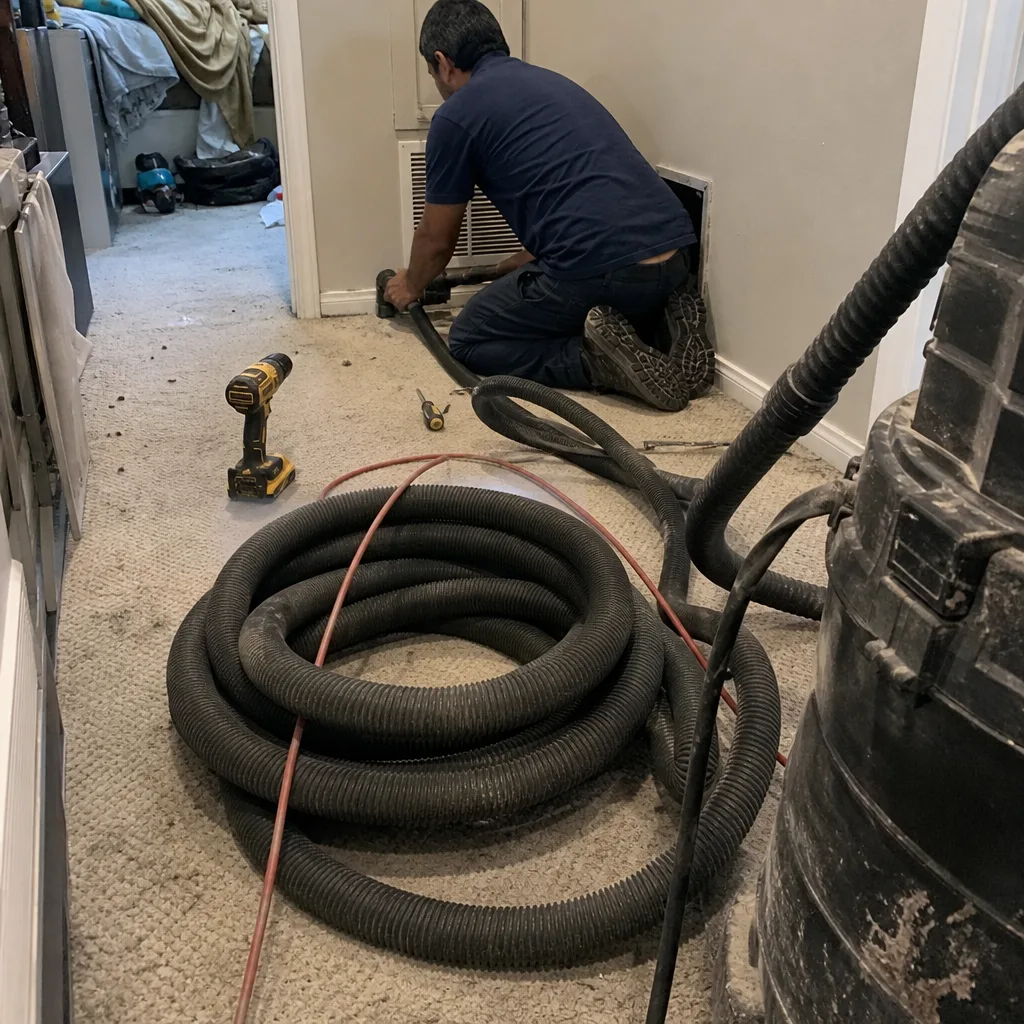
We run a Rotobrush rotary brush system on every duct cleaning job. The distinction matters because a rotary brush applies mechanical agitation to the duct surface. It scrubs the adhered soot and smoke particulate loose. A wand-only or blower-only method moves air through the ducts but does not physically agitate the surface film. In our experience, the systems that required the most cleaning after the Bobcat Fire were the ones where the homeowner had a wand-only cleaning done once and then found the odor returned within weeks. The film was still there. It just got a haircut.
Nikro HVAC cleaning equipment, the same brand trusted by restoration and remediation contractors, provides the negative-air extraction capability that keeps dislodged debris from recirculating into the living space. This is the contained cleaning approach that matters after an emergency. Without negative-air containment, the dust and particulate that the brush loosens can be pushed back into the home through register faces, settling on surfaces and re-entering the breathing zone.
Abatement Technologies equipment extends that containment principle further. Their HEPA-filtered negative-air systems create a pressure differential that holds contaminants inside the duct and moves them to a filtered exhaust point outside the living space. For post-wildfire smoke cleanup, where the particulate is fine enough to remain suspended in air for hours, this is not a luxury. It is the difference between removing the material and relocating it.
If you are comparing quotes after an emergency, ask the direct question: what equipment will be used and how will you contain the debris during the service? The answer tells you more about the outcome than the price does. A professional-grade rotary brush system, negative-air extraction, and HEPA filtration are the three characteristics to look for. If a quote does not mention them, keep looking.
Preventive Hardening: Duct-System Upgrades Worth Making Now
The best emergency response is the one you never need. Rancho Cucamonga homeowners who harden their duct systems before the next wildfire, earthquake, or power surge will face less damage and faster recovery. These upgrades range from simple and inexpensive to more involved, but all of them pay for themselves after the first avoided emergency.
Preventive hardening priorities for Rancho Cucamonga homes:
- Install a MERV 13 filter frame with a properly sized filter rack. Many filter racks in older homes are too shallow for higher-MERV media. An HVAC tech can install a deeper filter cabinet that accommodates a 2-inch or 4-inch MERV 13 filter without excessive static pressure.
- Seal all accessible duct joints with mastic and UL-listed foil tape. The time to seal joints is before an earthquake, not after. Properly sealed joints are less likely to separate during shaking and keep attic air out of the system year-round.
- Add whole-house surge protection at the electrical panel. This is a licensed electrician task, and it protects every appliance in the home, not just the HVAC system. A dedicated surge protector at the air handler disconnect is a secondary layer.
- Upgrade the thermostat to a model with recirculate mode. Some modern thermostats offer a setting that cycles the fan periodically even when the system is not calling for heat or cooling. During smoke events, this keeps air moving through the filter without running the compressor.
- Have the flex duct runs inspected and re-secured at connection points. Zip ties degrade over time in attic heat. Re-securing the connections before an earthquake reduces the chance of separation when shaking occurs.
- Consider the brands we work with regularly for air-quality upgrades. Honeywell and Aprilaire offer whole-home filtration systems, UV treatment options, and humidity management that extend beyond the capabilities of a standard filter rack. These systems integrate with existing ductwork and provide an additional layer of particulate capture for homes with respiratory concerns.
The most important step is documentation. Take photos of your ductwork in the attic or crawlspace now. When everything looks normal, you have a baseline. After an earthquake or power event, those photos let you compare and identify changes. A homeowner who knows what their system looked like before the emergency is far better equipped to notice what changed after.
Common Mistakes to Avoid
- Running the HVAC system in “Auto” mode during a smoke event. This lets smoke settle in duct sections between cycles and forces the system to work harder when it does run. Switch the fan to “On” and close the fresh-air intake at the first sign of smoke.
- Assuming a filter change is sufficient after a smoke event. The filter captures some particulate, but smoke residue that adhered to the blower wheel, coil, and duct surfaces remains. That residue off-gases for months unless it is mechanically removed.
- Using standard duct tape to repair a separated flex duct joint. Cloth duct tape fails within months in the heat of a Rancho Cucamonga attic. The repair must use foil tape and mastic, applied to a clean surface, with proper zip-tie re-securing.
- Restarting the HVAC system immediately after power is restored. Inrush surge can damage control boards and motor modules when the grid comes back online. Wait 10 to 15 minutes and listen carefully on startup.
- Scheduling duct cleaning before an HVAC assessment after an emergency. If the blower motor or control board is damaged, cleaning the ducts is wasted work. The mechanical assessment comes first.
- Choosing a duct cleaning company based on price alone after a smoke event. Post-smoke cleaning requires rotary brush agitation and HEPA extraction. A cheaper wand-only method will not remove the adhered film, and the odor will return.
- Ignoring a room that suddenly stopped cooling properly after an earthquake. That room is likely served by a disconnected or restricted duct run. The problem will not fix itself, and the duct will continue drawing attic air until it is repaired.
When to Call a Professional
A professional duct inspection after any of these three emergency types is warranted when you observe the specific signs covered above: persistent smoke odor after the air clears, a room that suddenly stopped receiving airflow, a system that short-cycles or makes unusual sounds after a power event, or visible particulate at the register faces. If two or more signs are present, schedule the inspection rather than waiting. Timberline Air Duct Cleaning offers free estimates in Rancho Cucamonga, including post-emergency duct assessments, and we bring the equipment needed to identify and resolve the full scope of damage. Call (877) 265-9115 to schedule an assessment. For the broader context on our full service offering, visit the Timberline Air Duct Cleaning home page or see our complete guide to Air Duct Cleaning in Rancho Cucamonga.
Frequently Asked Questions
Post-smoke air duct cleaning in Rancho Cucamonga typically ranges from $450 to $850 for a full-system cleaning, depending on home size, number of registers, and the severity of smoke deposition. The price is higher than standard maintenance cleaning because combustion byproduct removal requires more agitation and longer extraction time. Call (877) 265-9115 for an exact quote for your home; estimates are free.
Cheaper quotes almost always mean lighter equipment and less removal. A wand-only cleaning service moves air and captures loose dust; it does not agitate adhered soot film or provide negative-air containment. The result is a lower price and an incomplete job. After a wildfire smoke event, the incomplete job leaves the smoke odor and health-relevant particulate in place. The equipment difference is the entire difference.
Ask for before-and-after photos of the duct inspection points, including the supply runs, return drops, and the blower wheel. A professional service will document the condition before cleaning and the clean surfaces after. You should also notice that the persistent smoke odor is gone within a few days of the service. If the odor returns quickly, the agitation was insufficient.
Sooner is better, but the window is not days. The residue inside the duct system continues to off-gas while the system runs, so every cycle after the event recirculates a small amount of the smoke compounds into the living space. Scheduling the cleaning within a few weeks of the smoke clearing prevents the residue from hardening further and makes removal easier.
A MERV 13 filter captures new particulate entering the system. It does nothing for what already deposited on the blower wheel, coil, and duct surfaces. That material sits in the system and off-gases with every cycle until it is agitated loose and extracted. A strong filter is a preventive measure for the next event; it is not a cleanup method for the current one.
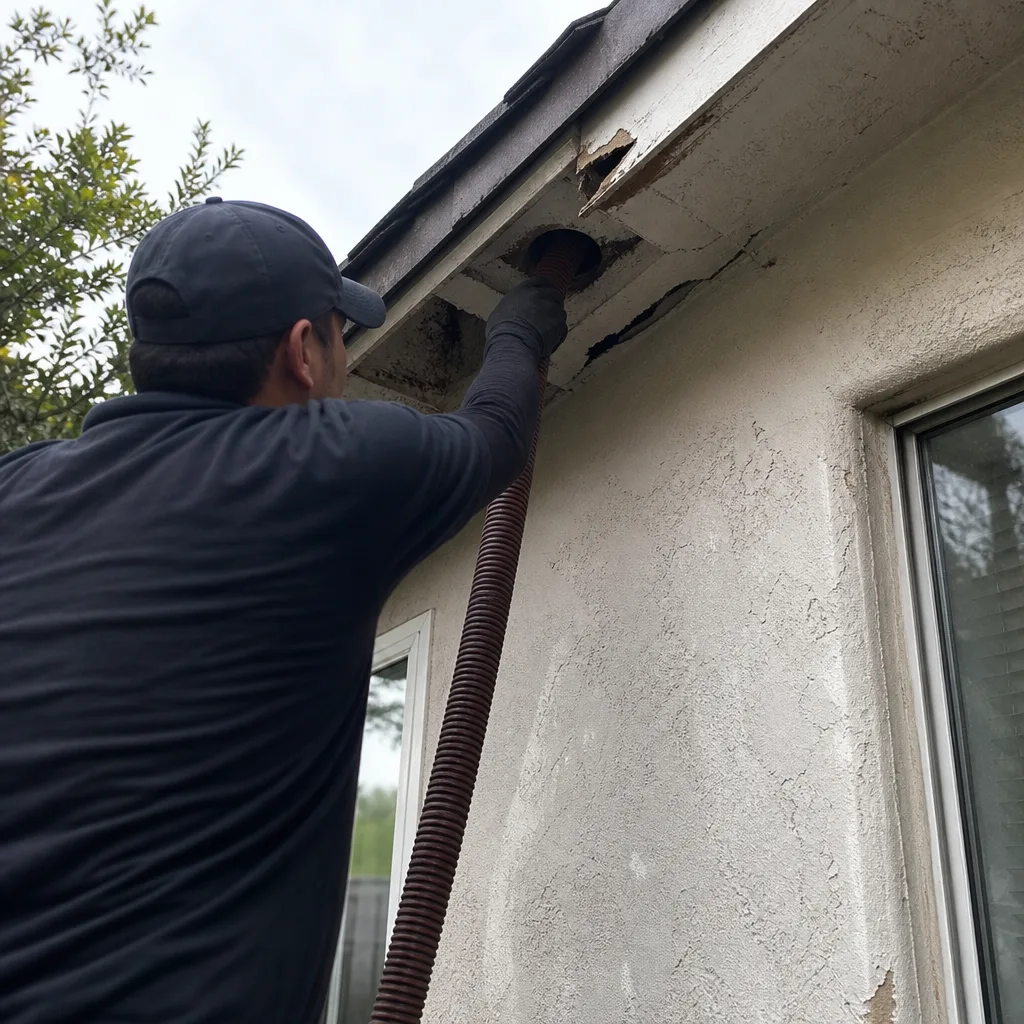
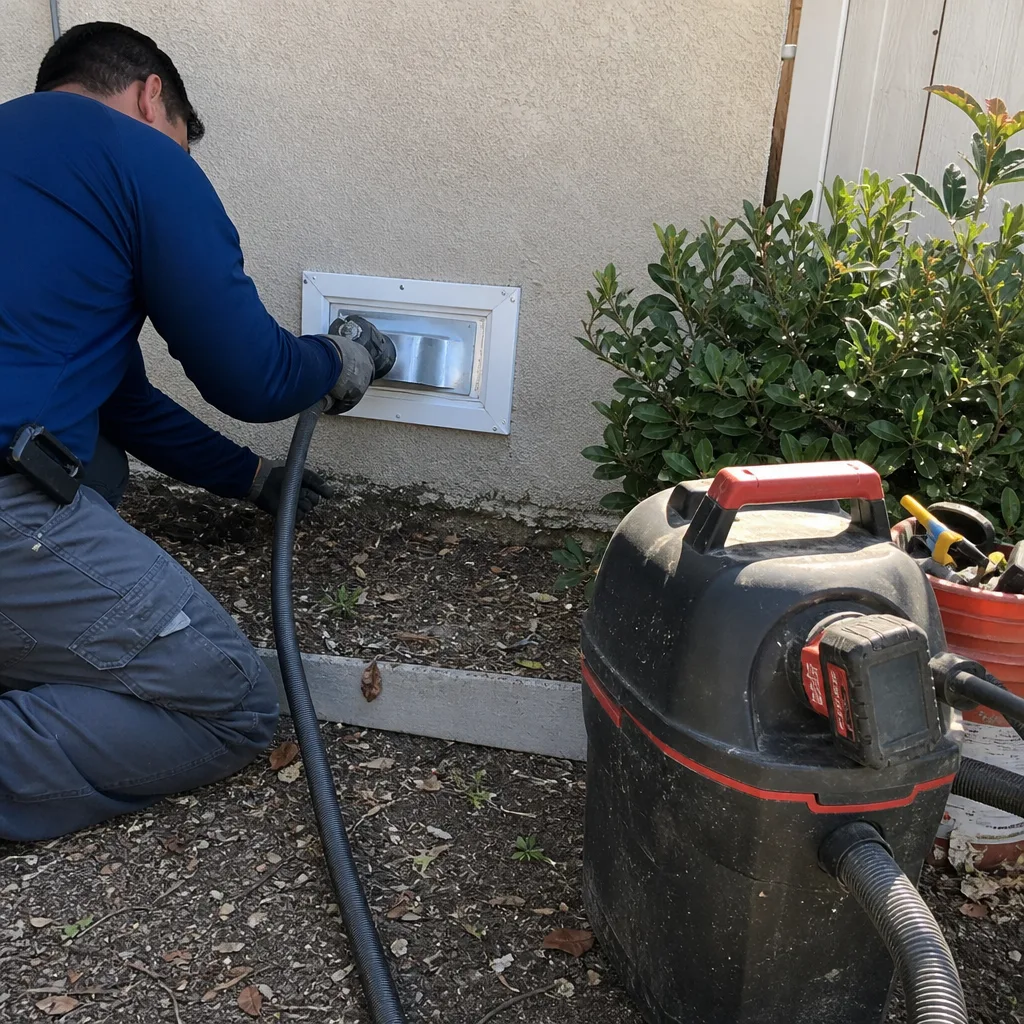
Yes. Dryer Vent Cleaning in Rancho Cucamonga is a dedicated service we offer year-round, and after a smoke or earthquake event, the dryer vent is often overlooked. Smoke particulate can enter the dryer vent through the exterior termination point, and seismic movement can dislodge the vent connection behind the dryer. Both are fire-safety relevant and worth inspecting during any post-emergency assessment. Our Air Duct Repair in Rancho Cucamonga service handles duct joint separation and flex duct replacement discovered during these inspections.
The Bottom Line
Rancho Cucamonga homes are exposed to three HVAC emergency scenarios that most national preparedness guides never mention. Wildfire smoke enters duct systems when the fresh-air intake stays open and the fan runs in Auto. Earthquakes separate flex duct joints that were never properly secured in the first place. Power surges cook control boards and leave blower motors limping along. Each of these has a specific protocol before the event, a specific assessment after the event, and a specific sequence of professional response. The common thread is that equipment quality determines the outcome. A contained cleaning with rotary brush agitation and HEPA extraction restores a system after contamination. A bargain job does not. Make the settings changes tonight, do the visual inspections before the next event, and have a contact plan ready. The next emergency is a matter of when, not if.
Written by the team at Timberline Air Duct Cleaning, serving Rancho Cucamonga since 2014.
See the difference
 Before
 After
 Before
 After
 Before
 After