
Last updated November 2, 2026
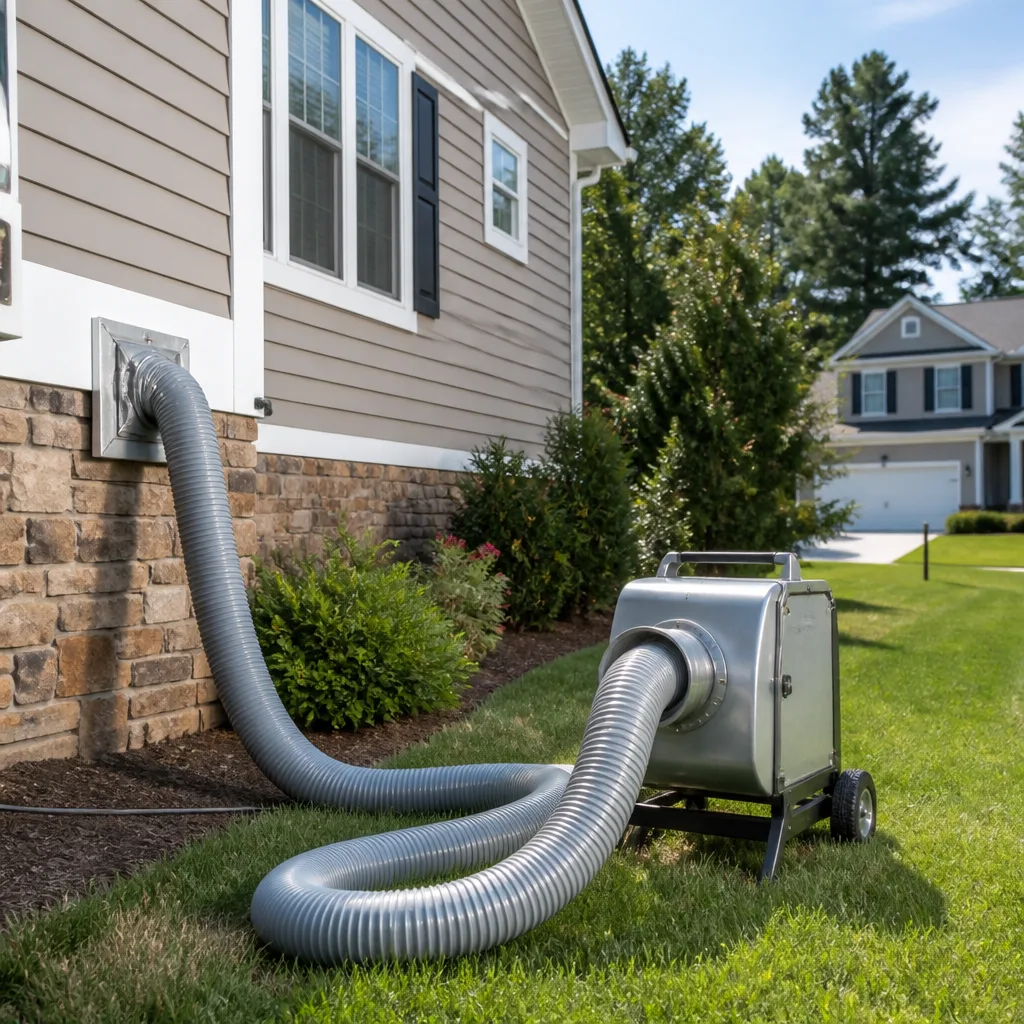 Whole-home duct cleaning
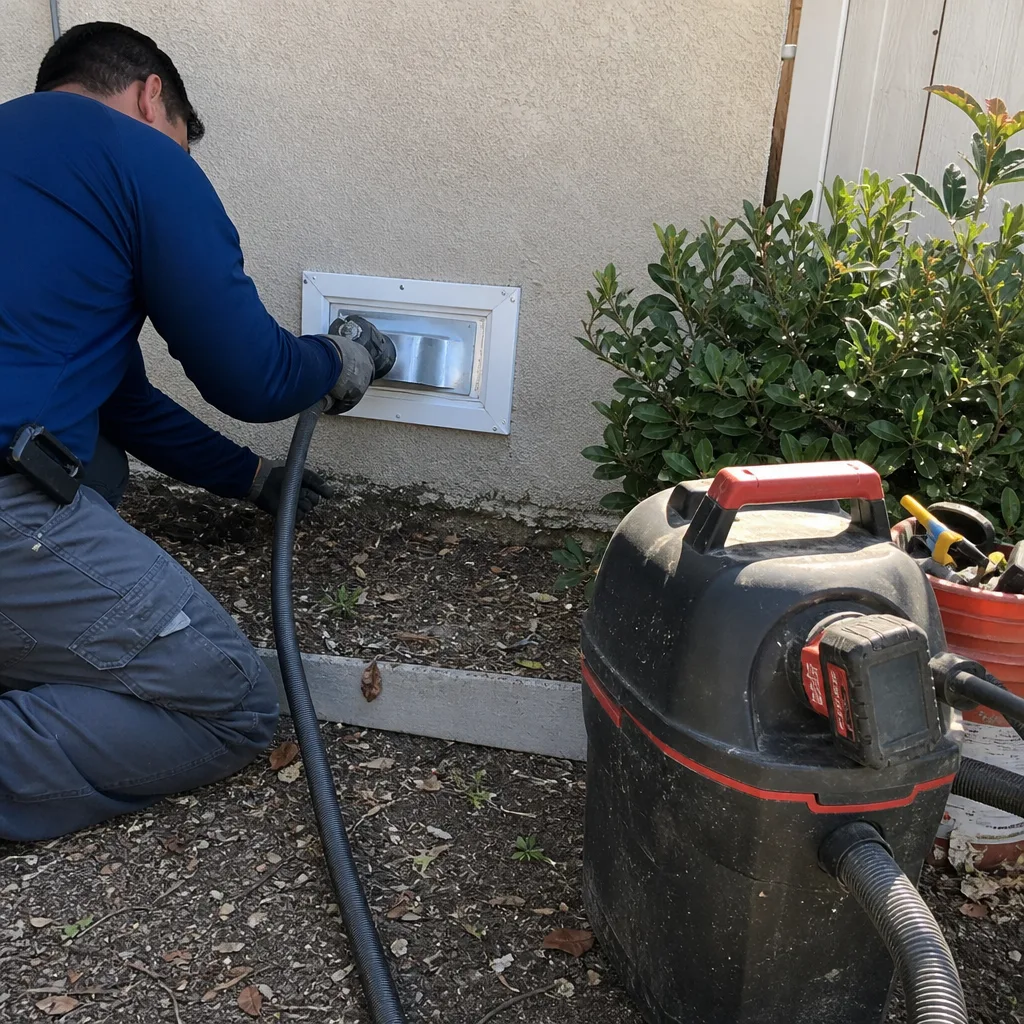
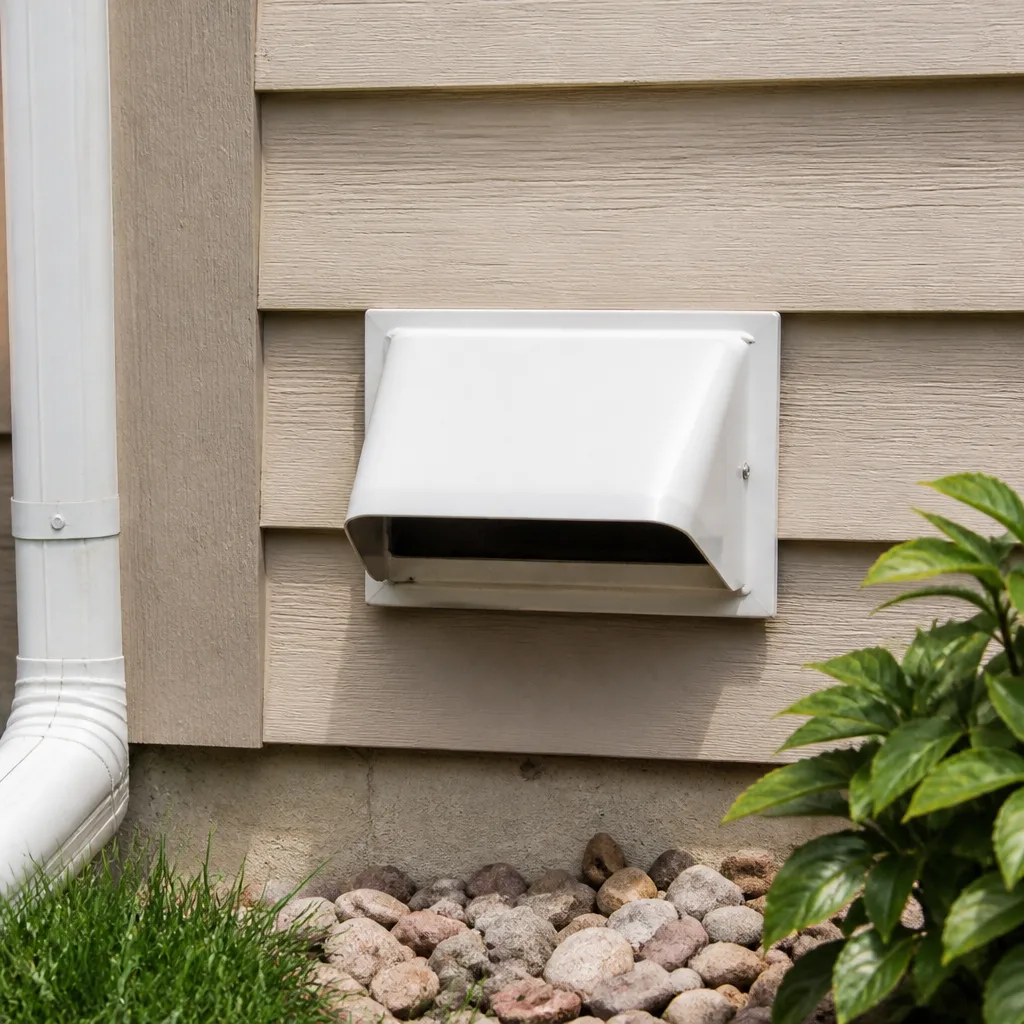 Dryer vent cleaning
 Camera inspection
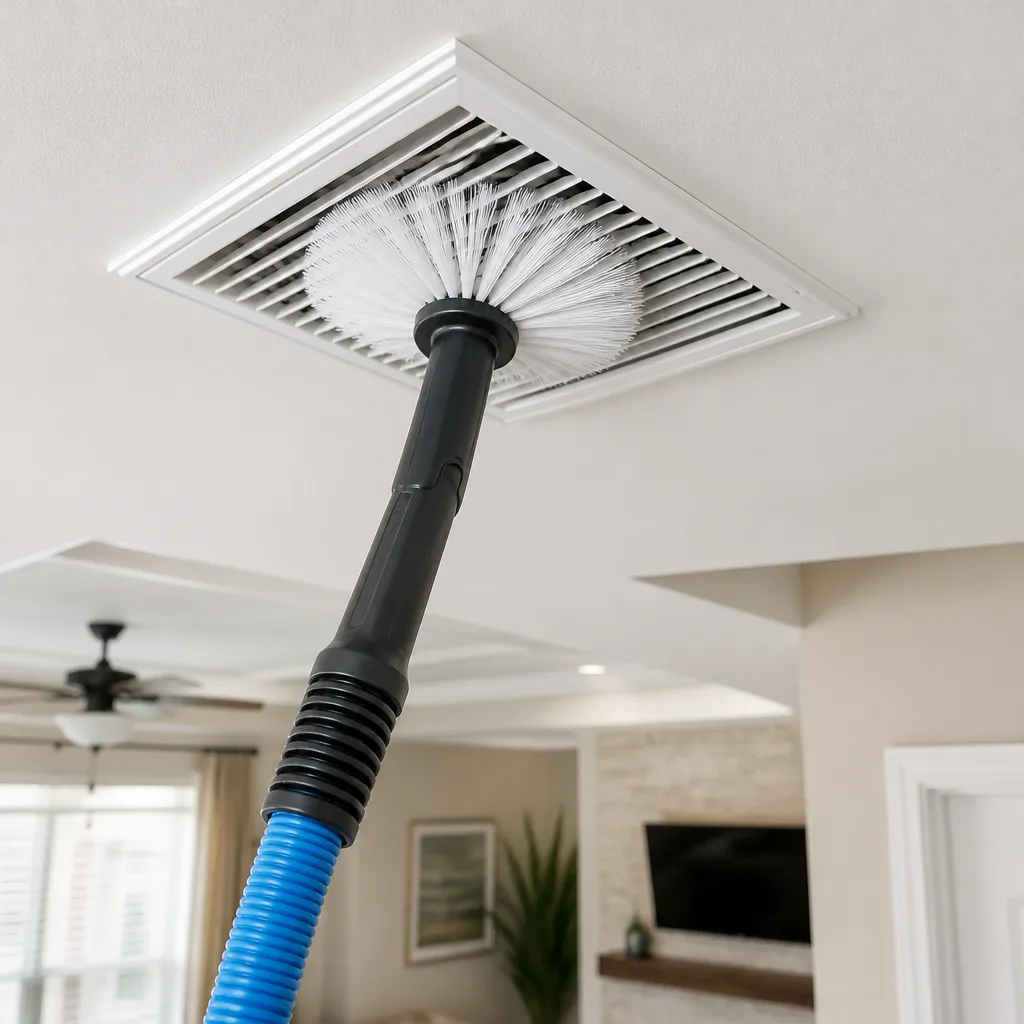 Sanitizing & deodorizing
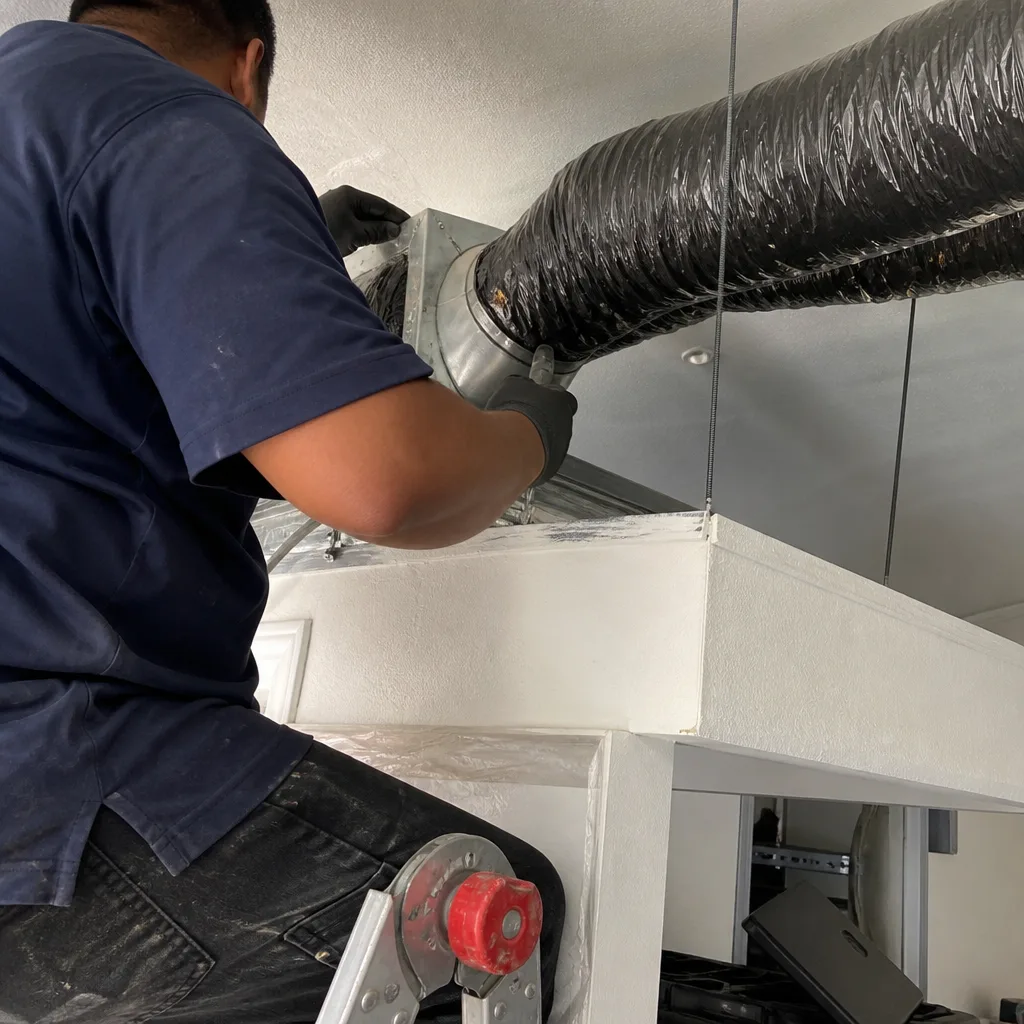
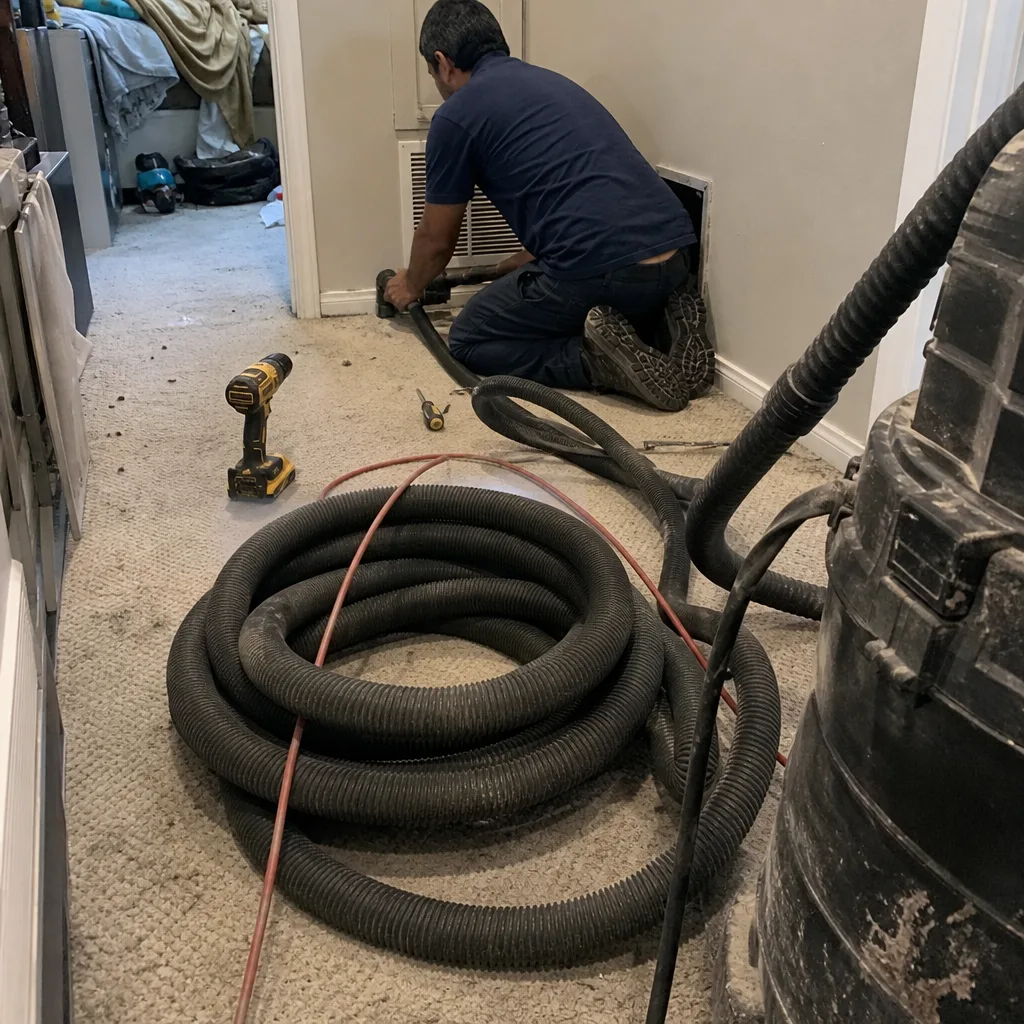
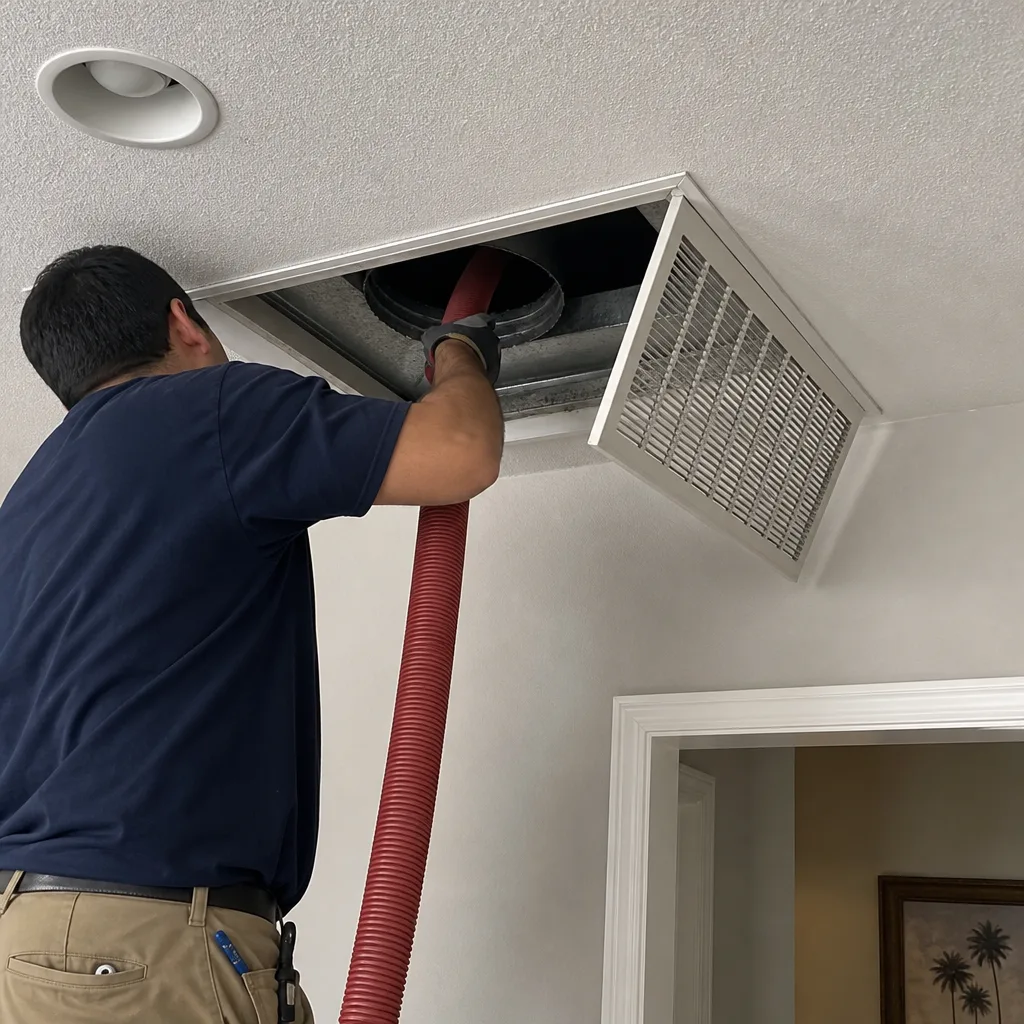
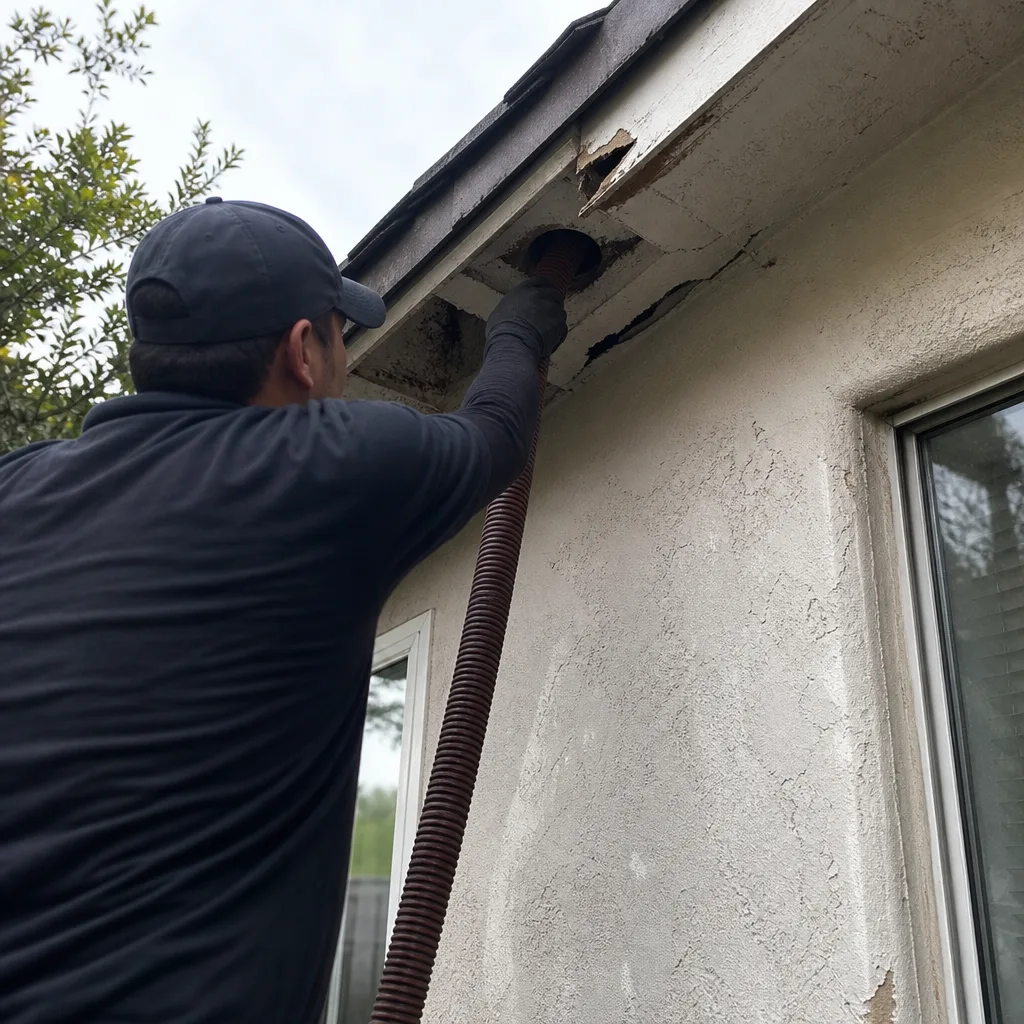
Whole-system duct and dryer vent check with before-and-after photos - you see exactly what came out of your vents
That "$99 whole-house special" is a bait ad - the real number appears once they are in your hallway, or the "clean" is a shop-vac at the register. We photograph the inside of your ducts before and after instead.
Air Duct Cleaning Permits, Codes & Inspections in CA: What You Need to Know
California has a reputation for regulating nearly everything, which is why we get a lot of surprised calls from homeowners in Rancho Cucamonga asking whether air duct cleaning requires a permit. The honest answer: the cleaning itself almost never does. But here’s what almost nobody explains upfront. California’s Title 24 energy code has specific duct sealing and leakage standards, and once a contractor does anything beyond cleaning, like repairing or sealing duct connections, those standards can suddenly apply. A well-meaning repair that doesn’t meet Title 24 specs can show up as a problem years later during a resale inspection. This guide unpacks exactly where that line sits, which agencies enforce what, and how to avoid paying for work that quietly creates a bigger problem than the dust it removed. For more on this topic, see our Air Duct Cleaning Warning Signs: A Rancho Cucamonga Homeowner’s Reference Guide.
Styles & brands we work with
- Whole-home duct cleaning
- Dryer vent cleaning
- Camera inspection
- Sanitizing & deodorizing
Quick Answer
Air duct cleaning in California requires no permit and no inspection, because it’s considered routine maintenance rather than construction. However, duct repair, replacement, or sealing work that alters the duct system’s structure can trigger Title 24 energy code requirements, HERS testing, and in some cases a building permit. Mold remediation discovered during cleaning may also require a licensed contractor under CSLB rules. In short: cleaning is unregulated maintenance; modifying the duct system is not.
Table of Contents
- Cleaning vs. Modification: Where the Permit Line Actually Sits
- How California’s Title 24 Applies to Duct Sealing and Repairs
- South Coast AQMD Rules for Duct Cleaning in San Bernardino County
- CSLB Licensing: What Class Covers Duct Work and Why It Matters
- How to Verify a CSLB License in 60 Seconds
- When Mold Remediation Crosses Into Licensed Contractor Territory
- HERS Testing and Duct Leakage: What a Homeowner Actually Needs to Know
- What This All Looks Like in Rancho Cucamonga Specifically
- Common Mistakes to Avoid
- When to Call a Professional
- Frequently Asked Questions
- The Bottom Line
Cleaning vs. Modification: Where the Permit Line Actually Sits
No state agency in California requires a permit to clean air ducts. The California Energy Commission, the Contractors State License Board (CSLB), and local building departments all treat duct cleaning as maintenance, the same category as changing an HVAC filter or vacuuming a return grille. As long as a contractor is removing dust, debris, and microbial growth using brushes, vacuums, or compressed air, no permit application crosses anyone’s desk.
The line moves the moment a contractor does any of the following:
- Cuts into or disconnects ductwork to access a section, then reconnects it in a way that changes the duct layout
- Replaces a damaged duct section, even if it’s just a few feet of flex duct
- Applies mastic sealant or tape to fix leaks at duct joints
- Adds a new supply or return register
- Reroutes any portion of the duct system
- Installs duct insulation or replaces existing insulation on ducts
Any one of those actions converts a maintenance visit into a modification project. In California, modification projects on duct systems can require a building permit from the local jurisdiction, depending on scope. A straight replacement of a damaged duct section in Rancho Cucamonga typically falls under the City of Rancho Cucamonga Building & Safety Division’s minor repair allowance, but sealing an entire duct system to meet Title 24 leakage standards is a different animal entirely.
Here’s the practical distinction we explain to every homeowner: if the duct system leaves your home in the same configuration it arrived in, you were having your ducts cleaned. If the system’s structure, routing, or sealing changes, you had duct work performed. One requires no paperwork. The other might.
At Timberline Air Duct Cleaning home, we’re careful about this line on every job. We clean ducts with professional-grade Rotobrush rotary brush systems and Nikro HVAC cleaning equipment. If our technician finds a cracked duct, a disconnected joint, or a crushed section, we photograph it and show it to you before touching it. We don’t quietly “fix” structural problems during a cleaning visit, because doing so without the proper scope of work can create liability for you and permitting problems down the road.
How California’s Title 24 Applies to Duct Sealing and Repairs
Title 24 is the building energy efficiency section of the California Code of Regulations. Part 6 of Title 24 is what people mean when they talk about the state’s energy code, and it has specific things to say about ductwork. The most relevant section for this conversation is the residential duct leakage standard.
The current Title 24 standard (the 2022 code cycle, which became effective January 1, 2023) requires that when a contractor alters a duct system in a single-family home, the altered portions must be sealed and tested to demonstrate leakage below specific thresholds. The standard varies by climate zone. Rancho Cucamonga sits in Climate Zone 10, where the duct leakage limit for altered ducts is 15% of total system airflow, or lower depending on whether the ducts are in conditioned or unconditioned space.
Here’s what that means in plain language, because the code itself is dense:
- If a contractor seals duct connections during a cleaning job, they’ve now performed duct alteration work.
- That alteration work must meet Title 24 sealing standards, which generally requires the use of mastic sealant or UL 181-approved tape, not standard duct tape.
- Depending on the scope, the work may require verification through a HERS (Home Energy Rating System) rater, who measures duct leakage with specialized testing equipment.
- Without that verification, a future energy inspection or resale inspection can flag the work as non-compliant.
The most important takeaway for a homeowner in Rancho Cucamonga: a contractor who says “I’ll seal those leaks while I’m in there” during a cleaning visit may be offering something genuinely useful, but they need to do it to code. If they can’t tell you what Title 24 requires for duct sealing in Climate Zone 10, they shouldn’t be sealing anything.
This is also where the equipment difference matters. A bargain duct cleaner working with a basic vacuum and wand setup simply can’t verify leakage. They have no way to measure what they’ve done. Our approach at Timberline is different. We use Abatement Technologies negative-air and HEPA filtration equipment to keep dislodged debris contained during cleaning. When we identify leaky ducts, we handle repair work through our Air Duct Repair in Rancho Cucamonga service, which approaches sealing and repair with Title 24 compliance in mind, not as an afterthought to a cleaning visit.
South Coast AQMD Rules for Duct Cleaning in San Bernardino County
Most homeowners have never heard of the South Coast Air Quality Management District, known as South Coast AQMD. But if you live in Rancho Cucamonga or anywhere in San Bernardino County, this agency has regulatory authority over how air-cleaning contractors operate. Their rules don’t specifically govern duct cleaning as a service category, but they intersect with the work in ways that matter.
South Coast AQMD regulates particulate emissions and the disposal of collected materials from commercial operations. For duct cleaning, this translates into a few practical requirements that a serious contractor follows even though no homeowner would think to ask about them:
Containment. When a contractor extracts dust, debris, and microbial material from ducts, that material can’t just be released into the air or blown out a window. South Coast AQMD rules on fugitive dust and particulate matter mean that collected debris must be captured and containerized. This is exactly why we run Abatement Technologies negative-air systems during cleaning. The negative-air setup means the room where we’re working has lower air pressure than the rest of the house, so dislodged dust moves toward the collection point, not into your living room.
Disposal. Material collected from ducts, especially if mold is present, needs to be sealed and disposed of according to county waste rules. You can’t just toss filtered debris in a customer’s trash can and call it done. A contractor working to proper standards bags and seals waste before removal.
Filtration. South Coast AQMD has some of the strictest air quality standards in the country, and while their direct enforcement on small contractors is limited, their standard informs what professional equipment looks like. HEPA filtration on the vacuum side is the difference between containing what you remove and recirculating it through the house. That’s why we specify Nikro and Abatement Technologies equipment in our trucks rather than entry-level blowers.
If you’re vetting a duct cleaning company in San Bernardino County, ask one question: “What kind of filtration do you run on your collection equipment, and where does the debris go when you’re done?” If the answer doesn’t include HEPA-level filtration and sealed disposal, you’re talking to a company that hasn’t thought through the regulatory environment they work in.
CSLB Licensing: What Class Covers Duct Work and Why It Matters
The Contractors State License Board (CSLB) is the state agency that licenses contractors in California. If someone does construction, alteration, or repair work on your home and they don’t hold the right CSLB license, you have little recourse if the work is bad, and your homeowner’s insurance may not cover damage caused by unlicensed work.
Duct-related mechanical work falls primarily under two license classifications:
- C-20 (Warm-Air Heating, Ventilating and Air-Conditioning Contractor): This classification covers installation, modification, and repair of HVAC systems, including ductwork. A C-20 contractor is licensed to cut, replace, seal, and reroute ducts.
- C-61/D-40 (Limited Specialty: Service and Repair): Some contractors work under this more limited classification, which allows service and repair but not new installation work. The scope is narrower.
Here’s a specific point that trips up homeowners: a company can hold a C-20 license for HVAC work but operate as a duct cleaning service without ever using the C-20 part of their license. Cleaning alone doesn’t require a contractor’s license at all. It’s classified as maintenance. So when you ask a duct cleaning company for their license number and they don’t have one, it doesn’t necessarily mean they’re operating illegally. It means they’re staying strictly within the maintenance scope of work.
But if that same no-license company offers to repair a duct, replace a section, or seal your system, they’re now practicing contracting without a license. That’s a CSLB violation, and it’s one of the most common ways homeowners in our area end up with bad duct work.
This is why Timberline maintains a full scope of capability: Air Duct Cleaning in Rancho Cucamonga for maintenance work, plus Air Duct Repair in Rancho Cucamonga for the structural work that requires a licensed contractor’s care. We repair what we find, but we do it through the proper scope of service, not as an unlicensed side task.
How to Verify a CSLB License in 60 Seconds
Checking a contractor’s license in California takes less than a minute, and skipping this step is the single most common mistake we see Inland Empire homeowners make. Here’s the process:
- Go to the CSLB website at cslb.ca.gov.
- Click “Check a License” in the top navigation.
- Enter the contractor’s name, business name, or license number in the search field.
- Look at the license classification. For duct repair, you want to see C-20 or C-61/D-40.
- Check the license status. It should say “Active.” If it says “Expired,” “Suspended,” or “Revoked,” walk away.
- Note the expiration date and make sure it’s current at the time of your project.
Also look at the workers’ compensation insurance field on the license record. California requires contractors with employees to carry workers’ comp. If a contractor has no employees and answers “no” on workers’ comp, that’s legal for a solo operator, but it means any injury on your property falls on your homeowner’s insurance. For duct work, which involves crawlspaces, attics, and other risky access situations in Rancho Cucamonga’s older homes, we recommend working with a company that carries proper coverage.
One more check worth 30 seconds: look at the license’s “Other” section to see if the contractor has had any disciplinary actions or complaints filed. A clean license record over several years is a much stronger signal than a current license with a history of suspensions.
When Mold Remediation Crosses Into Licensed Contractor Territory
Here’s a scenario we see regularly: a homeowner calls for duct cleaning in Rancho Cucamonga, and during the inspection, the technician finds dark staining inside the supply ducts that looks like mold. What happens next depends entirely on the contractor you hired, and this is where the regulatory picture gets more complex than almost anyone expects.
Mold remediation in California falls under a different set of rules than duct cleaning. The California Department of Public Health (CDPH) has guidelines for mold assessment and remediation, but there’s no state-issued mold remediation license. What does apply is the CSLB’s classification system. Mold remediation that involves demolition, removal of building materials, or structural work requires a contractor’s license, typically a C-22 (Asbestos Abatement) or a general contracting classification depending on scope. A company that only cleans ducts is not licensed to perform mold remediation if the remediation goes beyond surface cleaning of the duct interior.
The practical implications:
- If mold is limited to dust adhered to duct surfaces and comes off with brushing, it’s cleaning, not remediation.
- If mold has penetrated into the duct insulation or the surrounding wall cavity, the insulation or drywall may need removal, and that’s remediation work.
- If a contractor tells you they’ll “spray the ducts with bleach” or “fog the system” without assessing moisture sources, be skeptical. Killing mold inside a duct without fixing the moisture problem means the mold will return, and the chemicals may damage your system.
A competent duct cleaning company in San Bernardino County should be able to tell you the difference between what they can clean and what requires a mold remediation specialist. We make that call on every job. If the substance in your ducts looks like mold but is limited to surface contamination, our Rotobrush and Nikro cleaning equipment removes it along with the accumulated dust. If we find evidence of active moisture intrusion or mold that has penetrated materials, we tell you to contact a licensed remediation contractor before we finish the job. We don’t pretend a cleaning service can solve a structural mold problem.
HERS Testing and Duct Leakage: What a Homeowner Actually Needs to Know
HERS stands for Home Energy Rating System, and HERS raters are independent third parties certified by the California Energy Commission to verify energy code compliance. If duct sealing or repair work on your home requires Title 24 verification, a HERS rater is the person who does the testing.
The test itself is called a duct leakage test, and here’s how it works: the rater seals off your registers, connects a calibrated fan to the duct system, pressurizes it, and measures how much air escapes. The result is expressed as a percentage of the system’s total airflow. Title 24 sets maximum leakage limits by climate zone, and for altered ducts in Rancho Cucamonga, that number is tight enough that sloppy sealing work will fail.
What does this mean for you as a homeowner in practical terms?
- A duct cleaning service should never claim their cleaning work required HERS testing. Cleaning doesn’t trigger it.
- A duct repair or sealing job may require HERS testing depending on the scope and whether it was part of a permitted project.
- If a contractor does duct repair work and can’t or won’t provide HERS verification when the scope requires it, the work may be non-compliant and can cause problems at resale.
The resale point is worth emphasizing. In California, when you sell a home, the buyer’s home inspector may review any recent work done on the house, including duct work. If a previous duct sealing job doesn’t meet Title 24 standards and was never verified, it can delay a sale or become a negotiation point. Conversely, if the work was done properly and documented, it’s an asset. This is one of the quiet ways that choosing the right duct contractor in Rancho Cucamonga matters years after the work is done.
What This All Looks Like in Rancho Cucamonga Specifically
Rancho Cucamonga sits in the western Inland Empire, a city with a particular housing stock mix. You have tract homes built in the 1980s and 1990s through the master-planned communities north of Foothill Boulevard, older single-family homes in the Alta Loma and Etiwanda areas, and newer construction pushing up against the San Gabriel foothills. Each of these presents different duct conditions.
The 1980s and 1990s tract homes are the ones where we most commonly find duct problems worth noting during cleaning. The flex duct used in that era often has degraded outer jackets, and the duct tape connections have dried out and failed. In many Rancho Cucamonga homes of that vintage, duct leakage of 20 to 30 percent is not unusual, meaning a significant portion of your conditioned air is blowing into the attic instead of your living room.
Here’s the local climate angle that matters for this guide: Rancho Cucamonga summers routinely push past 100 degrees. When your duct system is leaking, your air conditioner is working harder to maintain a comfortable temperature. The hotter the summer, the more a leaking duct system costs you. And when the Santa Ana winds blow, which they do with some regularity in the fall, dust infiltration through leaking return ducts becomes a noticeable indoor air quality issue.
For homeowners in the northern Rancho Cucamonga neighborhoods near the foothills, particularly the Terra Vista and Rancho Etiwanda areas, dust from the hills and the occasional smoke from wildfire season accumulates in ducts faster than in other parts of the city. A duct cleaning schedule that works for a coastal homeowner might not be aggressive enough for a Rancho Cucamonga foothills home.
The city’s Building & Safety Division follows the California Building Standards Code, which incorporates Title 24, but local enforcement follows the scope of work rules we’ve outlined here. Minor repairs don’t require a permit. Substantial duct system modifications do. If you’re planning a project that involves more than cleaning, check with the City of Rancho Cucamonga before work starts. A credible contractor will help you determine whether your project crosses that threshold.
Common Mistakes to Avoid
- Assuming all duct work requires a permit. This causes homeowners to overthink and delay needed maintenance. Cleaning requires no permit, and delaying it because you’re unsure means living with dustier air and a harder-working HVAC system than necessary.
- Letting a cleaning company do “bonus” sealing work without documentation. We’ve seen this repeatedly: a low-priced duct cleaning crew offers to “seal up a few leaks” while they’re in the house, using whatever tape they have on the truck. That sealing work now exists on your duct system, and if it doesn’t meet Title 24 standards, you own a non-compliant modification.
- Hiring a cleaner for what’s actually a repair job. If you know your ducts have collapsed sections or disconnected joints, call a contractor who can handle Air Duct Repair in Rancho Cucamonga, not a cleaning company that will either ignore the problem or try to fix it unlicensed.
- Not checking the CSLB license before repair work starts. Sixty seconds on the CSLB website could save you from paying for duct work that your insurance company won’t cover if something goes wrong.
- Treating mold claims casually. If a contractor tells you there’s mold in your ducts and offers to “take care of it” for a few hundred extra dollars, ask what their remediation qualifications are. If the answer is vague, get a second opinion.
- Falling for the unbelievably cheap whole-house coupon. In Rancho Cucamonga and throughout the Inland Empire, we see direct mail pieces offering whole-house duct cleaning for prices that can’t cover the cost of running professional equipment. Those offers usually involve bait-and-switch pricing at the door or a “clean” that’s really just a visual wipe of the register faces.
- Forgetting to ask about containment equipment. A duct cleaning company that doesn’t use negative-air or HEPA filtration is blowing dust around your house and calling it cleaning. Ask what equipment they run before you book.
When to Call a Professional
If any of these situations describes where you are right now, it’s time to make a call rather than continue researching, or explore our more guides & resources to learn more:
- You’ve seen dust blowing from your registers when the system starts up, or noticed black staining around the register faces.
- Your last duct cleaning was more than five years ago, or you’ve done any renovation, roofing, or pest work since then.
- A home inspector flagged duct issues during a recent inspection, or you’re preparing to sell and want to avoid disclosure problems.
- Someone in your home has persistent allergy symptoms that improve when they leave the house.
- You suspect a previous homeowner or contractor did unpermitted duct work.
Timberline Air Duct Cleaning offers Air Duct Cleaning services with free estimates in Rancho Cucamonga. Call (877) 265-9115 and we’ll walk your duct system, show you what we find, and give you a straight answer about what needs cleaning and what needs repair. No scare tactics, no bait-and-switch pricing.
Frequently Asked Questions
No. Air duct cleaning is classified as routine maintenance under California law, and neither the state, the county, nor the City of Rancho Cucamonga requires a permit for it. A permit only comes into play if the scope of work expands to include duct modification, replacement, or sealing that changes the duct system’s structure.
Duct cleaning removes accumulated dust and debris from the interior of the duct system without altering the system itself. Duct sealing applies mastic, tape, or other materials to close leaks at duct joints, and that modification work can trigger Title 24 energy code requirements including possible HERS testing depending on scope. One is maintenance; the other is construction work.
Go to cslb.ca.gov and click the “Check a License” link. Enter the contractor’s name or license number. For duct repair work, look for a C-20 (Warm-Air Heating, Ventilating and Air-Conditioning Contractor) or C-61/D-40 (Limited Specialty: Service and Repair) classification with an “Active” status. For duct cleaning alone, no license is required, but a company that also offers repair should hold the proper classification. Call (877) 265-9115 if you’d like help understanding what you’re looking at.
South Coast AQMD doesn’t issue permits for duct cleaning, but their rules on particulate containment and debris disposal apply to how professional duct cleaning should be performed. Contractors working in San Bernardino County should use HEPA filtration and negative-air containment to prevent extracted dust from re-entering living spaces, and collected debris should be sealed and properly disposed of.
Unpermitted duct work doesn’t automatically make a home unsellable, but it can become a disclosure issue during resale. If a buyer’s inspector finds non-compliant duct modifications, the work may need to be verified, corrected, or permitted retroactively before closing. The cost of correcting poor duct work almost always exceeds the cost of having done it properly the first time.
Ask for before-and-after photos of your ducts. A professional company using Rotobrush or Nikro equipment can show you the interior condition of your ducts before and after cleaning from the same camera angle. If a company refuses photo documentation, treat that as a red flag. Timbersaw’s process includes photographic verification, and we welcome questions about what your photos show. Call (877) 265-9115 for an honest assessment.
The Bottom Line
Air duct cleaning in California is straightforward from a regulatory standpoint: no permit, no inspection, no special license. The complexity arrives when the work moves beyond cleaning into repair, sealing, or replacement territory. Understanding where that line sits protects you from unlicensed work, Title 24 compliance problems, and resale headaches down the road. If you need a duct cleaning in Rancho Cucamonga that’s done with professional-grade equipment and the regulatory awareness that separates serious operators from fly-by-night crews, call Timberline Air Duct Cleaning at (877) 265-9115. We clean ducts thoroughly, contain the debris we remove, and we repair what we find, properly.
Written by the team at Timberline Air Duct Cleaning, serving Rancho Cucamonga since 2014.
See the difference
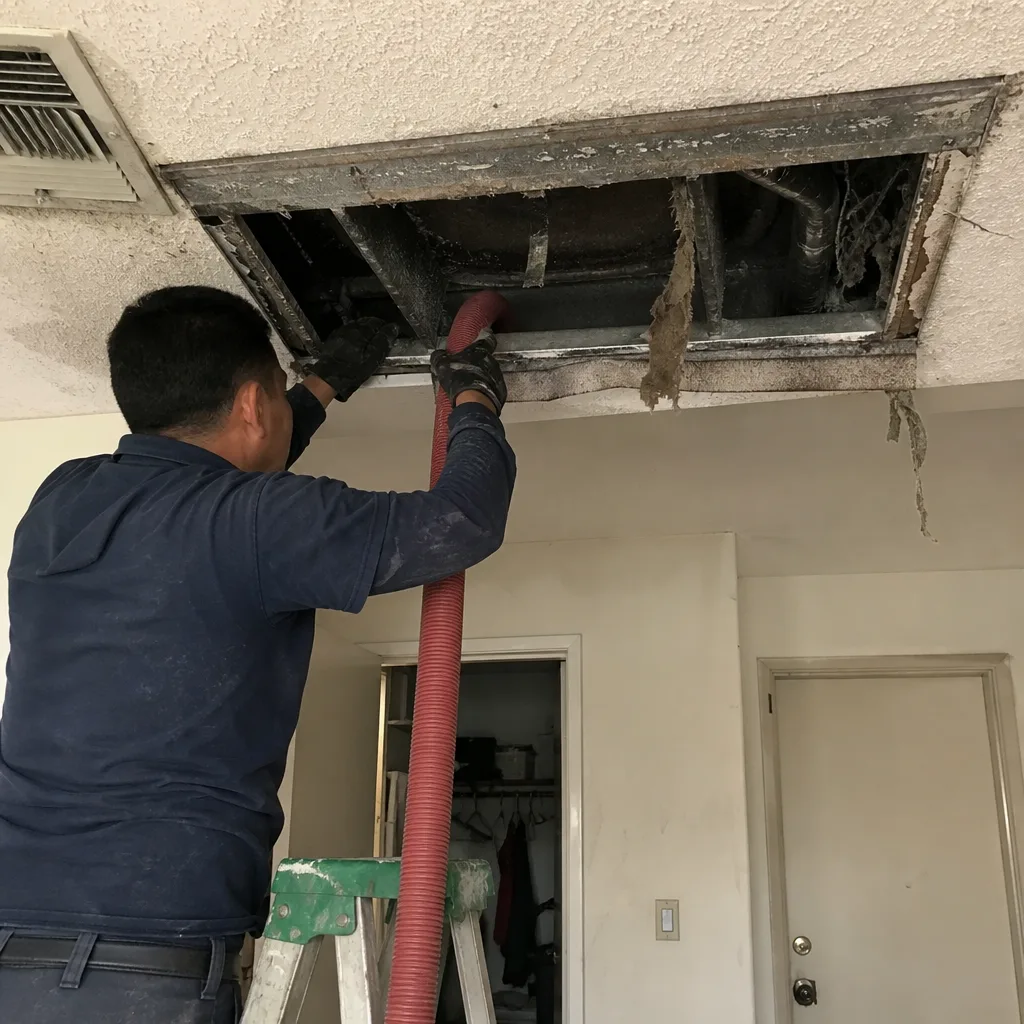 Before
 After
 Before
 After
 Before
 After